On the morning of Blackbeard’s last fight, the water was grey and deathly still. The battle was fevered, clawing, and the pirates fought dirty. Up on deck of the infamous Queen Anne’s Revenge, the air was thick with smoke from makeshift molotov cocktails the pirates had hurled at their pursuers, sailors from the British navy spearheaded by the young and true-hearted Lieutenant Maynard. In the belly of the pirate vessel, a Black man “bred up” by Blackbeard sat, listening intently to the scuffling and echoes of screams above his head. Breaking the first rule of mariners and their wooden world, he sat next to an open flame. The man was under orders to touch the candle to a powder keg if things did not go the pirate’s way. Inside the magazine, there was a strange sense of shelter, and he felt ready to blow them all to kingdom come rather than face a capture and a trial. Unaware of the danger lurking belowdecks of the pirate ship, the navy forces aboard the Ranger pulled their vessel alongside the Queen Anne’s Revenge.
The pirates delivered a devastating round of cannonballs into the side of the Ranger, shattering wood and bone in an instant. Confident of his success in beating back his enemy, Blackbeard leaped down to the Ranger, bringing his crew with him. He landed crouched like a panther and then drew himself to his full height, which was closer to seven feet than six. Fire and brimstone seemed to be the natural habitat of this man; he was broad, with a great black beard, eyes ablaze, and a roaring voice. He charged Maynard, cutlass swinging.
Water on the Pamlico Sound
Blackbeard wasn’t born aboard a ship, but in a harbor. Sometime around 1690 in Bristol, England, Blackbeard was born to the name Edward Teach. Being an illegitimate son of well-to-do parentage afforded him something of an education, but no official acknowledgement by his father, and no status to speak of. Wits and a smudgy family history were the only advantages for this boy, who grew up in a nondescript rowhouse in a port town where comings and goings were as unremarkable as the rhythm of the tide. As a young man he left on the sea to seek his fortune — first as a privateer based in Jamaica in 1712, then eventually as a full-fledged pirate. Privateering was effectively state-sanctioned piracy, robbing the trade of opposing countries in times of war. In 1724 a man writing under the name Captain Charles Johnson said, “Privateers in time of war are a nursery for pirates against a peace,” and he wasn’t far off. For Edward Teach, the transition from privateering to piracy was as natural as leaving a home that offered him nothing.
Edward Teach sailed the Caribbean under the training of Benjamin Hornigold. An adept pirate in his own right, Hornigold fathered so many pirate crews that his alumni had a nickname, The Flying Gang. Teach had built a reputation for boldness in his privateering days, but on Hornigold’s vessel he still had to work his way up the ranks. After about six months of experience and taking on the memorable stage name Blackbeard, Teach was given command of a French vessel, which he renamed the Queen Anne’s Revenge (renaming a vessel has been considered to be bad luck by mariners for centuries, like saying Macbeth in a theatre; pirates renamed ships with abandon). Teach and Hornigold worked in tandem for a while, until Teach once again struck out to make his own way, leveraging his daring image to inspire fierceness in his crew and fear in the hearts of his prey. In the spring of 1717, Teach formed a small flotilla with Stede Bonnet, gentleman pirate from the fragrant hill country of Barbados. Bonnet had recently suffered a few embarrassing losses, with even a large, lumbering merchant ship giving him the slip. Shortly after joining forces with Blackbeard, Bonnet suffered another loss. Blackbeard replaced him as captain with the first mate from the Queen Anne’s Revenge. Bonnet did not seem to feel the loss too keenly in the moment, spending his days in his dressing gown, reading.
The flotilla grew as the combined forces dominated the waters they sailed, robbing merchants of their wares, and sometimes their ships. On April 9, 1717, they captured five vessels in one day — and burnt one, simply because she was sailing out of Boston. On November 28, 1717, the pirates captured La Concorde, a French slaver full of human cargo. They set the sailors and most of the enslaved on shore, and refitted La Concorde into the Queen Anne’s Revenge 2.0.
On this new, looming Queen Anne’s Revenge, there was room for more men and moreweapons. The vessel was armed to the teeth, boasting 40 cannons, far beyond the day’s standards, even for pirates. With her, Blackbeard expanded his territory, plaguing the east coast of America and acquiring a wife in almost every port (grand total: seventeen). In waters from Philadelphia back to the Caribbean, the man with the great black beard became a spectre to be feared, synonymous with violence and bad fortune and fury. Leaning further into this reputation, Blackbeard readied himself for battle by styling his hat with slow-burning matches, smearing his face with gun powder. During the off-hours, he was known to challenge his crew to a trial by hellfire in the hold, shutting out the outside world and lighting brimstone, daring his men to try and outlast him as oxygen was replaced by smoke (they never did).
One of Blackbeard’s grandest accomplishments (or worst, depending on your view of piracy) was blockading Charleston. In a feat of nerve and piratical dexterity, the posse held the trade of an entire port — one of the biggest and most important in the colonies — hostage for the puzzling ransom of a medicine chest. A few pirates went ashore to collect their ransom, swaggering through the streets of Charleston at high noon, leering at its citizens, and daring them to so much as frown their disapproval. Perhaps sensing that they’d pushed their luck too far, the pirates hastily repaired to North Carolina to seek a pardon the king had offered. The terms of the pardon were generous; it was free to any pirate who applied, on the condition they promised to bring their piracy to a halt. Stede Bonnet (back in charge of his vessel at last) was sent ahead to Bath Town, while the other four in the flotilla took a side-junket to the fishing village of Beaufort to make some repairs before surrendering their pirating ways, and with them a ship they would have to sell.
The pirates aboard the Queen Anne’s Revenge held their collective breath, trying to skate through the shallow waters of Topsail Inlet. It’s tough sailing, even now, even for skillful sailors. Then came the sound they were waiting for, but hoping not to hear: The scraping of wood against sand. They were stuck, solidly wedged into a sandbar. After waving their comrades back to help them, soon two ships were lodged in Topsail Inlet, creaking and groaning as water filled their bows. Here’s the thing about being grounded in a large ship: There are not sails, oars, or manpower enough to remove them before the sea claims them. The crew — and the loot — were quickly unloaded.
The majority of the men were set on a sliver of island nearby while to their dismay the loot went with Blackbeard and his new hand-picked crew. The marooned men howled after the sails disappearing into the blue yonder, partly out of indignation, partly from rising panic. Teach and his crew took their winnings and hightailed it to Bath Town, where they applied to governor Charles Eden for a pardon and received it in short order.
Look out at Beaufort Inlet from Fort Macon, North Carolina. If you bump into the right people, they might even be able to point to where the buoy marking the shipwreck used to be.
Edward Teach blustered into town with a big reputation and no-questions-asked wealth, and it bought him friends — in society and government. For a while, it seemed as though Blackbeard was trying to settle down. After years away from Bristol, he’d found another home in another, smaller port town, bought a plantation, built a mansion, and found a wife to keep in it. The process of settling down had been far from traditional; during one of his courtships, the unlucky girl (Governor Eden’s own daughter) received the gift of her other suitor’s right hand in a jeweled case. Teach’s friendships were swept with an unpleasant undercurrent, which is perhaps why he started making regular trips upstream to visit a sister who mysteriously appeared in the backwaters of North Carolina.
Blackbeard’s signature flag, flying in modern-day Bath.
Even after Blackbeard married his final wife, rumors continued to swirl about untowards goings-on at his mansion off Bath Creek. Unsavory characters were known to go and come, slinking in on the creek. Local planters saw it with their own eyes when they were invited to raucous nights of feasting, hazy nights full of booze, sweet curls of tobacco smoke, and general debauchery. They wondered what happened when they left, speculating as they stumbled home that Blackbeard’s wife suffered brutal mistreatment at the hands of his crew, while Blackbeard looked on and laughed. Bath was small enough, Blackbeard could have kept a low profile if he wanted to. But it was also small enough that the whole town knew if anything was slightly amiss, and old habits die hard. It was not long before Edward Teach was back on the water.
Friendship with the powers that be comes in handy when you’re up to no good; it takes little effort to let friendship rot on the vine and turn to corruption. After almost a year of wining and dining and dancing on the governor’s lawn, Blackbeard gathered a small collective and resumed his piracy career, using the island of Ocracoke as his base while retaining Bath as his home. The goods of local merchants started to go missing, pilfered from their sloops in the outer inlets, and word started to spread that trade with the southeastern coast was unsafe. When Teach kept his crimes out of sight (a quick trip to Maryland here, a venture to southern waters there), at least there was plausible deniability surrounding his lengthy absences, and the mysterious nighttime deliveries smuggled in through the tunnel that ran from the river straight to the governor’s cellar. But one September day he brought a handsome prize to his home port. With a flourish, he presented the French vessel Rose Emelye, innocently explaining that he and his crew had found her floating unmanned (but packed with expensive cocoa, sugar, spices, and cloth), with no identifying papers. The local authorities took him at his word, and local merchants took this as the final straw. If they could not bend the ear of their own governor, with the pirate living in their own midst and making it hard for local ships to get out to sea, they would bring their case to Virginia’s government. With a colony particularly dependent on sea-based trade, Governor Alexander Spotswood was alarmed into immediate action (well, as immediate as government action has ever been). He commissioned navy men to end Blackbeard’s reign of terror, sending out two ships led by Lieutenant Maynard. Their orders were sweetened by the promise of a hefty reward: Bring back pirates, dead or alive.
Lieutenant Maynard found Blackbeard anchored quietly in a spot now known as Teach’s Hole, sheltered by the island of Ocracoke. He did not catch the pirates entirely by surprise; they had been tipped off by Tobias Knight, a high-ranking government official in Bath with ties to Governor Eden. On the morning of November 22, Maynard and his crew began approaching slowly, cautiously, through the shallow waters. Spotting the approaching forces, Blackbeard leaned over the edge of his ship, bellowing,
“Damn you for villains, who are you? And from whence came you?” Continuing his approach, Maynard called back that Teach could see very well from the Union Jack they were flying that they weren’t pirates. The exchange ended with Blackbeard throwing back liquor after a sarcastic toast to Maynard: “Damnation seize my soul if I give you quarters, or take any from you!” Both masters prepared their ships for battle.
By the time Maynard and Blackbeard met on the decks of the Ranger, the vessel was in rough shape, the decks strewn with broken glass and wounded. The two men fought first with pistols (Maynard’s bullet found its mark in Blackbeard’s flesh), then hacked and brawled with swords. It was a rabid duel. Out of the worst luck in the world, Maynard’s cutlass snapped at the hilt. He stepped back, fumbling with his pistol. Blackbeard raised his sword to deliver a devastating blow, but one of Maynard’s crew struck him from the back, and Maynard escaped with only a scrape across his fingers.
Springer’s Point on Ocracoke, very near the place still called Teach’s Hole.
The fight continued, navy men and pirates swinging at one another in a blind fever of swords, axes, and makeshift weaponry, until the water around the ships was tinged red. Maynard continued to strike and fire at Blackbeard, but in a perverse miracle, with each injury the veteran pirate only became more fearsome. Finally, as Maynard was cocking his pistol for the sixth time, Blackbeard dropped to the deck with a thud. He was dead, his body covered with 25 wounds, five of them inflicted by bullets. Seeing their leader lifeless, his crew jumped overboard, refusing to be lured back until they were promised mercy. Blackbeard’s head was immediately claimed as a prize, and his body was pitched over the side of the ship.
“Here was an End of that courageous Brute, who might have pass’d in the World for a Heroe, had he been employ’d in a good cause,” Charles Johnson wrote years after the fact.
And the man in the magazine? He had been so close to lighting up the barrels of powder, and bringing explosive destruction on everyone — but two prisoners talked him out of it, begging for their lives.
After the smoke cleared and the debris (human or otherwise) was cleaned up, the navy got down to business. They made their triumphant return to Williamsburg, the trophy of Blackbeard’s head swinging from the bowsprit. In Williamsburg, all of his men except one were quickly condemned to do the “hempen jig”. They hanged in a row along the waterway, and their bodies were left behind for a year as a warning to other potential ne’er-do-wells. This was not the last anyone heard of Blackbeard, however.
The name Blackbeard echoed in conspiracy charges against Tobias Knight and Governor Eden; it was shouted in courtrooms and muttered in taverns for decades after his death. And his mystery outlived them all — legend has it that his spirit still stalks the harbors and inlets of North Carolina, looking on with approval at ceremonies where his skull is filled with moonshine and passed around, or appearing as flickering lights out on the water and leading innocent sailors to disaster (some variations say that Teach’s Lights lead to his treasure, with the devil perched atop). He had claimed that no one knew the location of his treasure, with the exception of Satan himself, and that “the longest liver should take all.” And so we have all been left to wonder.
Wrong, almost entirely wrong. Most of the story you’ve just read is exactly that — a story. There was likely no buried treasure, no wealthy father, no palace in Bath-Town. Even his real name is in question. Blackbeard’s final battle was no epic struggle; in reality, it probably lasted about six minutes. We can’t really be blamed for believing the story so many North Carolinians grow up knowing; it fits together so well, does it not? It flows, there’s a certain amount of poetry. But history is prose — it has tangles and knots and often doesn’t assemble itself into a cohesive plotline. The version we have echoed since Charles Johnson told it back in 1724 came with an authoritative voice and has grown thick with layers added over the space of three centuries. Certain parts are blatantly false, bits are speculation, parts are exaggerated or editorialized, and — perhaps most surprisingly — some pieces are as true as the North Star.
It was important that you know the outline of the old story, so you can understand all the context for all the installments over the next seven months. There’s so much more to this story than smoke, guns, swords, and rum (although there’s still plenty of all that to be had). This series is crafted to bring the human Blackbeard into focus — a flesh-and-bones man, who led a band of other real men to sea (and ultimately misfortune) in a world strained by war, plague, coronations, and local power grabs. In the forthcoming issues, you will hear from archaeologists and treasure hunters, archivists, lawyers, historians, shopkeepers and reenactors, and from many worthy historians who have worked tirelessly to recover the story of Blackbeard from the rubble of legend. Through their eyes you will explore the reserves back behind library walls, old taverns, new labs, see the remnants of ancient rituals and hear the sound a shipwreck makes when it is pulled from the ocean floor. The long way around means extra mileage, but brings with it the prospect of remarkable views. Welcome aboard.
If you’d like to learn more on your own, check out these free resources:
water was … deathly still: (Cooke, Arthur L. “British Newspaper Accounts of Blackbeard’s Death.” The Virginia Magazine of History and Biography, vol. 61, no. 3, 1953, pp. 304–307. JSTOR, http://www.jstor.org/stable/4245947. Accessed 8 June 2020)
renaming a vessel: Duffus, Kevin. “The Last Days of Blackbeard the Pirate” 4th ed., Looking Glass Productions, Raleigh, 2014, p. 70.
formed a small flotilla with Stede Bonnet: Johnson, Charles. “A General History of Pirates, Second Edition.” T. Warner, London, 1724, p. 71. Via Project Gutenberg, 25 Aug. 2012, http://www.gutenberg.org/files/40580/40580-h/40580-h.htm.
hill country of Barbados: Bailey et al, “Legends of Black Beard and His Ties to Bath Town: A Study of Historical Events Using Genealogical Methodology” North Carolina Genealogical Society Journal, Volume 28 No. 3, 2002, p. 280.
merchant ship giving him the slip: Dolin, Jay. “Black Flags, Blue Waters” Liveright Publishing Corp., New York, NY, 2018. p. 217
dressing gown, reading: Boston News-Letter, November 4-11, 1717, p. 2. qtd. in Farrell et. al, “Message in a Breech Block: A Fragmentary Printed Text Recovered from Queen Anne’s Revenge” The North Carolina Historical Review, Volume XCV, Number 2, 2018, p. 245
November 28, 1717: Minutes – De Pas Feuquieres – 10 Dec 1717, N.D., via baylusbrooks.com/index_files/Page13855.htm. Retrieved 2/23/20.
40 cannons: Capt. Ellis. Brand to Josiah Burchett, 4 July 1718. Included in letter from Josiah Burchett to Lords of the Treasury, written 11/26/1719. NC State Archives, T1/223 / ER 16-30
readied himself for battle by styling his hat: Johnson, Charles. “A General History of Pirates, Second Edition.” T. Warner, London, 1724, p. 87. Via Project Gutenberg, 25 Aug. 2012,http://www.gutenberg.org/files/40580/40580-h/40580-h.htm.
two ships were lodged in Topsail Inlet: Moore, David D. “Captain Edward Thatch: A Brief Analysis of the Primary Source Documents Concerning the Notorious Blackbeard” The North Carolina Historical Review, Volume XCV, Number 2, 2018, p. 175.
applied to governor Charles Eden for a pardon: Ibid., p. 75.
the gift of her other suitor’s right hand: Whitehead, Jason “Ghosts Among Us: Scary Tales From Colonial Williamsburg” Colonial Williamsburg Foundation, Williamsburg, VA, 2016. p. 86-87.
a sister who mysteriously appeared: Whedbee, Charles Harry. “Legends of the Outer Banks and Tar Heel Tidewater” John F. Blair, Winston Salem, 1966. p. 46
The goods of local merchants: Dolin, Jay. “Black Flags, Blue Waters” Liveright Publishing Corp., New York, NY, 2018. p. 245
tunnel that ran from the river: Bailey et al, “Legends of Black Beard and His Ties to Bath Town: A Study of Historical Events Using Genealogical Methodology” North Carolina Genealogical Society Journal, Volume 28 No. 3, 2002, p. 255-6.
French vessel Rose Emelye: Moore, David D. “Captain Edward Thatch: A Brief Analysis of the Primary Source Documents Concerning the Notorious Blackbeard” The North Carolina Historical Review, Volume XCV, Number 2, 2018, p. 178.
found Blackbeard anchored quietly in a spot now known as Teach’s Hole: Cooke, Arthur L. “British Newspaper Accounts of Blackbeard’s Death.” The Virginia Magazine of History and Biography, vol. 61, no. 3, 1953, pp. 304–307. JSTOR, http://www.jstor.org/stable/4245947. Accessed 8 June 2020
25 wounds, five of them inflicted by bullets: Ibid., 84.
his crew jumped overboard, refusing to be lured: Ibid., 84.
two prisoners talked him out of it: Ibid., 85.
Blackbeard’s head swinging from the bowsprit: Ibid., 85.
skull is filled with moonshine and passed around: Whedbee, Charles Harry. “Blackbeard’s Cup and Stories of the Outer Banks” John F. Blair, Winston-Salem, 1989. p. 33-4
Teach’s Lights lead to his treasure, with the devil perched atop: Whedbee, Charles Harry. “Legends of the Outer Banks and Tar Heel Tidewater” John F. Blair, Winston Salem, 1966. p.56
the longest Liver should take all: Johnson, Charles. “A General History of Pirates, Second Edition.” T. Warner, London, 1724, p. 89. Via Project Gutenberg, 25 Aug. 2012,http://www.gutenberg.org/files/40580/40580-h/40580-h.htm.
Wrong, almost entirely wrong: A wink toRaskin, Ellen. If you got the reference, let’s be friends. If you didn’t, that’s okay – pick up a copy of The Westing Game and bask in a delightful whodunnit.
about six minutes: George Gordon to Josiah Burchett, September 14, 1721. “Letters – George Gordon to Burchett—14 Sep 1721.” George Gordon to Burchett-14 Sep 1721, N.D., baylusbrooks.com/index_files/Page4723.htm. Retrieved 2/23/20
Illustration by Kelsey Martin of Kettle Pot Paper. Let it also be known that the people have spoken, and they have named the sea serpent Sedgwick.
Most quotes have been updated with standard spelling, capitalization, and punctuation.
November 4, 1718
About two weeks before Edward Teach lost his head near Ocracoke, an alarming report from Tobias Knight reached the governor’s council, meeting in the home of Thomas Pollock. A “great body of Indians now about Bath Town” had kidnapped the son and daughter of Thomas Worsley, a planter in the area, plus his servant named Nathaniel Ming and a difficult-to-identify enslaved man. Rangers scouring the area reclaimed the son, John Worsley, and sensed some crookedness in his story.
Roughly a week before the pirate’s last standoff, a Captain John Worley’s testimony condemns the children and their tale. The whole kidnapping story was “a villainous confederacy of Mr. Worsley’s children and servants, with his slave Pompey”, fabricated to keep Pompey out of trouble for some transgression (Pompey was presumably enslaved by Thomas Worsley; council minutes are not specific). The council orders Thomas Worsley to pay a £500 bond for the chaos the group almost caused, and to bring his daughter Mary to attend the next court or council session for further instruction. John was condemned to receive “39 lashes well laid on his bare back”.
39 lashes is heavy punishment to bear for a lie, particularly to the modern eye. But young John Worsley grew up in a much different world. The land of North Carolina was vast, stubborn, and wild. Because of the long miles between good Anglicans, Governor Eden fretted over those “seduced by Quakerism”, a shift with meaningful political consequences. In one of many frustrated letters, Reverend John Urmston (one of very few officially-sanctioned ministers in Carolina) wrote that the colony’s people were at a near-constant stretch to make ends meet.
To understand what was happening in North Carolina in November 1718, you’re going to need to know something about the rest of the world, and the people in it. The goal of this issue is to give you framework, knowledge, and tools that will be useful over the next six installments, to eventually make the seemingly strange and distant past more present and familiar.
Distant Snapshot
In the early 1700s, Bach labored over his first cantatas, young Frederick the Great learned how to walk, Ben Franklin’s older brother taught him how to set type in a printing press, and Voltaire was imprisoned in the Bastille because of a bawdy satirical poem he wrote about French royalty. China had transitioned into the Qing dynasty and was about to usher in the best years for that line. During 1707 alone, the United Kingdom was created, 27 consecutive years of war in India between the Maratha and Mughal empires paused, and Mount Fuji erupted, covering Edo (Tokyo) with ash from 60 miles away. In 1712, descendants of the Maya began to rebel against Spanish rule from the highlands of Mexico. In Russia, Peter the Great was firmly establishing his homeland as a formidable European power, and in 1718 had his oldest son Alexei tortured to the point of death for allegedly conspiring to take the throne. European explorers had just brushed the coast of Australia, while the Makasar people of modern-day Indonesia established trade with the Aboriginal people during their annual excursions to harvest sea cucumbers.
In Europe, the main powers reaching out to grasp the New World were France, England, and Spain (plus Portugal and the Netherlands, depending on the region). After a failed settlement attempt on Roanoke, England set down a settlement in Jamestown, which eventually bloomed outwards as far north as Newfoundland and down to South Carolina. The Spanish laid quick and seemingly irreversible claim to much of South America; holdings along the African coast and islands in the West Indies (the Caribbean area) were much more scattered. Under Oliver Cromwell, England tried to claim Hispaniola (Haiti) and ended up settling for mostly-deserted Jamaica to ensure that there were protestants in the West Indies.
Land was not just land, after all — it was a chance to determine what the rest of the world would look like for centuries. For operators like Sir Francis Drake (one of the first gentleman privateers), stealing from the Spanish under an English banner was not only lucrative, it was a chance to serve queen and country and Moral Good — and Spanish privateers felt similarly justified. England, France, and Spain spent the late 17th century in wavering alliances, France and England ganging up on Spain only to be back at war with each other within a few years. The War of Spanish Succession (1701-1713) ushered in a flood of privateers (more or less state-sanctioned pirates who stole from opposing nations) for all parties involved; England actively warring with both France and Spain was a concern on both land and sea. Surveyor and amateur naturalist John Lawson wrote worriedly in 1712 to an English audience that France was more strategic about their settling (the subtext: this would not do).
Who rules?
Once third in line for the English throne, and for a time not in line at all, Queen Anne reigned through most of the War of Spanish Succession. Anne was known for her ill health, poor eyesight, and eighteen pregnancies that resulted in no surviving heirs.
Queen Anne, the last Stuart monarch.
In 2020, royal succession feels inevitably stable. How Anne came to the throne is emblematic of the instability of an ongoing identity crisis that overshadowed English government for a hundred years.
In 1625 Anne’s great uncle, Charles I, inherited the crown from his father, along with a stubborn belief in divine right, and a tenuous relationship with Parliament. Those tensions came to a (lost) head with the English Civil War; Charles I’s death warrant was signed and sealed by Oliver Cromwell (former revolutionary, future Lord Protector). The foray away from monarchy and into a commonwealth ended in 1660 with Cromwell’s son Richard, who abdicated and fled to Paris six months after succeeding Oliver. Charles II (who had himself fled to France before his father’s beheading) was brought back to rule.
Although Charles II flirted with Catholicism, he ensured his openly Catholic brother James’s daughters, Mary and Anne, were raised in the Anglican church. Charles II had 14 illegitimate children, but no legitimate heir. When James II was inevitably deposed, Mary stepped into place with her husband William of Orange. This couple was also childless; when both died, Anne reigned for 12 years, dodging partisanship from both sides and truly pleasing neither Whig nor Tory even up til her death with no heirs in 1714. Out of eligible, protestant Stuarts, the United Kingdom turned to a Hanover cousin from Germany — King George I. George was technically 52nd in line and did not speak fluent English, but at least he was protestant. His detractors called him “The Turnip King”, a dig at the supposedly backwards Hanover region.
As monarchs shifted, so did England/Britain’s relationship to the colonies, and the shape of the colonies themselves. Under Charles I, land was set aside for a colony named Coralana, after the Latin version of Charles. Under Charles II, the name was softened to Carolina, and the land was bestowed upon eight Englishmen who had been loyal to both Charleses. The arrangement was called “proprietorship”, the eight men and their heirs the Lords Proprietors. Their lands were technically still subject to English law, but the Lords Proprietors were responsible for the colony’s administration, could tax inhabitants, and could sell off parcels of land as they saw fit.
Desperate Fortunes in the West Indies
After the Spanish started extracting large quantities of gold from the Aztecs and Inca, historian A. P. Thornton writes that the Caribbean became, “a cauldron where the blood of Europe boiled at will.” Jamaica in general and Port Royale in particular became a home for, “people of desperate fortunes.” In 1717, a mob in Kingston actually rescued a convicted pirate from the gallows. But before there were pirates, buccaneers roamed the islands, radiating out from Hispaniola, where they began as scavengers, and carving out an existence from hunting wild boars and occasional sea robbery.
Most buccaneers would have been happy to be small-time operators, living by the new customs of the coast and doing whatever they could get away with. But when the Spanish escalated attempts to clear the area, buccaneers responded in kind. In 1666 Jean-David Nau, alias François L’Olonnais (who had escaped death at the hands of the Spanish by smearing himself with blood and playing dead amongst his own deceased crew members), sacked Gibraltar on the coast of Venezuela, gaining 30,000 pieces of eight just in ransom money for citizens he captured. This handsome prize made it easy to collect up a crew back on Tortuga, where buccaneers would go to replenish their supplies and spend their winnings, “with great liberality, giving themselves freely to all manner of vices and debauchery, among which the first is that of drunkenness, which they exercise for the most part with brandy; this they drink as liberally as the Spaniards do clear fountain-water.”
Although the buccaneers’ heyday was 60 years before Blackbeard’s time, governors were haunted by the threat of another stronghold, another chance entire cities would be sacked and left to smolder for a month.
Trade
In general, Europe sent out manufactured goods like cloth, porcelain, instruments (both medical and musical), and heavy weaponry, while the colonies exported goods made from natural resources (timber, fur, pitch, produce, etc.). The trade triangle connected at the coasts of Europe, the colonies, and Africa, where ivory, gold, and human beings were purchased for goods. The enslaved bore the burden of creating the cash crop of the era, sugar. They are the human backdrop for much of Europe’s economic development in the colonies — planting, cultivating, and harvesting sugar cane, crushing the stalks and then tending vats of molasses as they boiled and boiled and boiled, all while contending with disease, hunger, and heat that made the air itself seem heavy.
Life on the Water
The world as most knew it, with earth underfoot, was complex enough. Add a slew of people in a floating, tight space, and the usual complications of human nature multiply. How you fared depended on the vessel you found yourself in, what route it took, who was in charge, and where you fell in the pecking order.
A sailor stored all the personal possessions he would need on a voyage in his sea chest. This included clothing (distinctives: shirts with checks or striped patterns and breeches with wide legs, all preferably made from canvas, ticking, or cotton), bedding (hammocks, quilts), tobacco and/or strong drink in some form, incidentals for personal upkeep (sewing kit, razors), books, some cash, and ingredients like sugar, bacon, and spices to make their rations more palatable. Most common sailor’s quarters were in the forecastle (pronounced “focsle”), a section of the ship accessed by a hatch, where the floors were filled with chests, and hammocks were slung between beams that made the low ceilings even lower. In bad weather the hatch was shut, and the air would grow close with damp and the smell of unwashed — or at best, less-than-ideally-washed — sailor.
Food
On merchant ships, a standard ration was one pound of meat, one pound of bread (hard biscuits), and some combination of other fixings like dried peas or cheese per man per day, usually eaten in shifts of three to five men. Whenever possible, cooks supplemented their supplies with fresh local food/catches, however exotic. Contemporary accounts include flamingo tongues, albatross, tortoise (one cook wrote that a big one could feed 40-50 men), and shark tail (“parboiled and fried with onions is pretty good eating”).
For many seamen, life slipped by in a rhythm of four-hour watches, with an occasional two-hour dogwatch to make sure the work was divided evenly. The work itself varied by position, by weather, by location; when nothing was pressing, there was always maintenance (caulking, scraping, scrubbing, stitching) to do.
Danger at Sea
“Sea-men are … to be numbered with the living nor the dead: their lives hanging continually in suspense before them,” minister John Flavel wrote in a 1682 pamphlet. This statement rings true for merchants, pirates, and navy men alike. Besides normal workplace accidents like falling from the yard, there was about a 3-5% chance of wrecking, fear of facing the elements on the open sea (sailors were known to keep a wary eye out for “storm-raisers” — dolphins, cats, and halcyon), not to mention the biggest killer: Disease. There was scurvy, “bloody flux” (dysentery), malaria, and “ship fever” (typhus), which had a reputation for easily ripping through an entire vessel. Treatment could be worse than disease. Bleeding was a catch-all remedy, and one sailor put down in his journal that a ship’s surgeon did little for a sailor but, “feeling his pulses when he is half dead, asking when he was at stool, and how he feels himself, and how he slept, and then giving him some of their medicines upon the point of a knife, which doeth as much good to him as a blow upon the pate [head] with a stick.”
Discipline
On trade ships, punishments for misbehavior ranged from the captain deducting three day’s wages from a sailor’s pay to having a thief run a gauntlet composed of his shipmates, from moderate beating to being locked in irons. Punishment particularly associated with the navy was keel-hauling, dragging a man under and scraping him across the bottom of the ship; almost drowning him, and inflicting immense pain and panic in the process. Navy or no, if a sailor felt he had been mistreated there was little recourse; the court systems were unfriendly to such claims, and mutiny was a last resort. Perhaps this added appeal to the idea of joining a pirate ship, where the punishment process could involve a jury of the wrongdoer’s peers and a vote on the proper punishment. Pirate captain Bartholomew “Black Bart” Roberts is credited with this contrast of the two lives: “In an honest service, there is thin commons, low wages, and hard labor; in this [piracy], plenty and satiety, pleasure and ease, liberty and power; and who would not balance creditor on this side, when all hazard that is run for it, at worst, is only a sour look or two at choking. No, a merry life and a short one, shall be my motto.”
An aside: In some cases, mutinies started by handing the captain or officer a “round robin”, a paper with the crew’s written intentions, and their signatures in a circle, so no one could be accused of being the first to sign or claim to be the last to sign under duress if the mutiny was unsuccessful or they encountered the authorities.
A Pirate’s Life
(in strictly general terms. we’ll get to the nuance in later issues, pinky promise. for right now, the big picture)
On a ship with generally law-abiding inhabitants, living/sleeping quarters were determined by hierarchy; pirates worked more on a first-come-first-serve basis, a sign of their more egalitarian philosophy. The captain was still in charge, but he was elected by a simple majority, could be deposed (or “turn’d before the mast”) by a vote of the council, and he was only truly unquestionable in the heat of battle. Far more than a carefree thief-in-chief, a captain needed to have a working knowledge of navigation, and the ability to manage people from all over the world — under pressure and when they were bored. The captain would work closely with the boatswain and quartermaster (distributer of prize money and general order keeper), also elected positions. Regular general councils would have included all of the ship’s voluntary occupants and settled matters such as deciding their course, electing leadership, and resolving disputes. Pay was in proportion to contribution to the voyage, but the gap was not wide — the average man got one full share, while the captain might get one and a half or two shares; this effectively made their payouts less like wages to an employee and more like dividends to a shareholder.
Most pirates of the Golden Age operated out of shallow draft sloops, sometimes joining forces to make two-or-three ship flotillas. Each ship might have 10 guns and a maximum of about 100 men. The pirates sailing into the big leagues converted large prizes into men-of-war, carrying both more guns and more men.
Standard Piracy
During the Golden Age of Piracy (ca. 1695-1725), freebooters prowled the “pirate round”, cruising main trade routes from New England to Gambia — sometimes in open waters, often darting out from behind a strip of land when they spotted approaching prey. While nations had standardized flags, the anti-national pirates were more eclectic, centered around the key elements of a skeletal figure (either in full, or a simple “death’s head” skull), a weapon, and blood or a vital organ, all on a field of black. By the Golden Age’s zenith, most merchant captains realized fleeing was not likely to be successful or worth the potential trouble it could cause. The robbery itself tended to be fairly systematic: Pirates would corral the caught crew into one area (on shore, on the deck of the merchant ship, or sometimes the pirate ship), inquiring about what goods they were carrying and how they were treated. Were the conditions fair, or was the captain heavy-handed? Usually, the pirates released their victims with little more trouble than a vessel with a lightened load. But just often enough, pirates destroyed a ship with meagre provocation, avenged a captain’s mistreatment of his crew, or tortured a crew member to extract information about hidden gold or goods (the most common tactic: tying matches to a sailor’s fingers, and letting them burn down. An unusual but memorable technique was “woolding”, or tightening a rope around the potential informant’s head until the pressure practically popped his eyes out) . So it was systematic, but the system had several sticks of dynamite at its base.
An aside: According to maritime historian (and patron saint of too many footnotes in this installment) Peter Earle, particularly harsh captains were sometimes put through an ordeal called “blooding and sweating”. The captain would be stripped and forced to run a gauntlet of the crew who were each armed “with a sail-needle, pricking him in the buttocks, back, and shoulders, thus bleeding they put him in a sugar cask swarming with cockroaches, cover him with a blanket, and leave him there to glut the vermin with his blood.” BLECH.
At the end of the War of Spanish Succession, 36,000 sailors for the British navy found themselves out of work. They flooded the general maritime workforce, and pay for honest work was cut nearly in half. Although there was not an immediate spike in piracy, it slowly crescendoed into the Golden Age of Piracy, with about 2,000 pirates roaming the seas. At the close of the Golden Age, writer Charles Johnson blamed Spanish influences in the West Indies for the uptick. They were too ready to turn a profit, he wrote, and gave out commissions for privateering without discretion. (translation: bloody foreigners.)
The Johnson Problem
The title page of Captain Charles Johnson’s General History of Pirates reads like an old-fashioned movie poster: “Their first Rise and Settlement in the Island of Providence, to the present Time. With the remarkable Actions and Adventures of the two Female Pyrates MARY READ and ANNE BONNY”. The book itself is a conundrum all historians must confront while covering piracy. It is one of the earliest sources that presents a collection of fairly reasonable information, but the accuracy is notoriously spotty. After 300 years, we still don’t know with absolute certainty who was behind the pen name Charles Johnson (an older theory says he was Robinson Crusoe author Daniel Defoe; a newer and more likely theory is that he was writer/publisher Nathaniel Mist). The book is so hit-or-miss, historian David Moore says any claim Johnson makes has to be taken with “a hogshead of salt”. And yet, General History is still the source. Everyone must pay homage — and then double-check every word.
Gold Rush
In reality, the spike in piracy was probably a combination of sailors out of work, privateers losing their commissions but wanting to keep their lifestyle, and the chance – however small – of making it big. In July 1715, 10 Spanish ships wrecked across 40 miles of Florida reef. A thousand men drowned, and a fabulous amount of silver coins and bullion were left behind in the wrecks. This sparked a maritime gold rush. Henry Jennings and his crew absconded with 270,000 pieces of eight after raiding the Spanish in the area. Operating across the Atlantic, Black Sam Bellamy robbed at least 53 ships in one year.
The stories began to echo the old buccaneer successes as the island New Providence became a hive for piracy; in a 1740 history of Jamaica, Charles Leslie wrote that this new wave of pirates, “had such surprising success as will perhaps scarce gain belief in succeeding ages.”
Beginning of the End
Pirates made seafaring a risky business venture; in 1717 a group of Bristol merchants wrote the king, appealing for meaningful pirate suppression and proposing that former privateer Woodes Rogers be sent to New Providence to clean house. The British navy was not only woefully outnumbered, they were also bogged down (sometimes literally) by their enormous ships. Admiral Edward Vernon wrote that sending a lumbering navy vessel after a pirate was like sending, “a cow after a hare”. In 1715 and 1716, the navy captured zero pirate ships. In 1717, that number was upped to one. On September 5, 1717, George I issued an offer of pardon, commonly known as the “Act of Grace”. In exchange for a full pardon for past acts of piracy, the reformed had to:
Give up piracy by January 5, 1718 and
Turn themselves in to the proper authorities by September 5, 1718.
The day the pardon expired, the government would offer a reward for still-active pirates; the bounty on the head of a captain was £100 (about $13,000 in today’s currency). If a crew member delivered their commander, the reward would be £200. The offer of pardon was widely published — nailed up in the most public places, and would have been read aloud in churches. Some pirates quit while they were ahead, but others decided to test their luck a bit further.
If British merchants were perturbed by piracy, the impacts would have been closer to home for American colonists. For one thing, piracy was happening in their waters, off their shores. The larger ports on the east coast (New York, Philadelphia, Charleston) had a more metropolitan buzz to them, but trade interruption feels more urgent when a ship does not come in every day — or even every week. Virginia at least had the Chesapeake Bay, which was rich with oysters and served as a trade pathway to the Atlantic. In South Carolina, colonists accumulated wealth through shipping and successful rice crops.
Pyrite in the Rough
And then there was North Carolina. Called “a valley of humility between two mountains of conceit”, she was the red-headed stepchild of the southern colonies. Where Charleston had a deepwater port and relatively easy sailing, North Carolina had a “vast chain of sandbanks so very shallow and shifting that sloops drawing only five foot water run great risk in crossing them” and a 60 mile stretch of shallow sound between ocean and mainland. After the sound, there were miles of tangled swampland to contend with, curtaining off inland settlements from the outside world and each other. In earlier years of the colony, agreements between the king, the proprietors, and settlers were markedly optimistic, outlining how they would divide the gold and precious gems they found, and setting high expectations for cash crops like silk and rice. Instead, they found finicky land better suited for growing watermelon, maize, and figs. Hog and hominy (corn, crushed by mortar because there were too few mills in the colony) were dietary staples, and pigs roamed the woods, distinct notching patterns in their ears marking ownership. Crops failed with alarming regularity.
North Carolina offered a few deal sweeteners to attract settlers to tame and fill the land. As of 1707, inhabitants could not be pursued for personal debts for their first five years of occupation. North Carolinians were also guaranteed freedom to worship per the dictates of their own conscience. In a time when church and government were intimately connected, even Quakers could hold positions of authority in both the vestry and General Assembly. These policies — and the difficult-to-access backwater settlements — meant newcomers ranged from garden variety European settlers arriving with stars in their eyes, to a large population of religious dissenters fleeing from the strict Anglican adherence required in other colonies, to criminals looking for a haven.
For years, those who came to North Carolina enjoyed being out of reach from whatever it was they left behind. In 1771 a Moravian minister wrote sourly that North Carolina’s general public, “appear to me like Aesop’s crow which inflated itself with other bird’s feathers … They have Moravian, Quaker, Separatist, Dunkard principles, know everything and know nothing, look down on others, belong to no one, and spurn others.”
This rough-around-the-center patchwork of people worked to settle the land. They heard new sounds (sometimes confusing the call of a bullfrog with a cow lowing her distress), saw hummingbirds for the first time (Lawson: “the miracle of all our wing’d animals; he is feather’d as a bird, and gets his living as the bees”), tried new delicacies like catfish, and learned the hard way that beavers should not be domesticated (they were “very mischievous in spoiling orchards…and blocking up your doors in the night”).
Remains of a fireplace thought to have warmed John Lawson’s house.
Governor Edward Hyde wrote in 1712 that the people were “naturally loose and wicked, obstinate and rebellious, crafty and deceitful and study to invent slander on one another.” It was not unusual for a governor of North Carolina to be at odds with the people in the colony — before Hyde, they had successfully ousted governors Jenkins, Miller, Eastchurch, Sothel, and Glover. Although it’s easy to imagine these years looking like Colonial Williamsburg (with tidy boxwood hedges and obvious English influence), a better picture is the Wild West, but with swampland.
Picking Sides
In North Carolina, there were two main political factions: Proprietary men (men with stronger ties to the proprietors, more ready to work the system and possibly gain land and/or titles), and dissenters (the sometimes rougher, fiercely independent group, backed by strong Quaker support). Both sides tried to stack the Assembly, which was filled with men who were elected (not appointed), in their favor. Those tensions came to their natural conclusion in Cary’s Rebellion, a series of skirmishes seeking to unseat Governor Hyde and replace him with more sympathetic Thomas Cary. Edward Mosley — lawyer, landowner, and eternal contrarian — did not seem to have any difficulty choosing a side. In fact, stolid government man Thomas Pollock wrote that he was, “the chief contriver and carrier-on of Colonel Cary’s rebellion”. Pollock himself sheltered the governor’s men, and had cannonballs bounced off his roof for his trouble.
Before Hyde was comfortably established as governor, North Carolinians’ scores to settle with each other went on the back burner as they found themselves in the midst of a years-long war.
The Tuscarora War started when a misunderstanding collided with grievances left unaddressed for too long, and it was bitter from its first day. On September 22, 1711, entire families were killed in coordinated attacks across North Carolina, pregnant women killed and babies ripped from the womb (historian David LaVerre notes that it was unusual for warriors to attack a woman at all, and this was probably a nod to the mistreatment of indigenous women). When the attacks fizzled out two days later, some settlers, too afraid to venture out, left their dead in the fields.
Aftershocks
Over three and a half years, hundreds of settlers and thousands of Native Americans died. All sense of security as something they could take for granted was shattered, for both sides. For the better part of three years, North Carolina had been struggling to subsist, unable to export many goods. North Carolina begged Virginia for assistance (after all, they had stepped in to resolve Cary’s Rebellion); Virginia’s Governor Spotswood responded mostly with snide, paternal letters, while South Carolina sent aid with strings attached. Reverend Urmston feared his family would starve; his colleague feared he had grown lazy and neglected baptisms. Abject misery is a common theme in government letters of the time describing the state of the colony. Pollock conservatively estimated the colony incurred £16,000 during the war. For years afterwards, the courts arranged new homes or apprenticeships for those orphaned by the conflict. At the close of the Tuscarora War, a particularly bad round of yellow fever struck the colony, killing many colonists, including Governor Hyde. Slowly recovering balance after reeling from misfortune, the colony was still stretched thin when Blackbeard set foot in Bath Town.
Bath (the small one)
Historic site manager Laura Rogers notes that today, most visitors approach Bath via two-lane highway, from the west. With no proper roads to connect settlements in 1718, travel and the first sight of Bath would have been by water. When famed evangelist George Whitfield made the rounds in North Carolina, it was notable that he could travel between New Bern and Bath in only a day; some speculated that the Divine must have been at work to accomplish such a feat. Whitfield’s trip to Bath did not go well. He left in a huff, and (according to local legend) shook the dust of the town off his feet and cursed it, an explanation for why it never grew into anything more than a quiet, charming riverside hamlet. In all likelihood, what kept Bath from expanding was the difficulty of trading at scale. Because of the shallow sounds, larger merchant ships were forced to unload onto smaller boats waiting at Ocracoke Inlet, and those smaller boats transported goods back and forth.
An aside: When it comes to the Whitfield curse, Rogers is (rightly) quick to note, “It’s really tough to document a lot of that that stuff.” Which begs the question, what would a documented curse look like? “Deare diary, today I curs’d the people of Bath-Towne…”
At the time of Cary’s Rebellion, there were around nine houses in Bath, with a few more heads of household. Most would have lived in modest, one-or-two room homes, which was standard for Carolinians at the time. Wealthier individuals went on to build two-story structures with extravagances like double chimneys, and planters (including Governor Eden) lived outside of Bath proper on Bath Town Creek, boating in to conduct business. The trades in town covered the basics, and (if you were an optimist like Lawson), you would say the place was brimming with potential. Undoubtedly, that optimism was worn thin by 1718, and its people were more ready to welcome a pirate and his winnings to the local economy.
Walk Bath; start at the Historic Site. For a couple of bucks, you can take a tour of the old homes in town. For free, you can check out some cool gravestones out back of the Palmer-Marsh house, and visit St. Thomas, the oldest church structure in the state.
Conclusion
November 11, 1718
The Worsley children and servant had perhaps concocted their kidnapping story out of kindness, but a bloody, costly three year war had been sparked by little more. After handing down their sentence, the governor’s council immediately dispatched a messenger to Tuscarora leader Tom Blount to explain what had happened and offer a reward for Pompey, if they happened to encounter him — dead or alive. The following summer Mary (the Worsley daughter) was fined £10 for her part in the plot.
In 1721, eleven years after starting his lonely and arduous mission, Reverend Urmston quit North Carolina with £138 uncollected pay and a damaged reputation. He told no one that he was leaving, Governor Charles Eden wrote with some irritation, except for dissenter Edward Moseley.
This was the world Blackbeard lived in as an adult, one with shifting loyalties and precarious peace; a world that could test the patience of a preacher to its breaking point in a matter of years. But what surroundings was he born into?
That is a more complicated question than you might imagine.
If you’d like to learn more on your own, check out these free resources:
(apparently still in the British Museum’s collection!).
NOTES
(a quick disclaimer: I had grand intentions of only putting out polished, MLA styled end notes…and then I spent two weeks leading up to publication with spotty WiFi, lamenting my decision to keep everything on GoogleDocs. so these are mostly MLA style, with an exception of some links, because I’m behind and still digging myself out of a hole. If you’re worked up about formatting for linked info…please don’t tell me.)
The concept for this installment owes much to Genevieve Foster’s World books starting with Augustus Caesar’s World, and the author owes much to her for showing that one can bring warmth and plain language to history, and still have something worth reading.
home of Thomas Pollock: NC Council.Minutes of the North Carolina Governor’s Council, 11/4/1718. The Colonial Records of North Carolina, Ed. William L. Saunders. Vol. 2. Raleigh, N.C.: P. M. Hale, Printer to the State, 1886. 313-4. Documenting the American South. 2007. University Library, The University of North Carolina at Chapel Hill. 27 November 2007. https://docsouth.unc.edu/csr/index.php/document/csr02-0169 Retrieved 7/20/20.
Thomas Worsley, a planter: Butler, Lindley S. “North Carolina 1718: The Year of the Pirates.” The North Carolina Historical Review, vol. XCV, Number 2, April 2018. p. 134.
The whole kidnapping was a “villainous confederacy”: NC Council. Minutes of the North Carolina Governor’s Council, 11/11/1718. The Colonial Records of North Carolina, Ed. William L. Saunders. Vol. 2. Raleigh, N.C.: P. M. Hale, Printer to the State, 1886. 315. Documenting the American South. 2007. University Library, The University of North Carolina at Chapel Hill. 27 November 2007. https://docsouth.unc.edu/csr/index.php/document/csr02-0171 . Retrieved 7/20/20
£500: NC Council. Minutes of the North Carolina Governor’s Council, 11/11/1718. The Colonial Records of North Carolina, Ed. William L. Saunders. Vol. 2. Raleigh, N.C.: P. M. Hale, Printer to the State, 1886. 315. Documenting the American South. 2007. University Library, The University of North Carolina at Chapel Hill. 27 November 2007. https://docsouth.unc.edu/csr/index.php/document/csr02-0171 . Retrieved 7/20/20
“39 lashes”: The whole kidnapping was a “villainous confederacy”: NC Council. Minutes of the North Carolina Governor’s Council, 11/11/1718. The Colonial Records of North Carolina, Ed. William L. Saunders. Vol. 2. Raleigh, N.C.: P. M. Hale, Printer to the State, 1886. 315. Documenting the American South. 2007. University Library, The University of North Carolina at Chapel Hill. 27 November 2007. https://docsouth.unc.edu/csr/index.php/document/csr02-0171 . Retrieved 7/20/20
stretch to make ends meet: Urmston, John. Quoted in LaVere, David. The Tuscarora War. Chapel Hill, The University of North Carolina Press, 2013. p. 10
“seduced by Quakerism”: Eden, Charles. Letter to Secretary for the Society for the Propagation of the Gospel, 10/8/1717. State Archives Microfilm, British Records, SPG/A/10
descendants of the Maya: Gosner, Kevin. “Historical Perspectives on Maya Resistance: The Tzeltal Revolt of 1712.” Indigenous Revolts on Chiapas and the Andean Highlands, Kevin Gosner and Arij Ouweneen. CEDLA, 1996.
Under Oliver Cromwell, England tried to claim Hispaniola: Earle, Peter. The Pirate Wars. New York City, Thomas Dunne Books, 2006. p. 91
Sir Francis Drake: Dolin, Eric Jay. Black Flags, Blue Waters. New York City, Liveright Publishing Corp, 2018. p. 8-9
ushered in a flood: Earle, Peter. The Pirate Wars. New York City, Thomas Dunne Books, 2006. p. 155
John Lawson wrote worriedly in 1712: Lawson, John. “A New Voyage to Carolina.” John Lawson, 1674-1711. A New Voyage to Carolina. Academic Affairs Library, UNC-Chapel Hill , 2001, docsouth.unc.edu/nc/lawson/lawson.html. p. iii/iv
“a cauldron where the blood”: Thornton, A.P. The Modyfords and Morgan, Jamaican Historical Review Vol. II, 1952. p. 37. Quoted in Earle, Peter. The Pirate Wars. New York City, Thomas Dunne Books, 2006. p. 89
people of desperate fortunes: Leslie, Charles. A New History of Jamaica. Quoted in Earle, Peter. The Pirate Wars. New York City, Thomas Dunne Books, 2006. p. 91
rescued a convicted pirate: Rediker, Marcus. Villains of All Nations. Boston, Beacon Press, 2004. p.11
began as scavengers: Dolin, Eric Jay. Black Flags, Blue Waters. New York City, Liveright Publishing Corp, 2018. p. 19
Spanish escalated attempts: Exquemelin, Alexandre. Buccaneers of America. Edited by William Swan Stallybrass. London, George Routledge & Sons Ltd, 1924. p. 76
Jean-David Nau alias François L’Ollanais: Earle, Peter. The Pirate Wars. New York City, Thomas Dunne Books, 2006. p. 94
escaped death at the hands of the Spanish: Exquemelin, Alexandre. Buccaneers of America. Edited by William Swan Stallybrass. London, George Routledge & Sons Ltd, 1924. p. 82-86
sacked Gibraltar: Exquemelin, Alexandre. Buccaneers of America. Edited by William Swan Stallybrass. London, George Routledge & Sons Ltd, 1924. p. 98
gaining 30,000 pieces: Exquemelin, Alexandre. Buccaneers of America. Edited by William Swan Stallybrass. London, George Routledge & Sons Ltd, 1924. p. 99
Tortuga, where buccaneers would go to replenish their supplies:
Exquemelin, Alexandre. Buccaneers of America. Edited by William Swan Stallybrass. London, George Routledge & Sons Ltd, 1924. p. 101
and
Exquemelin, Alexandre. Buccaneers of America. Edited by William Swan Stallybrass. London, George Routledge & Sons Ltd, 1924. p. 44-45
“with great liberality, giving themselves freely”: Exquemelin, Alexandre. Buccaneers of America. Edited by William Swan Stallybrass. London, George Routledge & Sons Ltd, 1924. p. 44-45
smolder for a month: Exquemelin, Alexandre. Buccaneers of America. Edited by William Swan Stallybrass. London, George Routledge & Sons Ltd, 1924. p. 208 and 210.
Europe sent out manufactured goods like cloth, porcelain: Goodall, Jamie L.H. Pirates of the Chesapeake Bay. The History Press, Charleston, 2020. p. 46
planting, cultivating, and harvesting sugar cane: LaVere, David. The Tuscarora War. Chapel Hill, The University of North Carolina Press, 2013. p. 97
need on a voyage in his sea chest: Farrell, Erik et. al “Message in a Breech Block.” The North Carolina Historical Review, vol. XCV, Number 2, April 2018. p. 244
clothing (distinctives: shirts, : Earle, Peter. Sailors: English Merchant Seamen 1650-1775. London, Random House, 1998. p. 34
Most common sailor’s quarters were in the forecastle: Earle, Peter. Sailors: English Merchant Seamen 1650-1775. London, Random House, 1998. p. 85-6
filled with chests, and hammocks were slung between beams: Earle, Peter. Sailors: English Merchant Seamen 1650-1775. London, Random House, 1998. p. 86
air would grow close: Earle, Peter. Sailors: English Merchant Seamen 1650-1775. London, Random House, 1998 p. 85-6
a standard ration was one pound of meat, one pound of bread: Earle, Peter. Sailors: English Merchant Seamen 1650-1775. London, Random House, 1998. p. 87
other fixings: Earle, Peter. Sailors: English Merchant Seamen 1650-1775. London, Random House, 1998 p. 87
three to five men at a time: Earle, Peter. Sailors: English Merchant Seamen 1650-1775. London, Random House, 1998. p. 87
supplemented their supplies with fresh local food: Earle, Peter. Sailors: English Merchant Seamen 1650-1775. London, Random House, 1998. p. 89
flamingo tongues, albatross, tortoise: Earle, Peter. Sailors: English Merchant Seamen 1650-1775. London, Random House, 1998. p. 89-90
“parboiled and fried with onions is pretty good eating”: Barlow, Edward. Journal of His Life at Sea, edited by B. Lubbock, p. 220. Quoted inEarle, Peter. Sailors: English Merchant Seamen 1650-1775. London, Random House, 1998.
rhythm of four hour watches, with an occasional two-hour: Earle, Peter. Sailors: English Merchant Seamen 1650-1775. London, Random House, 1998. p. 70
maintenance (caulking, scraping, scrubbing: Earle, Peter. Sailors: English Merchant Seamen 1650-1775. London, Random House, 1998. p. 76
“Sea-men are as it were a third sort”: Flavel, John. Navigation Spiritualized: Or, a New Compass for Sea-Men, 1682. Introduction A3. Quoted in Earle, Peter. Sailors: English Merchant Seamen 1650-1775. p. 129
3-5% chance of wrecking: Earle, Peter. Sailors: English Merchant Seamen 1650-1775. London, Random House, 1998. p. 110
“storm-raisers”: Bassett, Fletcher. Legends and Superstitions of the Sea and Sailors. Belford, Clarke & Co., Chicago, 1885. p. 449
scurvy, “bloody flux” (dysentery), malaria, and “ship fever”: Earle, Peter. Sailors: English Merchant Seamen 1650-1775. London, Random House, 1998. p. 133-136
“feeling his pulses when he is half dead”: Barlow, Edward. Journal of his Life at Sea. Edited by Lubbock, p. 213-4. Quoted inEarle, Peter. Sailors: English Merchant Seamen 1650-1775. London, Random House, 1998. p. 138
deducting three day’s wages: Earle, Peter. Sailors: English Merchant Seamen 1650-1775. London, Random House, 1998. p. 135
having a thief run a gauntlet composed of his shipmates: Earle, Peter. Sailors: English Merchant Seamen 1650-1775. London, Random House, 1998. p. 152
court systems were unfriendly: Earle, Peter. Sailors: English Merchant Seamen 1650-1775. London, Random House, 1998. p. 167
could involve a jury of the misdoer’s peers, and a vote: Johnson, Charles. “A General History of Pirates, Second Edition.” T. Warner, London, 1724, p. 230.Via Project Gutenberg, 25 Aug. 2012,http://www.gutenberg.org/files/40580/40580-h/40580-h.htm.
“There is thin commons, low wages” Johnson, Charles. “A General History of Pirates, Second Edition.” T. Warner, London, 1724, p. 272.Via Project Gutenberg, 25 Aug. 2012,http://www.gutenberg.org/files/40580/40580-h/40580-h.htm.
first come, first serve: Rediker, Marcus. Villains of All Nations. Boston, Beacon Press, 2004. p.65
elected by a simple majority: Earle, Peter. The Pirate Wars. New York City, Thomas Dunne Books, 2006. p. 164
deposed or “turn’d before the mast”: Rediker, Marcus. Villains of All Nations. Boston, Beacon Press, 2004. p. 69
only unquestionable in the heat of battle: Rediker, Marcus. Villains of All Nations. Boston, Beacon Press, 2004. p. 65
not just a carefree thief-in-chief: Pointed out in conversation by AJ Drake, historian at Bath Historic Site
all over the world: La Nouvelle Trompeuse (Boston 1684) included men from the British Isles, Holland, France, Sweden, Portugal, Spain, New England, plus Black and indigenous people from the Caribbean.Earle, Peter. The Pirate Wars, New York City, Thomas Dunne Books, 2006. p. 100
quartermaster (distributer of prize money: Rediker, Marcus. Villains of All Nations. Boston, Beacon Press, 2004. p. 67
settled matters such as deciding their course, electing leadership, and resolving disputes: Rediker, Marcus. Villains of All Nations. Boston, Beacon Press, 2004. p. 68
Pay was in proportion to contribution: Rediker, Marcus. Villains of All Nations. Boston, Beacon Press, 2004. p. 70
the average man got one full share: Rediker, Marcus. Villains of All Nations. Boston, Beacon Press, 2004. p. 70
captain might get one and a half or two shares: Rediker, Marcus. Villains of All Nations. Boston, Beacon Press, 2004. p. 70
shallow draft sloops: Earle, Peter. The Pirate Wars. New York City, Thomas Dunne Books, 2006. p. 162
might have 10 guns, and a maximum of about 100 men: Earle, Peter. The Pirate Wars. New York City, Thomas Dunne Books, 2006. p. 162
large prizes into men-of-war: Earle, Peter. The Pirate Wars. New York City, Thomas Dunne Books, 2006. p. 163
main trade routes from New England to Gambia: Earle, Peter. The Pirate Wars. New York City, Thomas Dunne Books, 2006. p. 100
anti-national: Rediker, Marcus. Villains of All Nations. Boston, Beacon Press, 2004. p. 8
key elements of a pirate flag: Rediker, Marcus. Villains of All Nations. Boston, Beacon Press, 2004. p. 98
most merchant captains realized fleeing: Earle, Peter. Sailors: English Merchant Seamen 1650-1775. London, Random House, 1998. p.14
pirates would corral the merchant crew into one area: Exquemelin, Alexandre. Buccaneers of America. Edited by William Swan Stallybrass. London, George Routledge & Sons Ltd, 1924. p. 61
and
Earle, Peter. The Pirate Wars. New York City, Thomas Dunne Books, 2006. p. 177-8
inquiring: Earle, Peter. The Pirate Wars. New York City, Thomas Dunne Books, 2006. p.176
Usually, the pirates released their victims with little extra trouble: Earle, Peter. The Pirate Wars. New York City, Thomas Dunne Books, 2006. p. 175
destroyed a ship with meagre provocation: See the case of the Protestant Caesar
avenged a captain’s mistreatment: Betagh, A Voyage Round the World, p. 78. Quoted inEarle, Peter. The Pirate Wars. New York City, Thomas Dunne Books, 2006. p.176
tortured a crew member to extract: Earle, Peter. Sailors: English Merchant Seamen 1650-1775. London, Random House, 1998. p. 122
the most common tactic…woolding: Earle, Peter. Sailors: English Merchant Seamen 1650-1775. London, Random House, 1998. p. 123
36,000 sailors: Rediker, Marcus. Villains of All Nations. Boston, Beacon Press, 2004. p. 23
nearly in half: Rediker, Marcus. Villains of All Nations. Boston, Beacon Press, 2004. p. 23
2,000 pirates roaming the seas: Rediker, Marcus. Villains of All Nations. Boston, Beacon Press, 2004. p. 29
blamed the Spanish influences in the West Indies for the uptick: Johnson, Charles. “A General History of Pirates, Second Edition.” T. Warner, London, 1724, p. 26.Via Project Gutenberg, 25 Aug. 2012,www.gutenberg.org/files/40580/40580-h/40580-h.htm.
an older theory says he was Daniel Defoe: Moore, David D. “Captain Edward Thatch: A Brief Analysis of the Primary Source Documents Concerning the Notorious Blackbeard.” The North Carolina Historical Review, vol. XCV, Number 2, April 2018. p. 150
he was writer/publisher Nathaniel Mist: Brooks, Baylus C. “‘Born in Jamaica, of Very Creditable Parents’ or ‘A Bristol Man Born’? Excavating the Real Edward Thache, ‘Blackbeard the Pirate.’” The North Carolina Historical Review, vol. 92, no. 3, 2015, pp. 235–277. JSTOR, http://www.jstor.org/stable/44113270. Accessed 21 Sept. 2020.
a hogshead of salt: Moore, David D. “Captain Edward Thatch: A Brief Analysis of the Primary Source Documents Concerning the Notorious Blackbeard.” The North Carolina Historical Review, vol. XCV, Number 2, April 2018. p. 149-150
July 1715, 10 Spanish ships wrecked across 40 miles of Florida reef: Earle, Peter. The Pirate Wars. New York City, Thomas Dunne Books, 2006. p. 160
A thousand men drowned: Earle, Peter. The Pirate Wars. New York City, Thomas Dunne Books, 2006. p. 160
silver coins and bullion: Wagner, Pieces of Eight, 1967. Chapter 4. Quoted in Earle, Peter. The Pirate Wars. New York City, Thomas Dunne Books, 2006. p. 160
absconded with 270,000 pieces of eight: Earle, Peter. The Pirate Wars. New York City, Thomas Dunne Books, 2006. p. 160
at least 53 ships: Goodall, Jamie L.H. Pirates of the Chesapeake Bay. The History Press, Charleston, 2020. p. 47
“had such surprising success: Leslie, Charles. A New History of Jamaica, p. 91,Quoted in Earle, Peter. The Pirate Wars. New York City, Thomas Dunne Books, 2006. p. 91
group of Bristol merchants wrote: “America and West Indies: July 1717, 17-31.” Calendar of State Papers Colonial, America and West Indies: Volume 29, 1716-1717. Ed. Cecil Headlam. London: His Majesty’s Stationery Office, 1930. 344-364. British History Online. Web. 12 September 2020. http://www.british-history.ac.uk/cal-state-papers/colonial/america-west-indies/vol29/pp344-364.
“a cow after a hare”: Vernon to Burchett, 11/7/1720, in Vernon Letter-Book, Jan.-Dec 1720. Quoted in Rediker, Marcus. Villains of All Nations. Boston, Beacon Press, 2004. p. 29
In 1715 and 1716, the navy captured zero pirate ships: Earle, Peter. The Pirate Wars. New York City, Thomas Dunne Books, 2006. p. 183
1717, that number was upped to one: Earle, Peter. The Pirate Wars. New York City, Thomas Dunne Books, 2006. p. 183
September 5, 1717, George I issued an offer of pardon: Johnson, Charles. “A General History of Pirates, Second Edition.” T. Warner, London, 1724, p. 33.Via Project Gutenberg, 25 Aug. 2012,www.gutenberg.org/files/40580/40580-h/40580-h.htm.
bounty on the head of a captain was £100: Johnson, Charles. “A General History of Pirates, Second Edition.” T. Warner, London, 1724, p. 34.Via Project Gutenberg, 25 Aug. 2012,www.gutenberg.org/files/40580/40580-h/40580-h.htm.
reward would be £200: Johnson, Charles. “A General History of Pirates, Second Edition.” T. Warner, London, 1724, p. 72.Via Project Gutenberg, 34 Aug. 2012,www.gutenberg.org/files/40580/40580-h/40580-h.htm.
“vast chain of sandbanks so very shallow”: “America and West Indies: September 1721, 6-10.” Calendar of State Papers Colonial, America and West Indies: Volume 32, 1720-1721. Ed. Cecil Headlam. London: His Majesty’s Stationery Office, 1933. 403-451. British History Online. Web. 21 September 2020. http://www.british-history.ac.uk/cal-state-papers/colonial/america-west-indies/vol32/pp403-451. Document 654.
miles of swampland to contend with, curtaining off inland settlements: Butler, Lindley S. “North Carolina 1718: The Year of the Pirates.” The North Carolina Historical Review, vol. XCV, Number 2, April 2018.
expectations of the colony producing silk: Williamson, Hugh. The History of North Carolina, Vol. I. Thomas Dobson, Philadelphia, 1812. p. 115 and 117
watermelon: LaVere, David. The Tuscarora War. Chapel Hill, The University of North Carolina Press, 2013. p. 43
maize: Lawson, John. “A New Voyage to Carolina.” John Lawson, 1674-1711. A New Voyage to Carolina. Academic Affairs Library, UNC-Chapel Hill , 2001, docsouth.unc.edu/nc/lawson/lawson.html. p. 76-7
figs: Williamson, Hugh. The History of North Carolina, Vol. I. Thomas Dobson, Philadelphia, 1812. p. 115 and 117
Hog and hominy: (The Colonial Records of North Carolina, Ed. William L. Saunders. Vol. 1. Raleigh, N.C.: P. M. Hale, Printer to the State, 1886. xii. Documenting the American South. 2007. University Library, The University of North Carolina at Chapel Hill. 27 November 2007 https://docsouth.unc.edu/csr/index.html/document/csr02-es01 . Retrieved 7/20/20.
notching patterns in their ears marking ownership: LaVere, David. The Tuscarora War. Chapel Hill, The University of North Carolina Press, 2013. p. 9-10
Crops failed with alarming regularity: LaVere, David. The Tuscarora War. Chapel Hill, The University of North Carolina Press, 2013. p. 9-10
for the first five years of occupation: NC General Assembly. Act of the NCGA concerning settlement 1707. The Colonial Records of North Carolina, Ed. William L. Saunders. Vol. 2. Raleigh, N.C.: P. M. Hale, Printer to the State, 1886. 674-75. Documenting the American South. 2007. University Library, The University of North Carolina at Chapel Hill. 27 November 2007. https://docsouth.unc.edu/csr/index.php/document/csr01-0351. Retrieved 9/22/20
hold positions of authority in the vestry and Assembly: NC General Assembly. An Act for Establishing the Church & Appointing Select Vestrys. 1715. The Colonial Records of North Carolina, Ed. William L. Saunders. Vol. 2. Raleigh, N.C.: P. M. Hale, Printer to the State, 1886. 210. Documenting the American South. 2007. University Library, The University of North Carolina at Chapel Hill. 27 November 2007. https://docsouth.unc.edu/csr/index.php/document/csr02-0106 . Retrieved 7/20/20, document number 105)
and
LaVere, David. The Tuscarora War. Chapel Hill, The University of North Carolina Press, 2013. p. 13
“appear to me like Aesop’s crow: Soelle, George. Quoted in Iron, Charles F. “Evangelical Geographies of North Carolina.” New Voyages to Carolina: Reinterpreting North Carolina History. Ed. Larry Tise and Jeffrey Crow. Chapel Hill, The University of North Carolina Press, 2017. p.149
confuse the call of a bullfrog with a cow: Lawson, John. “A New Voyage to Carolina.” John Lawson, 1674-1711. A New Voyage to Carolina. Academic Affairs Library, UNC-Chapel Hill , 2001, docsouth.unc.edu/nc/lawson/lawson.html. p 132)
saw hummingbirds: Lawson, John. “A New Voyage to Carolina.” John Lawson, 1674-1711. A New Voyage to Carolina. Academic Affairs Library, UNC-Chapel Hill , 2001, docsouth.unc.edu/nc/lawson/lawson.html. p 145
tried new delicacies like catfish: Lawson, John. “A New Voyage to Carolina.” John Lawson, 1674-1711. A New Voyage to Carolina. Academic Affairs Library, UNC-Chapel Hill , 2001, docsouth.unc.edu/nc/lawson/lawson.html. p. 160
“very mischievous in spoiling orchards”: Lawson, John. “A New Voyage to Carolina.” John Lawson, 1674-1711. A New Voyage to Carolina. Academic Affairs Library, UNC-Chapel Hill , 2001, docsouth.unc.edu/nc/lawson/lawson.html. p 120
“I never saw one acre of land managed as it ought to be”: Lawson, John. “A New Voyage to Carolina.” John Lawson, 1674-1711. A New Voyage to Carolina. Academic Affairs Library, UNC-Chapel Hill , 2001, docsouth.unc.edu/nc/lawson/lawson.html. p. 75
“naturally loose and wicked”: Hyde, Edward. Letter to Mr. Rainsford, 5/30/1712.Quoted in LaVere, David. The Tuscarora War. Chapel Hill, The University of North Carolina Press, 2013. p. 10.
successfully ousted governors Jenkins, Miller, Eastchurch, Sothel, and Glover: Saunders, William. Preface. The Colonial Records of North Carolina, Ed. William L. Saunders. Vol. 1. Raleigh, N.C.: P. M. Hale, Printer to the State, 1886. Documenting the American South. 2007. University Library, The University of North Carolina at Chapel Hill. 27 November 2007. https://docsouth.unc.edu/csr/index.php/document/csr01-es02 . Retrieved 9/3/20
two main political factions: LaVere, David. The Tuscarora War. Chapel Hill, The University of North Carolina Press, 2013. p. 9
“was the chief contriver and carrier-on of Colonel Cary’s rebellion”: Pollock, Thomas. Letter to Charles Craven, 2/20/1713. The Colonial Records of North Carolina, Ed. William L. Saunders. Vol. 2. Raleigh, N.C.: P. M. Hale, Printer to the State, 1886. 20. Documenting the American South. 2007. University Library, The University of North Carolina at Chapel Hill. 27 November 2007. https://docsouth.unc.edu/csr/index.php/document/csr02-0011 Retrieved 9/23/20.
Pollock himself sheltered the governor’s men: LaVere, David. The Tuscarora War. Chapel Hill, The University of North Carolina Press, 2013. p. 14
September 22, 1711, entire families were killed: LaVere, David. The Tuscarora War. Chapel Hill, The University of North Carolina Press, 2013. p. 69-71
pregnant women killed and babies ripped from the womb: LaVere, David. The Tuscarora War. Chapel Hill, The University of North Carolina Press, 2013. p. 71
it was unusual for warriors to attack a woman at all: LaVere, David. The Tuscarora War. Chapel Hill, The University of North Carolina Press, 2013. p. 71
left the dead in the fields: LaVere, David. The Tuscarora War. Chapel Hill, The University of North Carolina Press, 2013. p. 72
hundreds of settlers and thousands of native Americans: LaVere, David. The Tuscarora War. Chapel Hill, The University of North Carolina Press, 2013. p. 185
North Carolina begged Virginia for assistance: NC Governor’s Council, NCGA.Memorial concerning aid from Virginia, 1712. The Colonial Records of North Carolina, Ed. William L. Saunders. Vol. 2. Raleigh, N.C.: P. M. Hale, Printer to the State, 1886. 837-8. Documenting the American South. 2007. University Library, The University of North Carolina at Chapel Hill. 27 November 2007. https://docsouth.unc.edu/csr/index.php/document/csr01-0449 Retrieved 9/23/20.
and
Pollock, Thomas. Letter to Alexander Spotswood, 1/15/1713. The Colonial Records of North Carolina, Ed. William L. Saunders. Vol. 2. Raleigh, N.C.: P. M. Hale, Printer to the State, 1886. 4-5. Documenting the American South. 2007. University Library, The University of North Carolina at Chapel Hill. 27 November 2007. https://docsouth.unc.edu/csr/index.php/document/csr02-0002 Retrieved 9/23/20.
snide paternal letters: Spotswood, Alexander. Letter to Thomas Pollock, 1/21/1713. The Colonial Records of North Carolina, Ed. William L. Saunders. Vol. 2. Raleigh, N.C.: P. M. Hale, Printer to the State, 1886. 5-6. Documenting the American South. 2007. University Library, The University of North Carolina at Chapel Hill. 27 November 2007. https://docsouth.unc.edu/csr/index.php/document/csr02-0003 Retrieved 9/23/20.
and
LaVere, David. The Tuscarora War. Chapel Hill, The University of North Carolina Press, 2013. p. 163
resolve Cary’s rebellion: Saunders, William S. The Colonial Records of North Carolina, Ed. William L. Saunders. Vol. 1. Raleigh, N.C.: P. M. Hale, Printer to the State, 1886. xxvii. Documenting the American South. 2007. University Library, The University of North Carolina at Chapel Hill. 27 November 2007. https://docsouth.unc.edu/csr/index.php/document/csr01-es02 Retrieved 9/23/20.
feared his family would starve: Urmston, John. Letter to John Chamberlain, 5/30/1712. The Colonial Records of North Carolina, Ed. William L. Saunders. Vol. 1. Raleigh, N.C.: P. M. Hale, Printer to the State, 1886. 850-1. Documenting the American South. 2007. University Library, The University of North Carolina at Chapel Hill. 27 November 2007. https://docsouth.unc.edu/csr/index.php/document/csr01-0455 Retrieved 9/22/20.
neglectful of baptisms: Rainford, Giles. Letter to John Chamberlain, 7/25/1712. The Colonial Records of North Carolina, Ed. William L. Saunders. Vol. 1. Raleigh, N.C.: P. M. Hale, Printer to the State, 1886. 857-860. Documenting the American South. 2007. University Library, The University of North Carolina at Chapel Hill. 27 November 2007. https://docsouth.unc.edu/csr/index.php/document/csr01-0460 Retrieved 9/22/20.
debt incurred was £16,000: Quoted in LaVere, David. The Tuscarora War. Chapel Hill, The University of North Carolina Press, 2013. p. 185
For years afterwards, the courts arranged new homes or apprenticeships: Quoted in LaVere, David. The Tuscarora War. Chapel Hill, The University of North Carolina Press, 2013. p. 185
yellow fever, which killed many colonists: LaVere, David. The Tuscarora War. Chapel Hill, The University of North Carolina Press, 2013. p. 137
notable that he could get from New Bern to Bath in only a day: Interview with Laura Rogers and AJ Drake of the Bath Historic Site
the Divine must have been at work: Interview with Laura Rogers and AJ Drake of the Bath Historic Site
larger merchant ships were forced to unload onto smaller boats waiting at Ocracoke Inlet: Interview with Laura Rogers and AJ Drake of the Bath Historic Site; AJ
around nine houses in Bath: Interview with Laura Rogers and AJ Drake of the Bath Historic Site; Laura
a few more heads of households: Interview with Laura Rogers and AJ Drake of the Bath Historic Site; AJ
modest, one or two room homes, which was standard for Carolinians at the time: Interview with Laura Rogers and AJ Drake of the Bath Historic Site; Laura
planters lived outside of Bath proper on Bath Town Creek, boating in to conduct business: Interview with Laura Rogers and AJ Drake of the Bath Historic Site
governor’s council immediately dispatched a messenger: NC Council. Minutes of the North Carolina Governor’s Council, 11/11/1718. The Colonial Records of North Carolina, Ed. William L. Saunders. Vol. 2. Raleigh, N.C.: P. M. Hale, Printer to the State, 1886. 159-160. Documenting the American South. 2007. University Library, The University of North Carolina at Chapel Hill. 27 November 2007. https://docsouth.unc.edu/csr/index.php/document/csr02-0171 . Retrieved 7/20/20
fined £10 for her part in the plot: General Court of NC.Minutes of the court, 7/28/1719 – 8/1/1719. The Colonial Records of North Carolina, Ed. William L. Saunders. Vol. 2. Raleigh, N.C.: P. M. Hale, Printer to the State, 1886. 358. Documenting the American South. 2007. University Library, The University of North Carolina at Chapel Hill. 27 November 2007. https://docsouth.unc.edu/csr/index.php/document/csr02-0185. Retrieved 9/24/20
Governor Charles Eden wrote: Eden, Charles. Letter to David Humphreys, 4/12/1721. The Colonial Records of North Carolina, Ed. William L. Saunders. Vol. 2. Raleigh, N.C.: P. M. Hale, Printer to the State, 1886. 430. Documenting the American South. 2007. University Library, The University of North Carolina at Chapel Hill. 27 November 2007. https://docsouth.unc.edu/csr/index.php/document/csr02-0210 . Retrieved 7/20/20.
After mining Beaufort County’s deed books, wills, and public records, plus countless various and sundry history books, Dee Lewis stated that he and colleague Juanita Paull “realized that [Blackbeard] lived in Bath. There’s no question that he lived there, that his father owned property there.”
Outside the four walls of the History Museum of Carteret County this would broadly be considered a bold, even controversial, claim. In the museum’s reference library, back behind exhibits ranging from Confederate spy Emeline Pigott’s carriage to World War II memorabilia, the statement is as unremarkable as asking which day the cafe next door serves tuna salad or the roar of the air conditioner. After generations of legends with no paper trail, there are two main strains of thought about Blackbeard’s origins. This theory, which places the man known to history as Edward Teach in Bath Town before his foray into piracy, is not broadly accepted by historians in North Carolina or beyond. That does not seem to bother the team one bit.
As volunteers at the history museum’s archive, Lewis and Paull spend their workday hours available to whomever might walk or call in, looking for a piece of history or to fill in their genealogy. He works in the more traditional space of paper and books, while she specializes in pursuing links in the chain through DNA. They have worked together for years, and it shows in their Bonnie-and-Clyde dynamic. When they are not dusting off other people’s history, they generally dig into their own. During her off hours, Paull (a woman with cropped, curly grey hair and a spunky streak a mile wide) is currently looking into Decatur Gillikin, an ancestor with a Paul Bunyan-ish reputation who kept a pet named Saw Blade that was rumored to be half wild hog, half gator. Although they are committed to be in the archives for set hours, it is not unusual for Lewis and Paull to stay until 10 or 11 at night, following a lead or absorbed in a book. By working persistently, they often find unexpected answers to old, long-settled questions. Paull explained,
“There’s a saying that goes: Family bibles can lie. DNA does not.” She added that someone’s granny may not have intentionally put falsehood in the family bible — but a family bible taken at face value has the potential to lead a genealogist astray.
An aside: Juanita, on their off-hours reading at the museum: “I have fallen in love with more men in this library, I’ll be honest.” Dee: “She tolerates me, but…” Juanita: “Well, I love his ancestors, too. I love his grandaddy the best, his grandaddy has some really good stories.”
Left to right: Bob (last name lost, sorry Bob!), Juanita Paull, and Dee Lewis.
“We warn everybody that’s getting into genealogy,” Lewis said, “If you have a thin skin, if you’re easily offended, if your feelings are hurt easily, this may not be for you. Because your ancestors were real people. Good, bad, and ugly. And if you dig hard enough, you’ll find all of it.”
The work Lewis and Paull undertake is important, but it is not urgent; it is done methodically, sifting through a thousand pieces of less relevant information for one piece of the puzzle that fits. People float in and out of the library — one volunteer working on identifying people in a cache of studio portraits, another bringing in an old painting to triangulate information about the location of a photo someone else dropped off. All of the volunteers have an area of expertise, and this creates what they call the Think Tank; when one person is stuck, they can present their problem to the group. (They also discuss questions like, “If you could live one day in history, what day would it be?”, which eventually circles back to matters of more immediate interest).
Lewis said,
“We’re constantly finding new sources of information. It’s easy here — you just pick up a book you’ve never opened before. There’s ten thousand books here, you just grab one off the shelf,” — the bookshelves tend to slope in the middle from the weight of the books, which range from antiques with yellowed pages to new reference books to binders — “and start reading. You’ll find something you don’t know.” Lewis also noted, “To get good at this stuff, you’ve got to know about royal families, you’ve got to know about transportation, you’ve got to know about ships, you’ve got to know about oceanography, you’ve got to know about local geography, the dynamics of the opening and closing of inlets. You’ve got to get real familiar with their world.”
Whatever the current project, whoever the subject, Lewis and Paull look at the big picture for individual facets that feed into understanding of an individual situation or person. Who were their neighbors? What property did they own? Who did they marry? How were they educated?
“You get to know these people … a whole lot of them we give nicknames,” Lewis says from behind his desk, which is scattered with books and papers and overlooked by a magnifying glass on an arm. Experience means that Lewis and Paull can swiftly make automatic conversions. For instance, they will know that spelling was wildly inconsistent, so the name Teach could also appear as Theach, Thatch, Tach, Thache, or Theache. They know in the back of their minds that families often used naming schemes, passing family names down the line from grandparent to grandchild, from uncle to nephew. After reading through enough old materials, your mind gets used to skimming right over capitalized nouns, yt used for that, and the funny f-swoop used for an “s” in older books.
An aside: Juanita Paull says they have favorite names to say out loud, just because they are fun. “Like Marmaduke Goodhand,” she says with great relish. Mar-ma-duke Good-hand.
Familiarity with their subjects means that the moment you say an old eastern Carolina name, their minds start to map out a web of possible connections. They tend to know what a name means — but if they don’t, they have a pretty good idea where to begin looking.
In addition to the 10,000 books in the library, a regular stream of donors drop off new artifacts and letters (for instance, a scrap of the Hindenburg from the family of a Coast Guardsman who happened to be in Lakehurst working security for the doomed flight). The volunteers can also draw from online resources, which are adding more information by the day.
With so much data to draw from, where do they start? Lewis and Paull agree that a sixth sense develops inside experienced genealogists, and it tends to pull them in the right direction. Some would call it instinct or the subconscious or listening to your gut — Paull said that she thinks it’s a little spiritual. Lewis chimed in that dozens of times, he has been reading a book or researching a particular topic, and someone walks in asking about that very same subject. After enough serendipitous experiences, even he began thinking there was something to it.
“And I’m an accountant!” he added.
Whatever the pull is, a researcher eventually learns to listen to those internal pings and follow where they lead — to turn one more page, to request the next folder in a series, to check a certain name. It also will warn you when something is a bit askew.
Ancestry.com, Paull said with some indignance, has ruined their sources by letting individuals provide themselves as a source of information without cold, hard evidence. Some of the information is solid, but other pieces are at risk of the family bible compromise. In her eyes, you need three documents to make a definite statement, or else all you have is a hypothesis.
“DNA can now be one of those sources, but it’s very convoluted. It takes time,” she said.
Visit the History Museum of Carteret County in Morehead City, take in the exhibits, and pull a book off the shelf in the library — or better yet, ask one of the volunteers for one of their favorites, and start turning pages. Current hours: Tuesday — Friday, 12:00 – 4:00.
II.
“Dee is very good at instigating trouble,” Paull said, explaining how they started down the Blackbeard rabbit hole.
“Thank you very much,” Lewis retorts, pleased.
Sitting in the Think Tank and batting around ideas, they realized that all the information they had about Blackbeard was based around popular stories and contradictory claims.
Both had grown up going to Beaufort’s Pirate Festival in the heyday of Grayden Paul, a local historian and yarn-spinner who was known to preface his stories, “All these tales are true, except for the ones that aren’t.” The point of the festival was not historical accuracy, but — understandably — festivities, days filled with pageants, parades, and feasts presumably composed of hot dogs and ice cream. (Lewis says the origins of the event actually had something to do with not wanting to be outdone by the centennial celebration of rival neighbor, Morehead City).
Other than Blackbeard’s Queen Anne’s Revenge sinking out in the inlet, the facts behind Beaufort’s most treasured and re-told stories about Blackbeard are questionable at best, complemented by contradictory stories about his origins (Johnson’s General History repeated from the second edition on that he was born in Bristol, but the lore in North Carolina has always been that he was from Bath). The contradictions, tall tales, and closely-held traditions left the duo with a Swiss-cheese portrait of who the pirate was. Lewis and Paull decided to take a fresh look by tracing Blackbeard from scratch, like they would for their own family, and following where their research led.
The stack from the library’s Blackbeard envelope (which is appropriately decorated with skulls, etc.)
III.
Despite many claims to the contrary, there are no definite descendants of Blackbeard in North Carolina, no genetic trail to follow. Instead, Lewis and Paull decided to start with John Martin, a known associate of Blackbeard who was tried with the pirate crew in Williamsburg and was presumably pardoned or exonerated. He was also one of Lewis’s gruncles (a shorthand term they’ve developed for a many-times-great uncle or close relative. See also: grauntie). Deciding to work independently of each other and to come back together once they’d each reached a conclusion, Lewis and Paull used John Martin’s will as an entrypoint and meandered on from there. They worked in bits and pieces, on afternoons when the library was empty, and whenever else time allowed. They methodically sifted through landowners on Bath Creek: the Knights, Aldersons, Worsleys, Lewises, Reeds, Kenyons, Salters, Nelsons, Fulfords, and others, their plots of land often separated by creeks that were slender and gnarled, like the roots of a live oak. Just for fun, Paull decided to trace Lewis’s DNA back to see which landowners he was related to.
“It was all of ’em,” Lewis said, later producing a photocopied map of Bath Creek marked with a list of his ancestors/Bath residents written out in blocky text, the number of genealogical connections circled (Knight: 15. Martin: 60. Cary: 6. Jones: 105, etc.). Perhaps in a moment of boredom or brainstorming, someone colored in Bath Creek with a blue highlighter.
An aside: Dee can trace his line back to the Vikings, but he says that’s not an exclusive club due to their wild oats sowing. He says even Prince Charles is in the category with him, something he’s resigned to. “You’ve got to take the gristle with the gravy.”
Dee Lewis at his post.
Paull said that part of this project was following the money. If wealth suddenly came into a family, what was the source? An intriguing trend emerged in the wills from the area; an unusually large number of people passed down cutlasses and Spanish currency to surviving relatives.
“One guy left four cutlasses to his four sons,” Lewis said, wondering at the number. “One cutlass, maybe. You just ask yourself the logical question: Why did this guy need four cutlasses? What business might he have been in? It don’t take Nostradamus most of the time to figure [it] out.”
Their research paints a more complete portrait of a complicit community — some inhabitants engaged directly in piracy, others willing to act as fences (knowingly selling stolen goods at a cheap price) to buyers who were happy to have access to those goods, all while officials actively turned a blind eye. The end results of Lewis and Paull’s work is written out on a genealogical form chart, which is stamped “This Genealogy Subject to Correction and amendment” and marked in scrawling red ink: THEORY NOT FACT. It all boils down to one surname: Beard.
IV.
Lewis and Paull’s work is complimented by that of genealogists Jane Stubbs Bailey, Allen Norris, and John H. Oden, who published their findings in the North Carolina Genealogical Society Journal (which Lewis and Paull did not read before embarking on their own project). We’re going to look at a basic outline of the Beard theory as framed by Bailey et al., and pepper in additional findings from other researchers/historians.
In 1711, merchant-mariner Captain James Beard was taken deathly ill in South Carolina. Despite his weakness he dictated a hasty will, leaving his earthly possessions to his (unnamed) wife and son back in North Carolina. When and how and why the Beards came to Bath is something that deeds and court records cannot answer — but we do know Captain Beard owned land in Bath by 1706, when he served on a local jury. An old deed for the Beard land on Bath Creek describes one border as beginning at the water oak with three marks on Glebe Creek. The other boundary bumped up against Governor Eden’s property, known to Bailey, Oden, and Norris as “the tunnel land” for the long passage that supposedly ran under the ground and out to the creek (more on that in a later issue). In 1718 Eden exchanged the land bordering the Beards for another plantation on the east side of Bath Creek, but the stories of land with a tunnel in such close proximity to the mouth of the creek — ideal placement if you were to participate in any smuggling activities — were enough to send rumors swirling for centuries.
The general area of the different family properties on Bath Creek, adapted from the map in the paper by Bailey et al.
Captain Beard’s wife Elizabeth (who remarried and became a Marston), or their unnamed son, kept the land in the family after James’s death in 1711. Bailey, Oden, and Norris write that there are strong connections between the Beards of Bath with those of Charleston and Barbados, where Lewis found a Captain Edward Baird (an uncle or a grandfather to the Beard son in Bath, Lewis speculates) transporting passengers from Scotland in 1665. In May of 1714 someone from the Beard household claimed and received £6, eight shillings, eight pence for damages done to the property during the Tuscarora War. In 1718 — the crucial, final year for Blackbeard — records of quit rent payments (an annual property tax) trailed off. After Blackbeard’s death, it appears that some former crew members or relatives of crew members permanently moved out to Ocracoke, where Howard, Salter, and Jackson descendants still live. Filmmaker and historian Kevin Duffus has also drawn connections on the trail of an enslaved man called Caesar; a Caesar appears in connection with land purchased by Tobias Knight (the government official who would later be accused of being in league with the pirates) in 1716, then on Blackbeard’s ship in Ocracoke of 1718, and then again in June of 1719 in an inventory of Tobias Knight’s possessions. In this version of events, Blackbeard’s last crew, confidantes, and even conspirators within the government were not desperate fortune-seekers, but neighbors. Perhaps most compelling from a genealogical standpoint, Susannah Beard Franck — likely the only sister of Captain James Beard’s heir — named her only son Edward.
V.
The Beard theory has no smoking gun; it is made up of a thousand tantalizing breadcrumbs, details that have been tweaked and twisted and exaggerated for centuries. The story is so ingrained that it seems to emanate from the land itself. It could still be wrong, but at the Carteret County History Museum, they have found that all the old stories have at least a kernel of truth to them.
“It just makes so much more sense,” Juanita Paull said with conviction.
“It really does,” Dee Lewis agreed. “If you’ve ever sailed a boat or been in a boat in Bogue Sound, Pamlico Sound, if you don’t know where you’re going, it’s real easy to run aground … It’s a dy-namic piece of real estate out there. I mean, maybe somebody from Bristol, England could get real, real good at it, but it’s more likely that it’s a local.” Historian Kevin Duffus’s hypothesis is that Blackbeard the pirate got his start when a group of Bath boys sailed down to Florida to try their luck fishing the wrecks, and returned to their home creek when they had something to show for it.
It’s not outside the realm of possibility. In addition to a well-established pattern of Carolinians scavenging wrecks closer to home (as Duffus noted), pirates were known to fish the Florida wrecks. One of these pirates was Black Sam Bellamy, a man whose crew died at the hands of a Boston hangman, an event that seemed to set off disproportionate grief and vengeance for Blackbeard. Could it be there was a personal connection — that their crews had met while wrecking? That a tall young freebooter named Edward starting going by Edward “Black” Beard to sully his own reputation and present himself as a threatening figure, all the while hiding his roots in plain sight?
Note: An earlier version of this article incorrectly stated that Samuel Bellamy was hanged in Boston — he himself died quite famously in a shipwreck, and some of the remaining crew were hanged. We regret the error.
Blackbeard being from Bath could explain the quick in-roads he made with Proprietary men, his knowledge of local waters, and the men who fought with him at Ocracoke. This theory would explain a lot, and Lewis notes that both research teams (from the Carteret County History Museum and Bailey, Norris, and Oden) reached the conclusion independently.
“Either we’re all wrong,” Lewis said staunchly, “Or we’re right.”
VI.
When Baylus Brooks started looking into Blackbeard in August of 2014, he had no intention of making waves. He heard the Beard hypothesis and wrote up a blog post about it — but before hitting publish, an instinct honed by about 30 years of genealogy work told him to do a spot check of information on the Teach family. His first stop: Ancestry. Brooks searched Edward Teach, sometime around the year 1700, fully expecting the search to come up empty. There was one hit: an Edward Thache in Jamaica.
“And I went, ‘Jamaica??’ That’s where we were supposed to find the guy in the first place!” he recounted. Brooks quickly checked Ancestry’s source, which turned out to be Family Search, a database largely supported by Latter Day Saints to help church members trace ancestors for posthumous baptism. All Anglican church records from Jamaica had been transferred onto microfilm (exactly what it sounds like; images of documents shrunk down onto reels of film; you could keep an entire year’s correspondence on one spool of film) in the sixties. Family Search digitized the microfilm church records and made them available online to anyone who searched. Parish records are an invaluable resource for dates of birth, death, marriage — most of the stuff of a human life. If you can find the vestry minutes, you can fill it out with money trouble and complaints. The records from the church in Kingston presented a sketch of the Thache family; first the death of Elizabeth Theach in January 1699, the marriage of an Edward and Lucretia Theach six months later, and then the 1706 death of Edward.
Brooks described his research process as consuming.
“You find something, it leads to something else, and then you follow that until you burn the hell out of it. That’s the way I research. When I want to know something, I just burn, burn and burn and burn, and get everything I can, squeeze that turnip for all the blood I can get out. And then I go on to something else.” He jokes that he doesn’t even recognize his wife when he is absorbed in a project.
The baptism record of Cox Thache, son of Captain Edward and Lucretia Thache. Via Family Search.
Within about a week of finding the Thaches on microfilm scans, he also found records involving two Edward Thaches of Jamaica: One a captain and a father, the other his son, a young man in the British navy. Brooks pulled together a basic family history based on the material he had gathered at that point and called the office of Jamaica’s Registrar General. He asked if they happened to have any plat (land schematic) records for Edward Teach. On the other end of the phone, a woman laughed. Afraid of being taken for “one of these kooks calling for Blackbeard”, he told her he was after the records, not pirates. Although she said that no, they had no plats associated with the Teach name, Brooks followed up over email with his Thache family chart attached. He received word of five (five!) new records for his trouble, including one dated after Edward Thache senior’s death which the younger Edward used to pass all of his inheritance to Lucretia Thache (his stepmother). The deed is almost tender, stating that Edward was relinquishing claim of his inheritance “in consideration of the love and [a]ffection I have for and bear towards my brother and sister Thomas Theache and Rachell Theache.”
The deed from Edward Theache to Lucretia Theache, courtesy of Baylus Brooks, collected on his behalf by Dianne Golding Frankson of Genealogy Plus Jamaica.
What information Brooks could not acquire online, he outsourced, employing a researcher to make digitized copies of the records (having your own copies is better, he said, because you don’t have to rely on another’s transcription). After compiling all available public records on the family, Brooks concluded that they were the only Thaches in Jamaica at the time, and they all lived within Saint Catherine’s Parish. Brooks kept burning through new topics, and ran his finds by several people he trusted, and whose opinions he valued. The reactions were variations on astonishment.
In some ways, Brooks’s research calls into question the image of Blackbeard projected by the British government, the version sold to tourists every summer, the portrait painted in Johnson’s General History, and the reputation clearly encouraged by Blackbeard himself. What does it mean if the black-hearted, towering man cared for his family? If he was a navy man who found he was surprisingly good at a dishonorable trade? If he came not from impossible circumstances, but a respectable family?
In other ways, Brook’s research confirms the traditional telling. In A New History of Jamaica (published in 1740), Charles Leslie writes that Blackbeard’s mother still lived in Spanish Town, Jamaica, that she was perfectly respectable, and that Blackbeard’s brother was a captain of the train of artillery there. He does not name this upstanding mother and brother. For this, Brooks said, he wishes he could reach back in time and smack Charles Leslie around a little. Historian David Moore pointed out that Charles Johnson himself in the first edition of General History states that Edward Teach’s birthplace was Jamaica, and altered (presumably corrected) it to Bristol in the second edition. In the mid-1600s, there was a minister’s family from Gloucester, Reverend Thomas Teache and his wife Rachel, who were parents to Mary, Thomas, Edward, Philip, and others. In the 1660s the family moved to Sapperton (roughly 35 miles from Bristol), and in later years records in the area for Edward Thache dry up, possibly implying a move. The investigation is hindered by the fact that the Gloucester Diocese parish records were damaged by a fire in 1731, a mob in 1831, and bombing in 1940. Still, what data we have leaves room for an Edward Thache, grandson of a minister and son of a captain, born in Bristol but sailing out of Jamaica. It should be noted here that this part of the theory is presented more softly here than in Brooks’s own writing — he is admittedly not much one for caveats.
VII.
Brooks’s case for Edward Thache, a man Bristol-born, was published in the North Carolina Historical Review, then by the state in a well-received standalone pamphlet, and grew into a 670 page self-published book. After all, Brooks said, he had not found just one Thache, but a whole family and a history surrounding them. Still, 670 pages later, there are more questions. What can we learn about the brother who worked in a very specific military position, according to Charles Leslie? What can we learn about the Thache family allies on Jamaica? What would have caused the Thaches to move from the Bristol area to Jamaica in the first place? And why would Blackbeard retreat to North Carolina? We know that it was a good place to hide out, but why would a newcomer choose its notoriously difficult waters for a home base? Hubris, perhaps, or maybe not knowing better. Brooks is unable to travel to Jamaica to look for more tangible evidence, but he is sure more is there waiting to be found. As more pieces of information about this Edward Thache come to light, there will undoubtedly be more questions to pursue.
VIII.
The dynamic of knowing so much and yet wondering even more is a tension genealogists have to get used to. A theory can be generally accepted, but take years to pin down. The Thaches of Jamaica and Gloucestershire are two dots, with a line dotted between them in pencil — it may be a decade before it can be replaced by a straight line drawn in ink.
Although proponents of each theory disagree (sometimes bitterly) on who Blackbeard was, they agree on who he was not. Blackbeard was not even close to the most ferocious pirate who ever sailed the seven seas. That image was conjured in part by his own posturing, partly by a government on the warpath, and partly by Johnson’s widespread, distrusted work (although no one, the author included, is above accepting a nugget or two of perceived truth from Johnson, should it agree with other evidence in their theory of events). Both theories have dotted lines that leave an Elizabeth in Blackbeard’s wake — in Jamaica, a possible daughter, and in Bath Elizabeth Marston, a potential mother who was twice-widowed and went on to run a tavern in Edenton.
An aside: Elizabeth Marston was called to court to testify about hearing a Mr. George Allen (perhaps a bit deep in his claret) damning King George I, along with other blustering.
The work of a genealogist is granular, but if you lose sight of the broader picture, you’re in danger of being caught in a web of your own weaving. Both sides share frustration at missing pieces, documents missing because of fire, war, or mysterious circumstances; surely there would be a more complete portrait if only that church had been kept safe, if only the trial records had survived the fire. As compelling as it is to have documents signed by an Edward Thache in Jamaica, there may well be an Edward Beard of Bath on record somewhere or (more likely) there is some middle ground explanation, that there were some previously unknown friends for him to come home to in Bath. Often the simplest explanation is the truth, but the human element always brings with it the possibility of reason-defying surprise. The theory you subscribe to depends on the holes you decide you can live with. And perhaps the bridge to fill those gaps is only one forgotten reel of microfilm away.
If you’d like to learn more on your own, check out these free resources:
Join Family Search for free and try punching in a few names
NOTES
a pet named Saw Blade: Guthrie, Bob, editor. Decatur Gillikin, the Mightiest Man to Ever Hoist a Sail. Carteret County Historical Society, Morehead City, 2009. p. 2.
to turn one more page: In an interview, Kevin Duffus told this great story about finding a key piece of the puzzle while searching for a Fresnel lighthouse lens that had been missing for 150 years. He was working through materials at the Library of Congress, and it was five minutes till closing. A security guard was hovering over him, insisting that he had to wrap up. His gut told him to just turn one more page — and there on that next page was the solution to the mystery.
“All these tales are true”: Guthrie, Bob, editor. Decatur Gillikin, the Mightiest Man to Ever Hoist a Sail. Carteret County Historical Society, Morehead City, 2009. V.
Johnson’s General History repeated: Johnson, Charles. A General History of Pirates. Second Ed.,T. Warner, London, 1724, p. 70. Via archive.org
presumably pardoned or exonerated: John Martin’s name appears in Beaufort County in the Beaufort County Deeds Book (as an esquire, no less) in 1720, 1723, and 1726 — long after the trial. Duffus, Kevin. “The Last Days of Blackbeard the Pirate” 4th ed., Looking Glass Productions, Raleigh, 2014. p. 173
merchant-mariner: Bailey et al. “Legends of Black Beard and His Ties to Bath Town: A Study of Historical Events Using Genealogical Methodology.” North Carolina Genealogical Society Journal, vol. 28 no. 3, 2002. p. 251
South Carolina: Ibid., 261.
leaving his earthly possessions: James Beard’s will,Quoted in Bailey et al. “Legends of Black Beard and His Ties to Bath Town: A Study of Historical Events Using Genealogical Methodology.” North Carolina Genealogical Society Journal, vol. 28 no. 3, 2002. p. 261
owned land in Bath by 1706: Bailey et al. “Legends of Black Beard and His Ties to Bath Town: A Study of Historical Events Using Genealogical Methodology.” North Carolina Genealogical Society Journal, vol. 28 no. 3, 2002. p. 261.
An old deed for the Beard land: Ibid., 263.
“the tunnel land”: Ibid., 256.
Eden exchanged the land: Ibid., 256.
Elizabeth (who later remarried): Ibid., 253.
kept the land in the family after James’s death: Ibid., 271.
Beards of South Carolina and Barbados: Ibid., 260.
and Barbados:
Bailey et al. “Legends of Black Beard and His Ties to Bath Town: A Study of Historical Events Using Genealogical Methodology.” North Carolina Genealogical Society Journal, vol. 28 no. 3, 2002. p. 295
and
Duffus, Kevin. “The Last Days of Blackbeard the Pirate” 4th ed., Looking Glass Productions, Raleigh, 2014. p. 187
Captain Edward Baird: Dobson, David. Directory of Scottish Settlers in North America, 1625-1825, Volume I. Genealogical Publishing Co., Inc., Baltimore, 1984. p. 231.
£6, eight shillings, eight pence: Bailey et al. “Legends of Black Beard and His Ties to Bath Town: A Study of Historical Events Using Genealogical Methodology.” North Carolina Genealogical Society Journal, vol. 28 no. 3, 2002. p. 262
records of quit rent payments: Ibid., 265
Howard, Salter, and Jackson: Interview with Chester Lynn, July 2020
and
Ballance, Alton. Ocracokers. University of North Carolina Press, 1989, p. 21-2, citing the 1790 census.
drawn connections on the trail of an enslaved man called Caesar: VA Museum of History & Culture. “What’s wrong with Blackbeard?” by Kevin P. Duffus (Video) Online video clip. Vimeo. Vimeo, 3/21/2015. Web. Accessed 10/27/20
named her only son Edward: Bailey et al. “Legends of Black Beard and His Ties to Bath Town: A Study of Historical Events Using Genealogical Methodology.” North Carolina Genealogical Society Journal, vol. 28 no. 3, 2002. p. 273.
sailed down to Florida: VA Museum of History & Culture. “What’s wrong with Blackbeard?” by Kevin P. Duffus (Video) Online video clip. Vimeo. Vimeo, 3/21/2015. Web. Accessed 10/27/20
well-established pattern of Carolinians scavenging wrecks: Interview with Kevin Duffus, 5/19/20.
and
Butler, Lindley S. “North Carolina 1718: The Year of the Pirates.” The North Carolina Historical Review, vol. XCV, No. 2, April 2018. p. 136
pirates were known to fish the Florida wrecks: Earle, Peter. The Pirate Wars. New York City, Thomas Dunne Books, 2006. p. 160
vestry minutes: Just for a sampling, you can page through some of colonial NC’s vestry minutes here.
Elizabeth Theach in January 1699: Brooks, Baylus C. “‘Born in Jamaica, of Very Creditable Parents’ or ‘A Bristol Man Born’? Excavating the Real Edward Thache, ‘Blackbeard the Pirate.’” The North Carolina Historical Review, vol. 92, no. 3, 2015, p 273. JSTOR, http://www.jstor.org/stable/44113270. Accessed 7/2020.
marriage of an Edward and Lucretia Theach: Ibid., 273.
1706 death of Edward: Ibid., 252-4
One a captain: Ibid., p. 255
and a father: “Baptisms, marriages, burials 1669-1764, Vol. 1” Jamaica, Church of England Parish Register Transcripts, 1664-1880. Family Search, n/a. http://www.familysearch.org/ark:/61903/3:1:939F-DZJP-5?i=22&personaUrl=%2Fark%3A%2F61903%2F1%3A1%3AVHDB-FG8. Accessed 10/23/20. [Look, I’m not going to lie. That might not be the way one should cite a document within a search within a website. Just know the link goes to the baptism of Cox Thache, with father Edward Thache listed]
his son, a young man joining the British navy: Brooks, Baylus C. “‘Born in Jamaica, of Very Creditable Parents’ or ‘A Bristol Man Born’? Excavating the Real Edward Thache, ‘Blackbeard the Pirate.’” The North Carolina Historical Review, vol. 92, no. 3, 2015, p 254. JSTOR, http://www.jstor.org/stable/44113270. Accessed 7/2020.
“in consideration of the love and [a]ffection”: Deed to Lucretia Thache, via: “Deed — Edward Thache to Lucretia Thache—10 Dec 1706.” Edited by Baylus C Brooks, Baylus C. Brooks, Professional Research & Maritime Historian, Author, & Conservator, n/a. Accessed 10/15/20. baylusbrooks.com/index_files/Page526.htm.
they were the only Thaches in Jamaica: Brooks, Baylus C. “‘Born in Jamaica, of Very Creditable Parents’ or ‘A Bristol Man Born’? Excavating the Real Edward Thache, ‘Blackbeard the Pirate.’” The North Carolina Historical Review, vol. 92, no. 3, 2015, p 250. JSTOR, http://www.jstor.org/stable/44113270. Accessed 7/2020.
Charles Leslie writes that Blackbeard’s mother still lived on Jamaica: Leslie, Charles. A New History of Jamaica, London, J. Hodges, 1740. 275.
brother was a Captain of the Train of Artillery there: Leslie, Charles. A New History of Jamaica, London, J. Hodges, 1740. 275.
Historian David Moore pointed out: In interview, August 2020
minister’s family from Gloucester: Brooks, Baylus C. “‘Born in Jamaica, of Very Creditable Parents’ or ‘A Bristol Man Born’? Excavating the Real Edward Thache, ‘Blackbeard the Pirate.’” The North Carolina Historical Review, vol. 92, no. 3, 2015, p 257. JSTOR, http://www.jstor.org/stable/44113270. Accessed 7/2020.
Thomas Teache and his wife Rachel: Ibid., 257
1660s the family moved to Sapperton: Ibid., 257
in later years records for Edward Thache trail off: Ibid., 258.
the Gloucester Diocese parish records were damaged: Ibid., 249
referenced an Edward Thache in his will: Ibid., 255
in Jamaica, a possible daughter: Ibid., p. 255
Elizabeth Marston…twice-widowed and went on to run a tavern: Bailey et al. “Legends of Black Beard and His Ties to Bath Town: A Study of Historical Events Using Genealogical Methodology.” North Carolina Genealogical Society Journal, vol. 28 no. 3, 2002. p. 296
A note: For ease of reading, we have updated the punctuation and spelling in quotes, but left the original content intact. When Blackbeard roamed the seas, the world was split on which calendar system to use — we have converted all French Gregorian dates to fit into the British (Julian) calendar, so the timeline is more clear. We’re also playing around with all the variations on the name Thatch, just to keep you on your toes and give you the flavor of first-hand accounts.
“What with the pirates robbing us and the inclination of many of our people to join them, and the Spaniards threatening to attempt these islands we are continually obliged to keep on our guard and our trading vessels in our harbor. Above 100 men that accepted His Majesty’s Act of Grace in this place are now out pirating again and except effectual measures are taken the whole trade of America must be soon ruined. ”
– Woodes Rogers to the Board of Trade and Plantations, October 31, 1718.
“I fear they will soon multiply for too many are willing to join with them when taken, and with submission if some speedy care [is] not used to suppress them, the trade into and out of the West Indies will greatly suffer, besides the miserable consequences of their inhumanities.”
– Lieutenant Governor Bennett of the Bahamas to the Council of Trade and Plantations, May 31, 1718.
If you strip back what we know about Blackbeard to the bare bones of his acts of piracy — what he took, where he took it, and how — he is not particularly revolutionary. Lingering in bays and lurking in passages known to be frequented by merchant ships, drawing near under the pretense of being a fellow trader looking to share news or mail, pursuing a relatively less armed mark in a quick and agile sloop, firing a few warning shots, briefly overwhelming the victim’s vessel, and sailing away with stolen goods was hardly original. As an old Greek proverb goes, where there is a sea there are pirates — from the time of the Caesars to current day.
Of Blackbeard’s two year career (yes, only two documented years, late 1716 through 1718), records of his first year are patchy. He first appears in the deposition of Henry Timberlake, given on December 17, 1716. Timberlake, captain of a brigantine called the Lamb, said that he was robbed in waters near Hispaniola by an Edward Thach, who was apparently working in tandem with pirate captain Benjamin Hornigold. The next definite encounter: Almost an entire year later in October 1717, Pennsylvania council member Jonathan Dickinson writes that the waters around Philadelphia have “been infested with pirates [including Blackbeard] these three weeks past, taking seven vessels inward and outward bound.” Teach was sporadic, “never continuing forty-eight hours in one place,” navy captain Ellis Brand wrote in a report to superiors back in England. Even physical firsthand (non-General History of Pirates) descriptions of Blackbeard are difficult to come by. “Deponent says the captain was a tall, spare man with a very black beard which he wore very long,” is the most we have to go on, supplemented by an abstract of a letter from Lieutenant Maynard after the battle at Ocracoke which notes, “he let his beard grow, and tied it up with black ribbons.”
Two engravings of Blackbeard, made for 1736 and 1724 editions of General History of Pirates, respectively. Not drawn from life, it’s unlikely that either of these illustrations realistically depict the man himself.
The long, black beard is just about the most certain thing about this man. To catalogue the entire career of Edward Thatch or attempt to analyze the inner workings of a man we have so few primary sources on would require a thick volume bloated with caveats and best guesses. With the information we have, we can’t hope for an intricate portrait in full noontime light — instead we’re going to hone in on a few key moments that can show us glimmers of his character in his choice of prey, how he operated, and the way his world reacted to him.
Capturing La Concorde
On November 17, 1717, Blackbeard found his flagship. La Concorde’s lieutenant later deposed that they encountered the pirates “at about 8 a.m., in a time of mist,” in two vessels, one armed with twelve guns (cannon) and the other with eight. Although both of the oncoming sloops were under Blackbeard’s command, just a few months earlier one (the Revenge) had been captained by the rather inept Stede Bonnet. After being turned out of command in favor of Blackbeard, according to one newspaper account Bonnet was left more or less to his own devices: “He walks about in his morning gown, and then to his books, of which he has a good library on board.” Under Blackbeard’s leadership, by this mid-November morning the two pirate vessels were working together in an efficient dance.
The pirates fired off two volleys of cannon and musket fire, which was enough to persuade the crew of La Concorde — already diminished by sickness — to surrender. After the pirates took La Concorde, a cabin boy divulged that the captain and officers had gold dust in their possession. The pirates threatened to cut the necks of La Concorde’s men if they did not deliver the gold dust – and stole their clothing in the shakedown. The pirates “searched and visited and robbed them of their cargo and put the rest on said island ashore,” leaving the French crew with the conundrum of how to transport 453 people to Martinique with such a small vessel. Most of La Concorde’s cargo was not gold dust or fine pewter — it was enslaved people.
Like most trade vessels, La Concorde’s owner was not her captain, Pierre Dosset. While her crew was being robbed, her owner, René Mountaudouin, was safe back in La Concorde’s home port of Nantes, France. Although slavery was not legal in France proper, it was permitted in French colonies, and the king allowed some breaks in import/export duties for merchants engaged in the slave trade. In 1716, Nantes represented at least 80% of the French slave trade. Ships would wind down the Loire river to open sea carrying goods like brandy, cloth, cowrie shells, and gunpowder to trade for people and gold on the African coasts, then trade the human beings for sugar and other goods in the islands, and complete the triangle by returning to France. Archeological conservator Sarah Watkins-Kenney writes that over seven years, about one third of these voyages out of Nantes were made by Mountaudouin’s ships, several by La Concorde herself in 1713, 1715, 1717.
When La Concorde left Nantes for the last time in March 1717, her crew of about 75 had every intent of going about business as usual. As they approached the Judan coast in June, they would likely have put up a partition to separate enslaved men and women and maybe fortified a space in the ship in case of uprising. When they departed Juda in late September, they carried with them 516 souls “of all sexes and ages”; 61 died during the voyage. 16 Frenchmen also died from illness during the crossing. For context, an estimated 10-20% of the enslaved died during their voyage across the Middle Passage, namelessly marked in the logbook with entries like, “bury’d a boy slave No. 25”. For English sailors in European waters, the death rate during a voyage was at about 1%. Aboard a ship sailing the slave route, the rate shot up to 20-25% (18% for ships out of Nantes).
Although Blackbeard had no way of knowing it, La Concorde’s crew shriveled to 21 able men after 36 more crew members came down sick with either scurvy or dysentery. They were sitting ducks. When Blackbeard left with La Concorde, he took 61 enslaved Africans with him, along with cannon, gear, 10 involuntary crew members, and four volunteers — one of whom was the telltale cabin boy. The pirates left the remaining enslaved people behind with the Concorde’s crew on Bequia Island, with barrels of dried beans for basic sustenance (pirates were generally not in the business of murder by starvation). In addition to approximately two tons of beans, the pirates also left behind one of their smaller vessels, which the French wanly renamed Mauvaise Recontre or Bad Encounter.
A slave ship was made to morph, from merchant ship to floating prison and back again in a matter of a few months. La Concorde had served as a privateer in 1710, which perhaps made her ideal for this new metamorphosis, becoming the Queen Anne’s Revenge. While testifying on Martinique, Captain Dosset and others left the impression that, “these pirates armed the Vermudie and they will not be satisfied with the harm they have already done.” Before Blackbeard fitted up La Concorde for her new purpose, the government perceived he and Bonnet as A Problem. With the Queen Anne’s Revenge, they graduated to Official Concern.
The Protestant Caesar
Across the spring months of 1718, reports of Blackbeard roaming the West Indies and taking merchant ships began to pile up. The flotilla grew after capturing and deciding to keep the sloop Adventure (captained by David Herriot, who would later testify against the pirates in Charleston after he was captured with Bonnet’s crew, only to be shot in the aftermath of an escape attempt he hatched with Bonnet). By the time Herriot was involved, the crew told him that Bonnet had been out of command for some time, “being turned out of his command by the said Thatch and his pirate crew.” The crews of the Queen Anne’s Revenge and the Revenge were so interchangeable, vacillated from one ship to another so often, that Herriot could not tell which ship they properly belonged to. As they worked together to capture prizes, the QAR generally provided the muscle and intimidation, while the Revenge did the nimble work of chasing ships down.
Noticeably absent from the depositions of this time are accounts of a madman attacking with his beard aflame — but burning ships was a different matter. In early April 1718, when the pirates took a ship called Land of Promise, Blackbeard declared in no uncertain terms his mission to burn a ship that had given Bonnet the slip. The Protestant Caesar (what a name!) may have escaped once, but Blackbeard was determined not to give her captain the chance for a triumphant return to New England, where he could enjoy admiration for outsmarting and outrunning pirates.
On the morning of April 8, the Protestant Caesar’s crew spotted five vessels bearing down on them, “a large ship and a sloop with black flags and deaths heads in them and three more sloops with bloody [red] flags.” In a newspaper account verified by the ship’s own Captain Wyer and other eyewitnesses, the captain asked his men if they would fight, and “they answered that if they were Spaniards they would stand by him as long as they had life.” But after finding out that the big ship (the Queen Anne’s Revenge) had 300 men and 40 cannon under the command of Edward Teach, and that one of the sloops was filled with pirates they’d insulted by escaping only a few weeks earlier, “Captain Wyer’s men all declared they would not fight and quit the ship believing they would be murdered by the sloop’s company, and so all went on shore,” leaving the ship to be robbed while they watched from dry ground. According to David Herriot’s testimony later that year, Blackbeard sent ahead his quartermaster (William Howard) with eight other men to secure the Protestant Caesar, while in the Revenge a man surnamed Richards corralled four other merchant ships traveling nearby.
Three days after Blackbeard took the Protestant Caesar he extended a curious invitation: Captain Teach sent word that Captain Wyer would not be harmed if he came aboard. On the Queen Anne’s Revenge, Thatch told Wyer that he and his crew did well to abandon ship and informed him of his plans to burn the Protestant Caesar, “adding he would burn all vessels belonging to New England for executing the six pirates at Boston.” This was a practice of Blackbeard and his crew, telling their captives of their future plans. Some of it was bluster, but there was usually a kernel of truth to it. Over his documented career we know he burnt at least three vessels, including a sloop captured around the same time as the Protestant Caesar. The rationale? Because she belonged to a Captain James of Jamaica, who apparently advertised too freely that he refused to hire sailors who had accepted the Act of Grace (ex-pirates). This was a grudge with a price tag — even discounting a vessel’s contents (the best of which would have presumably been cleared pre-kindling), a ship itself could be valuable. When French authorities auctioned off the smaller sloop Blackbeard left La Concorde’s crew with, it brought in 3,950 livres.
To large companies like the East India Company, the loss of an entire ship or most of its cargo — though not insignificant — was absorbable. To the small-time traders and officers, the effects could be devastating. After Bonnet stole a ship and all of its contents from Captain Manwaring, the captain later addressed him in court: “You know you did: Which [what Bonnet stole] was my all that I had in the world, so that I do not know but my wife and children are now perishing for want of bread in New England. Had it been only myself, I had not mattered it so much; but my poor family grieves me.”
Blackbeard’s plunder was not all — or even mostly — silver and gold.
The burnings represented loss, chaos, and vengeance that far transcended pettiness. When Blackbeard threatened to burn every ship sailing out of New England, to chase down a specific ship, or to even take one of the British navy’s ships, they added bonafides to the bluster. Dark, seemingly far-flung prophecies would have carried a more serious weight to the government officials conducting depositions, hearing the threats secondhand from freshly-robbed victims.
Henry Bostock testified that he had told the pirates of the Act of Grace while his ship was being emptied of livestock, gunpowder, books, and linen, “but they seemed to slight it.” Letters from governors throughout the colonies were laced with concern about piracy in general and sprinkled with Thatch in particular, with his looming ship equipped with so many guns and men. News ranged from stolid naval reports to hysteria, rumors blurring the current situation (which, frankly, wasn’t great) with the worst case scenario. Blackbeard had already joined up with Bonnet, who for all they knew was a somewhat competent, deep-pocketed threat. And what if they joined forces with Charles Vane or other pirates? The pirates were making a new Madagascar-like hub out of the island of Providence, 800 — no 6,000 — pirates strong. Even with the more modest numbers, the Bahamas’s lieutenant governor wrote that, “they will be much superior to what force we can make to oppose them.”
Edward Thatch may have been imposing, but he himself did not pose a one-man threat to the wellbeing of the colonies. Blackbeard on the other hand, with a burgeoning reputation he stoked himself, added to the growing anxiety about the true boogeyman: complete interruption of trade. Colonial governors sent letter after letter pleading for backup. From Barbados, governor Robert Lowther wrote that it was not uncommon for sickness, desertion, and death to keep the navy’s ships in harbor for two thirds of the year; a letter from South Carolina noted tartly that the Act of Grace “has rather proved an encouragement than anything else, there now being three [pirates] for one there was before the Proclamation was put out.”
After the pirates burnt the Protestant Caesar, they let Captain Wyer and his men go, along with the three still-intact sloops that had been traveling with the Protestant Caesar.
Charleston Blockade
Surveyor and naturalist John Lawson wrote in 1709 that Charleston (“Charles Town” back then) had a, “very commodious harbour, about five miles distant from the inlet, and stands on a point very convenient for trade, being seated between two pleasant and navigable rivers. The town has very regular and fair streets, in which are good buildings of brick and wood,” plus fortifications. In 1717, Charleston had a population of about 3,000; it was the biggest English town south of Philadelphia, a “potpourri of nationalities and racial groups and a corresponding Babel of languages and sounds,” as one historian wrote.
Charleston Harbor’s usual bustle was rudely interrupted when, around early June 1718, Blackbeard’s flotilla sailed into its bottleneck, blocking access to the ocean. First, they snared the pilot boat (used to ferry pilots out to vessels, to guide them safely into the harbor). Then the pirates captured at least eight more vessels, some carrying “several of our best inhabitants of this place,” South Carolina governor Robert Johnson wrote later to the Board of Trade and Plantations. One of the captives was council member Samuel Wragg, along with his four-year-old son, William. Both outgoing and incoming trade came to a crashing halt. With an entire town held hostage, Blackbeard sent his ransom demands ashore with a couple of his men led by Richards, accompanied by one of their captives to press the urgency of the situation home. The pirates demanded the government of South Carolina, “send them a chest of medicines,” or else they would, “immediately put to death all the persons that were in their possession, and burn their ships … and threatened to come over the bar for to burn the ships that lay before the town and to beat it about our ears.”
A medicine chest seems like a strange ransom, but the pirates had already done fairly well by looting captured ships and stealing personal possessions of their captives. According to Ignatius Pell’s testimony, Thatch’s men claimed he had taken £1,000 – £1,500 worth of gold and silver from the ships who’d tried to pass. Thanks to lost legislative journals and papers, we know little about the inner workings of this deal — only that the governor must have found the threats to be credible enough to acquiesce, and that Blackbeard, “after plundering [his captives] of all they had, [they] were sent ashore almost naked.”
Although the pirates pulled off the blockade with little immediate risk to themselves, to cut off an influential trading town for the better part of a week was effectively thumbing their nose at the Act of Grace. To receive a pardon, reforming pirates had to cease criminal activity by January 5, 1718. Whether out of brazenness or desperation with a dash of wicked glee, in June of 1718, Blackbeard and crew committed some of the most public acts of piracy of the decade, setting colonial governments on edge. Governor Johnson described their year plagued by pirates as “the unspeakable calamity this poor province suffers … we are continually alarmed and our ships taken to the utter ruin of our trade.”
Wrecking
According to the Boston News-Letter (a weekly paper, half-sheet printed in two blocky columns on both sides), in Charleston, members of Blackbeard’s party stated their intention to head northward, to exact more revenge from New England’s vessels. And the pirates did make their way north — about 300 miles north where, after every other member of the flotilla made it through, the Queen Anne’s Revenge ran aground in Topsail Inlet. Blackbeard called the Adventure back to help, and it grounded as well, “about [a] gunshot away from the said Thatch,” Herriot deposed, using an interesting unit of measure. After assuring Herriot that he would receive at least some of his due for his lost ship, and presumably allowing Bonnet a small boat to go seek a pardon, Edward Thatch went aboard the Revenge and set a betrayal in motion. Ignatius Pell later testified in a Charleston court that Blackbeard “demanded all our arms [weapons], and took our best hands [sailors], and all our provision, and all that we had, and left us.” After gutting the Revenge, Blackbeard deposited Herriot, Pell, and about 15 others onto a sliver of sandy island nearby (Herriot: “a league distant from the main[land]; on which place there was no inhabitant, nor provisions”), and sailed away with the flotilla’s small remaining sloop packed with 40 white men, 60 Black men, and eight cannon.
The marooning only lasted about a day. When Stede Bonnet (newly pardoned and once again master of the Revenge) rescued the crew, he told them of plans to sail to Saint Thomas to receive a commission and become an upright privateer. Having little choice, the crew went with him, and together they quickly robbed several ships for provisions, and then several more for reasons unconfirmed. Herriot went on to testify that he suspected Blackbeard of running aground on purpose, to downsize the crew and keep the best loot for himself and his new inner circle.
The Rose Emelye
The Queen Anne’s Revenge ran aground around the middle of June, and Blackbeard probably arrived in the Bath area shortly afterward, where he surrendered to Governor Eden and received the king’s pardon. One would think he made an attempt to at least appear to live up to the conditions of the pardon for a few weeks — but by August 11 (August 11!), Pennsylvania governor William Keith reported to his council that there were reports that “one Teach, a noted pirate, who has done the greatest mischief of any to this place, has been lurking for some days in and about this town.”
On August 24 Edward Thatch was in his downsized sloop with a downsized crew, capturing two French ships bound homeward from Martinique, the Rose Emelye (also from Nantes) and Toison d’Or. The reborn pirates took the Rose Emelye, emptying her crew onto the Toison d’Or for a cramped ride back to land, admonishing them to sail fast, or they’d chase them down and burn their vessel too. Then Blackbeard sailed both his old and new ships hundreds of miles back to Ocracoke Inlet. If the crew had admitted foul play, the goods would likely have been condemned as piratically taken and sold at auction with no benefit to the pirates. So they swore they found the ship drifting along with no men aboard, and no identifying papers. Just cask upon cask of valuable dry goods. Governor Spotswood reported three months later that Captain Thatch and crew set fire to the Rose Emelye, destroying any evidence on the pretense (according to General History) that she was a leaky, faulty ship. After Spotwood, “received complaints from diverse of the trading people of that province of the insolence of that gang of pirates, and the weakness of that government to restrain them, I judged it high time to destroy that crew of villains.”
Until about ten years ago, historians referred to this ship as “The French Ship” or “The Sugar Ship.” She was nameless and almost mythic, the stories of her contents were elastic, stretching to fit the teller. After looking through three years’ worth of handwritten depositions, scanning for keywords in French, historian and former curator of nautical archeology at the North Carolina Maritime Museum David Moore found a name: Rose Emelye. According to depositions from her crew and that of the Toison d’Or, along with the ship itself the pirates stole 200 barrels of sugar, thousands of pounds of cocoa, and cotton. This sheds new light on just how credulous — or cynical — officials back in Bath Town must have been, and the information is hard-won.
An aside: Although Moore found the Rose Emelye through documents online, his former colleague from the QAR project, Mike Daniel, found the same depositions around the same time in an archive in Nantes.
“You’ve got to look under every rock,” Moore explained, “Because there’s a possibility of some little tidbit being in a letter that ordinarily you would not think would have anything to do with pirate activity, and then be a little something that the author of the letter wrote down at the bottom that dealt with the problems of pirates.” His current project: Transcribing the shipping records of South Carolina, Boston, New York, Bermuda, Virginia, Jamaica, Barbados, and Antigua, in hopes of finding one new sliver that could fill in our ever-shifting portrait of Blackbeard.
Conclusion
For nearly 300 years, the popular stories of Blackbeard have dealt in gore, devil’s deals, billowing smoke and broken mirrors. The violence in his character stretches large like a shadow puppet, but when brought towards the light it shrinks back into proper proportion. After years of scholarly work piling up, Moore writes that up until his last battle near Ocracoke, we have no documented evidence of Blackbeard killing anyone (plenty of threats, and one on-shore fight resulted in the death of some of his own crew members, but no actual deaths at his hands). While his techniques weren’t new, Blackbeard had undeniable street (sea?) smarts. Whether for the thrill of it, or because he was overconfident, or because he had an intimate working knowledge of the power of intimidation, he consistently took on large targets that should have been able to fend him off. While he doesn’t appear to have been either entirely a mindless, lucky brute or pure evil genius, quickness and adaptability served him well.
Often the next piece of the puzzle is on paper, in a throwaway footnote of someone’s thesis (Moore estimates he has five or six thousand of them saved, just in case), or in a letter in a forgotten box in someone’s attic. The trouble with paper is its mutability — it can be yellowed or burnt, scribbled over, crumpled, or dissolved, leaving historians behind to lament their blank spaces. Fortunately, when the paper trail sputters out, there is still another avenue. We can ask questions of the Queen Anne’s Revenge herself, as she is pulled from Beaufort Inlet, piece by piece.
A note on the notes: I’ve dropped all aspirations for MLA formatting for online links. They’re the worst, and I’m busy. Everything else should be decent.
“What with the pirates robbing us and the inclination: Woodes Rogers to Council of Trade and Plantations, October 31, 1718. “America and West Indies: October 1718.” Calendar of State Papers Colonial, America and West Indies: Volume 30, 1717-1718. Ed. Cecil Headlam. London: His Majesty’s Stationery Office, 1930. 359-381. British History Online. Web. 26 November 2020. http://www.british-history.ac.uk/cal-state-papers/colonial/america-west-indies/vol30/pp359-381.
“been infested with pirates”: Jonathan Dickinson to Lewis Galdy, October 23, 1717, quoted in Moore, David D. “Captain Edward Thatch: A Brief Analysis of the Primary Source Documents Concerning the Notorious Blackbeard.” The North Carolina Historical Review, vol. XCV, Number 2, April 2018. p. 161
“Deponent says the captain was a tall spare man”: Henry Bostock deposition, December 19, 1717. Retrieved 2/23/20.
“he let his beard grow, and tied it up with black ribbons.”: Cooke, Arthur L. “British Newspaper Accounts of Blackbeard’s Death.” The Virginia Magazine of History and Biography, vol. 61, no. 3, 1953, pp. 304–307. JSTOR, http://www.jstor.org/stable/4245947. Accessed 26 Nov. 2020. p. 306
“He walks about in his morning gown”: Boston News-Letter #707, Oct. 28-Nov. 6 1717. Quoted in Moore, David D. “Captain Edward Thatch: A Brief Analysis of the Primary Source Documents Concerning the Notorious Blackbeard.” The North Carolina Historical Review, vol. XCV, Number 2, April 2018. p.162
her owner, René Mountaudouin: Watkins-Kenney, Sarah. “A Tale of One Ship with Two Names: Discovering the Many Hidden Histories of La Concorde and Queen Anne’s Revenge.” The North Carolina Historical Review, vol. XCV, Number 2, April 2018. p. 187
the king allowed some breaks in import/export duties for merchants engaged in the slave trade: Watkins-Kenney, Sarah. “A Tale of One Ship with Two Names: Discovering the Many Hidden Histories of La Concorde and Queen Anne’s Revenge.” The North Carolina Historical Review, vol. XCV, Number 2, April 2018. p. 192
In 1716, Nantes represented at least 80%: Watkins-Kenney, Sarah. “A Tale of One Ship with Two Names: Discovering the Many Hidden Histories of La Concorde and Queen Anne’s Revenge.” The North Carolina Historical Review, vol. XCV, Number 2, April 2018. p. 192
with goods like brandy, cloth, and gunpowder: Watkins-Kenney, Sarah. “A Tale of One Ship with Two Names: Discovering the Many Hidden Histories of La Concorde and Queen Anne’s Revenge.” The North Carolina Historical Review, vol. XCV, Number 2, April 2018. p. 195
one third of these voyages out of Nantes: Watkins-Kenney, Sarah. “A Tale of One Ship with Two Names: Discovering the Many Hidden Histories of La Concorde and Queen Anne’s Revenge.” The North Carolina Historical Review, vol. XCV, Number 2, April 2018. p. 192
Watkins-Kenney, Sarah. “A Tale of One Ship with Two Names: Discovering the Many Hidden Histories of La Concorde and Queen Anne’s Revenge.” The North Carolina Historical Review, vol. XCV, Number 2, April 2018. p.198
put up a partition to separate enslaved men and women: Watkins-Kenney, Sarah. “A Tale of One Ship with Two Names: Discovering the Many Hidden Histories of La Concorde and Queen Anne’s Revenge.” The North Carolina Historical Review, vol. XCV, Number 2, April 2018. p. 207
fortified a space in the ship in case of uprising: Earle, Peter. Sailors: English Merchant Seamen 1650-1775. London, Random House, 1998 p. 77
16 Frenchmen also died from illness: Watkins-Kenney, Sarah. “A Tale of One Ship with Two Names: Discovering the Many Hidden Histories of La Concorde and Queen Anne’s Revenge.” The North Carolina Historical Review, vol. XCV, Number 2, April 2018. p. 199
Further reading: Cohn, Raymond L. “Deaths of Slaves in the Middle Passage.” The Journal of Economic History, vol. 45, no. 3, 1985, pp. 685–692. JSTOR, www.jstor.org/stable/2121762. Accessed 13 Nov. 2020.
“bury’d a boy slave No. 25”: Earle, Peter. Sailors: English Merchant Seamen 1650-1775. London, Random House, 1998 p. 78
death rate during a voyage was at about 1%: Earle, Peter. Sailors: English Merchant Seamen 1650-1775. London, Random House, 1998 p. 130
rate shot up to 20-25%: Earle, Peter. Sailors: English Merchant Seamen 1650-1775. London, Random House, 1998 p. 130
18% for ships out of Nantes: Earle, Peter. Sailors: English Merchant Seamen 1650-1775. London, Random House, 1998 p. 226
he took 61 enslaved Africans with him: Dolin, Eric Jay. Black Flags, Blue Waters. New York City, Liveright Publishing Corp, 2018. p. 214
remaining enslaved people behind with the Concorde’s crew on Bequia Island, with barrels of dried beans: Minutes from Martinique, December 10, 1717. Retrieved 2/23/20.
approximately two tons of beans: Moore, David D. “Captain Edward Thatch: A Brief Analysis of the Primary Source Documents Concerning the Notorious Blackbeard.” The North Carolina Historical Review, vol. XCV, Number 2, April 2018. p. 165
renamed Mauvaise Recontre: Watkins-Kenney, Sarah. “A Tale of One Ship with Two Names: Discovering the Many Hidden Histories of La Concorde and Queen Anne’s Revenge.” The North Carolina Historical Review, vol. XCV, Number 2, April 2018. p. 200
served as a privateer in 1710: Watkins-Kenney, Sarah. “A Tale of One Ship with Two Names: Discovering the Many Hidden Histories of La Concorde and Queen Anne’s Revenge.” The North Carolina Historical Review, vol. XCV, Number 2, April 2018. p.187
“these pirates armed the Vermudie”: Minutes from Martinique, December 10, 1717. Retrieved 2/23/20.
capturing and deciding to keep the Adventure: David Herriot deposition, October 24, 1718. Printed in Moss, Jeremy R. The Life and Tryals of the Gentleman Pirate, Major Stede Bonnet. Virginia Beach, koehlerbooks, 2020. p.179
“being turned out of his command by the said Thatch and his pirate crew” : David Herriot deposition, October 24, 1718. Printed in Moss, Jeremy R. The Life and Tryals of the Gentleman Pirate, Major Stede Bonnet. Virginia Beach, koehlerbooks, 2020. p. 180.
interchangeable, vacillated from one ship to another: David Herriot deposition, October 24, 1718. Printed in Moss, Jeremy R. The Life and Tryals of the Gentleman Pirate, Major Stede Bonnet. Virginia Beach, koehlerbooks, 2020. p. 180
Land of Promise, and Blackbeard declared: Boston News-Letter #739, June 9-16, 1718. Quoted in Moore, David D. “Captain Edward Thatch: A Brief Analysis of the Primary Source Documents Concerning the Notorious Blackbeard.” The North Carolina Historical Review, vol. XCV, Number 2, April 2018. p. 170
morning of April 8 the Protestant Caesar’s crew spotted five vessels: Boston News-Letter #739, June 9-16, 1718. Quoted in Moore, David D. “Captain Edward Thatch: A Brief Analysis of the Primary Source Documents Concerning the Notorious Blackbeard.” The North Carolina Historical Review, vol. XCV, Number 2, April 2018. p. 171
“a large ship and a sloop with black flags”: Boston News-Letter #739, June 9-16, 1718. Quoted in Moore, David D. “Captain Edward Thatch: A Brief Analysis of the Primary Source Documents Concerning the Notorious Blackbeard.” The North Carolina Historical Review, vol. XCV, Number 2, April 2018. p. 171
“they answered that if they were Spaniards they would stand by him as long as they had life”: Boston News-Letter #739, June 9-16 1718. Quoted in Moore, David D. “Captain Edward Thatch: A Brief Analysis of the Primary Source Documents Concerning the Notorious Blackbeard.” The North Carolina Historical Review, vol. XCV, Number 2, April 2018. p.171
“Captain Wyer’s men all declared they would not fight”: Boston News-Letter #739, June 9-16, 1718. Quoted in Moore, David D. “Captain Edward Thatch: A Brief Analysis of the Primary Source Documents Concerning the Notorious Blackbeard.” The North Carolina Historical Review, vol. XCV, Number 2, April 2018. p. 171
Richards in the Revenge corralled four other merchant ships traveling nearby: David Herriot deposition, October 24, 1718. Printed in Moss, Jeremy R. The Life and Tryals of the Gentleman Pirate, Major Stede Bonnet. Virginia Beach, koehlerbooks, 2020. p. 180
Three days after Blackbeard took the Protestant Caesar: Boston News-Letter #739, June 9-16, 1718. Quoted in Moore, David D. “Captain Edward Thatch: A Brief Analysis of the Primary Source Documents Concerning the Notorious Blackbeard.” The North Carolina Historical Review, vol. XCV, Number 2, April 2018. p. 171
“adding he would burn all vessels belonging to New England”: Boston News-Letter #739, June 9-16, 1718. Quoted in Moore, David D. “Captain Edward Thatch: A Brief Analysis of the Primary Source Documents Concerning the Notorious Blackbeard.” The North Carolina Historical Review, vol. XCV, Number 2, April 2018. p. 171
Because she belonged to a Captain James of Jamaica: David Herriot deposition, October 24, 1718. Printed in Moss, Jeremy R. The Life and Tryals of the Gentleman Pirate, Major Stede Bonnet. Virginia Beach, koehlerbooks, 2020. p. 181
Charles Vane: Woodes Rogers to Council of Trade and Plantations, October 31, 1718. “America and West Indies: October 1718.” Calendar of State Papers Colonial, America and West Indies: Volume 30, 1717-1718. Ed. Cecil Headlam. London: His Majesty’s Stationery Office, 1930. 359-381. British History Online. Web. 26 November 2020. http://www.british-history.ac.uk/cal-state-papers/colonial/america-west-indies/vol30/pp359-381.
800: James Logan to Robert Hunter, October 24, 1717. Quoted in Moore, David D. “Captain Edward Thatch: A Brief Analysis of the Primary Source Documents Concerning the Notorious Blackbeard.” The North Carolina Historical Review, vol. XCV, Number 2, April 2018. p.161.
sickness, desertion, and death kept the navy’s ships in harbor: Lowther to Board of Trade and Plantations, July 20, 1717. “America and West Indies: July 1717, 17-31.” Calendar of State Papers Colonial, America and West Indies: Volume 29, 1716-1717. Ed. Cecil Headlam. London: His Majesty’s Stationery Office, 1930. 344-364. British History Online. Web. 24 November 2020. http://www.british-history.ac.uk/cal-state-papers/colonial/america-west-indies/vol29/pp344-364.
“has rather proved an encouragement“: Extracts of several letters from South Carolina, June, 13 1718. “America and West Indies: August 1718.” Calendar of State Papers Colonial, America and West Indies: Volume 30, 1717-1718. Ed. Cecil Headlam. London: His Majesty’s Stationery Office, 1930. 327-343. British History Online. Web. 26 November 2020. http://www.british-history.ac.uk/cal-state-papers/colonial/america-west-indies/vol30/pp327-343.
along with three out of the four other sloops that were traveling with the Protestant Caesar: David Herriot deposition, October 24, 1718. Printed in Moss, Jeremy R. The Life and Tryals of the Gentleman Pirate, Major Stede Bonnet. Virginia Beach, koehlerbooks, 2020. p.181
“very commodious harbour”: Lawson, John. “A New Voyage to Carolina.” John Lawson, 1674-1711. A New Voyage to Carolina. Academic Affairs Library, UNC-Chapel Hill , 2001, docsouth.unc.edu/nc/lawson/lawson.html. p. 2
population of about 3,000: Dolin, Eric Jay. Black Flags, Blue Waters. New York City, Liveright Publishing Corp, 2018. p. 206
biggest English town south of Philadelphia: LaVere, David. The Tuscarora War. Chapel Hill, The University of North Carolina Press, 2013. p. 96-7
“potpourri of nationalities”: Charleston! Charleston! by Walter J. Fraser Jr. quoted in Dolin, Eric Jay. Black Flags, Blue Waters. New York City, Liveright Publishing Corp, 2018. p. 207
around early June 1718, Blackbeard’s flotilla sailed: Governor Johnson to the Council of Trade and Plantations, June 18, 1718. “America and West Indies: June 1718.” Calendar of State Papers Colonial, America and West Indies: Volume 30, 1717-1718. Ed. Cecil Headlam. London: His Majesty’s Stationery Office, 1930. 264-287. British History Online. Web. 9 November 2020. http://www.british-history.ac.uk/cal-state-papers/colonial/america-west-indies/vol30/pp264-287.
First, they snared the pilot boat: Governor Johnson to the Council of Trade and Plantations, June 18, 1718. “America and West Indies: June 1718.” Calendar of State Papers Colonial, America and West Indies: Volume 30, 1717-1718. Ed. Cecil Headlam. London: His Majesty’s Stationery Office, 1930. 264-287. British History Online. Web. 9 November 2020. http://www.british-history.ac.uk/cal-state-papers/colonial/america-west-indies/vol30/pp264-287.
at least eight more vessels: Governor Johnson to the Council of Trade and Plantations, June 18, 1718. “America and West Indies: June 1718.” Calendar of State Papers Colonial, America and West Indies: Volume 30, 1717-1718. Ed. Cecil Headlam. London: His Majesty’s Stationery Office, 1930. 264-287. British History Online. Web. 9 November 2020. http://www.british-history.ac.uk/cal-state-papers/colonial/america-west-indies/vol30/pp264-287.
“several of our best inhabitants”: Governor Johnson to the Council of Trade and Plantations, June 18, 1718. “America and West Indies: June 1718.” Calendar of State Papers Colonial, America and West Indies: Volume 30, 1717-1718. Ed. Cecil Headlam. London: His Majesty’s Stationery Office, 1930. 264-287. British History Online. Web. 9 November 2020. http://www.british-history.ac.uk/cal-state-papers/colonial/america-west-indies/vol30/pp264-287.
One of the captives was council member: Moss, Jeremy R. The Life and Tryals of the Gentleman Pirate, Major Stede Bonnet. Virginia Beach, koehlerbooks, 2020. p. 79
four-year-old son, William: Moss, Jeremy R. The Life and Tryals of the Gentleman Pirate, Major Stede Bonnet. Virginia Beach, koehlerbooks, 2020. p. 79
a couple of his men led by Richards: Extracts of several letters from South Carolina, June, 13 1718. “America and West Indies: August 1718.” Calendar of State Papers Colonial, America and West Indies: Volume 30, 1717-1718. Ed. Cecil Headlam. London: His Majesty’s Stationery Office, 1930. 327-343. British History Online. Web. 26 November 2020. http://www.british-history.ac.uk/cal-state-papers/colonial/america-west-indies/vol30/pp327-343.
accompanied by one of their captives: Extracts of several letters from South Carolina, June, 13 1718. “America and West Indies: August 1718.” Calendar of State Papers Colonial, America and West Indies: Volume 30, 1717-1718. Ed. Cecil Headlam. London: His Majesty’s Stationery Office, 1930. 327-343. British History Online. Web. 26 November 2020. http://www.british-history.ac.uk/cal-state-papers/colonial/america-west-indies/vol30/pp327-343.
“send them a chest of medicines,”: Extracts of several letters from South Carolina, June, 13 1718. “America and West Indies: August 1718.” Calendar of State Papers Colonial, America and West Indies: Volume 30, 1717-1718. Ed. Cecil Headlam. London: His Majesty’s Stationery Office, 1930. 327-343. British History Online. Web. 26 November 2020. http://www.british-history.ac.uk/cal-state-papers/colonial/america-west-indies/vol30/pp327-343.
“immediately put to death all the persons that were in their possession, and burn their ships” Extracts of several letters from South Carolina, June, 13 1718. “America and West Indies: August 1718.” Calendar of State Papers Colonial, America and West Indies: Volume 30, 1717-1718. Ed. Cecil Headlam. London: His Majesty’s Stationery Office, 1930. 327-343. British History Online. Web. 26 November 2020. http://www.british-history.ac.uk/cal-state-papers/colonial/america-west-indies/vol30/pp327-343.
L1,000 – L1,500: Ignatius Pell deposition, October 24, 1718. Printed in Moss, Jeremy R. The Life and Tryals of the Gentleman Pirate, Major Stede Bonnet. Virginia Beach, koehlerbooks, 2020. p.189-90
“after plundering [his captives] of all they had, [they] were sent ashore almost naked”: Governor Johnson to the Council of Trade and Plantations, June 18, 1718. “America and West Indies: June 1718.” Calendar of State Papers Colonial, America and West Indies: Volume 30, 1717-1718. Ed. Cecil Headlam. London: His Majesty’s Stationery Office, 1930. 264-287. British History Online. Web. 9 November 2020. http://www.british-history.ac.uk/cal-state-papers/colonial/america-west-indies/vol30/pp264-287.
for the better part of a week: David Herriot deposition, October 24, 1718. Printed in Moss, Jeremy R. The Life and Tryals of the Gentleman Pirate, Major Stede Bonnet. Virginia Beach, koehlerbooks, 2020. p. 181
January 5, 1718: Act of Grace, printed in Moss, Jeremy R. The Life and Tryals of the Gentleman Pirate, Major Stede Bonnet. Virginia Beach, koehlerbooks, 2020. p. 177
“The unspeakable calamity”: Governor Johnson to the Council of Trade and Plantations, June 18, 1718. “America and West Indies: June 1718.” Calendar of State Papers Colonial, America and West Indies: Volume 30, 1717-1718. Ed. Cecil Headlam. London: His Majesty’s Stationery Office, 1930. 264-287. British History Online. Web. 9 November 2020. http://www.british-history.ac.uk/cal-state-papers/colonial/america-west-indies/vol30/pp264-287.
intention to head northward: Boston News-Letter, June 30-July 7, 1718. Quoted in Dolin, Eric Jay. Black Flags, Blue Waters. New York City, Liveright Publishing Corp, 2018. p. 220.
after every other member of the flotilla made it through: David Herriot deposition, October 24, 1718. Printed in Moss, Jeremy R. The Life and Tryals of the Gentleman Pirate, Major Stede Bonnet. Virginia Beach, koehlerbooks, 2020. p. 182
“about [a] gunshot from the said Thatch”: David Herriot deposition, October 24, 1718. Printed in Moss, Jeremy R. The Life and Tryals of the Gentleman Pirate, Major Stede Bonnet. Virginia Beach, koehlerbooks, 2020. p. 182
assuring Herriot that he would receive at least part of his due: David Herriot deposition, October 24, 1718. Printed in Moss, Jeremy R. The Life and Tryals of the Gentleman Pirate, Major Stede Bonnet. Virginia Beach, koehlerbooks, 2020. p. 182
Herriot, Pell, and about 15 others: David Herriot deposition, October 24, 1718. Printed in Moss, Jeremy R. The Life and Tryals of the Gentleman Pirate, Major Stede Bonnet. Virginia Beach, koehlerbooks, 2020. p. 182
“a league distant from the main“: David Herriot deposition, October 24, 1718. Printed in Moss, Jeremy R. The Life and Tryals of the Gentleman Pirate, Major Stede Bonnet. Virginia Beach, koehlerbooks, 2020. p. 183
packed with 40 white men, 60 Black men, and eight cannon: David Herriot deposition, October 24, 1718. Printed in Moss, Jeremy R. The Life and Tryals of the Gentleman Pirate, Major Stede Bonnet. Virginia Beach, koehlerbooks, 2020. p. 183
Herriot’s marooning only lasted about a day: David Herriot deposition, October 24, 1718. Printed in Moss, Jeremy R. The Life and Tryals of the Gentleman Pirate, Major Stede Bonnet. Virginia Beach, koehlerbooks, 2020. p. 183
newly pardoned: Moss, Jeremy R. The Life and Tryals of the Gentleman Pirate, Major Stede Bonnet. Virginia Beach, koehlerbooks, 2020. p. 87
told them of plans to sail to Saint Thomas to receive a commission: David Herriot deposition, October 24, 1718. Printed in Moss, Jeremy R. The Life and Tryals of the Gentleman Pirate, Major Stede Bonnet. Virginia Beach, koehlerbooks, 2020. p. 183
suspected Blackbeard of running aground on purpose: David Herriot deposition, October 24, 1718. Printed in Moss, Jeremy R. The Life and Tryals of the Gentleman Pirate, Major Stede Bonnet. Virginia Beach, koehlerbooks, 2020. p. 184
he surrendered to Governor Eden and received the king’s pardon: Captain Vincent Pearce to Josiah Burchett, September 5, 1718. Quoted in Moore, David D. “Captain Edward Thatch: A Brief Analysis of the Primary Source Documents Concerning the Notorious Blackbeard.” The North Carolina Historical Review, vol. XCV, Number 2, April 2018. p. 175.
“one Teach, a noted pirate, who has done the greatest mischief”: Minutes of the Provincial Council of Pennsylvania, From the Organization to the Termination of the Proprietary Government, Volume 3. Quoted in Moore, David D. “Captain Edward Thatch: A Brief Analysis of the Primary Source Documents Concerning the Notorious Blackbeard.” The North Carolina Historical Review, vol. XCV, Number 2, April 2018. p. 178.
August 24: Moore, David D. “Captain Edward Thatch: A Brief Analysis of the Primary Source Documents Concerning the Notorious Blackbeard.” The North Carolina Historical Review, vol. XCV, Number 2, April 2018. p. 178
hundreds of miles back to Ocracoke Inlet: Moore, David D. “Captain Edward Thatch: A Brief Analysis of the Primary Source Documents Concerning the Notorious Blackbeard.” The North Carolina Historical Review, vol. XCV, Number 2, April 2018. p. 178
they had found the ship drifting along: Spotswood to James Cragg, October 22, 1718. Retrieved 1/22/20.
swore no men aboard, and no identifying papers: Spotswood to James Cragg, May 26 1719. Retrieved January 2020.
and
Williamson, Hugh. The History of North Carolina, Vol. II. Thomas Dobson, Philadelphia, 1812. p. 6.
Just cask upon cask of valuable dry goods: Spotswood to Board of Trade and Plantations, December 22, 1718. “America and West Indies: December 1718, 22-31.” Calendar of State Papers Colonial, America and West Indies: Volume 30, 1717-1718. Ed. Cecil Headlam. London: His Majesty’s Stationery Office, 1930. 424-446. British History Online. Web.11/23/20. http://www.british-history.ac.uk/cal-state-papers/colonial/america-west-indies/vol30/pp424-446.
Captain Thatch and crew set fire: Spotswood to Board of Trade and Plantations, December 22, 1718. “America and West Indies: December 1718, 22-31.” Calendar of State Papers Colonial, America and West Indies: Volume 30, 1717-1718. Ed. Cecil Headlam. London: His Majesty’s Stationery Office, 1930. 424-446. British History Online. Web.11/23/20. http://www.british-history.ac.uk/cal-state-papers/colonial/america-west-indies/vol30/pp424-446.
pretence (according to General History) that she was a leaky: Johnson, Charles. A General History of Pirates. Second Ed.,T. Warner, London, 1724, p. 76.
“received complaints from diverse”: Spotswood to Board of Trade and Plantations, December 22, 1718. “America and West Indies: December 1718, 22-31.” Calendar of State Papers Colonial, America and West Indies: Volume 30, 1717-1718. Ed. Cecil Headlam. London: His Majesty’s Stationery Office, 1930. 424-446. British History Online. Web.11/23/20. http://www.british-history.ac.uk/cal-state-papers/colonial/america-west-indies/vol30/pp424-446.
the pirates stole 200 barrels of sugar… : Moore, David D. “Captain Edward Thatch: A Brief Analysis of the Primary Source Documents Concerning the Notorious Blackbeard.” The North Carolina Historical Review, vol. XCV, Number 2, April 2018. p. 178
we have no documented evidence of Blackbeard killing anyone: Moore, David D. “Captain Edward Thatch: A Brief Analysis of the Primary Source Documents Concerning the Notorious Blackbeard.” The North Carolina Historical Review, vol. XCV, Number 2, April 2018. p. 184
on-shore fight resulted in the death of some of his own crew members: Disorders caused by the Pirates, December 21 1717. Retrieved 2/23/20
Graphics:
How many guns are a lot of guns?
Bellamy: Lt. Governor Bennett to the Council of Trade and Plantations, July 30, 1717. ( ‘America and West Indies: July 1717, 17-31’, in Calendar of State Papers Colonial, America and West Indies: Volume 29, 1716-1717, ed. Cecil Headlam (London, 1930), pp. 344-364. British History Online http://www.british-history.ac.uk/cal-state-papers/colonial/america-west-indies/vol29/pp344-364 [accessed 23 October 2020].)
La Concorde Stats: Watkins-Kenney, Sarah. “A Tale of One Ship with Two Names: Discovering the Many Hidden Histories of La Concorde and Queen Anne’s Revenge.” The North Carolina Historical Review, vol. XCV, Number 2, April 2018. p. 199
A couple of notes before we get going: As always, with older quotes we have updated spelling and punctuation for clarity. Also for clarity, the Department of Cultural Resources (DCR) eventually became the Department of Natural and Cultural Resources (DNCR) — to save us all the headache, we will be referring to the department by its original title throughout the body of this article.
November 21, 1996, was the last day the crew from Intersal could search the waters around Beaufort Inlet. On the following day their search permit would run out, and they would have to reapply, returning to home to wait out the cold season and application process. Intersal (a salvage/recovery company) had roamed the Beaufort area seeking three particular shipwrecks on and off for eight years and studied them for even longer. Using a magnetometer to scan the inlet floor, Intersal’s team could tell that there were a few particularly intriguing anomalies (potential wrecks) piled up on the floor of Beaufort Inlet, and focused their efforts on exploring those sites. On the last day, they decided to double-check a site that had been obscured by silty, stirred-up water earlier in the expedition. A series of three divers spotted cannons and an anchor rising up from the sand — a promising start. It would take years to truly confirm what they all suspected on the day of discovery: These were the remnants of Blackbeard’s Queen Anne’s Revenge.
Although not as evident as an anchor or a cannon, artifact QAR1445.009 and hundreds of thousands of others also awaited discovery, buried, lodged, resting in the scattered wreckage.
When Intersal first set out to search North Carolina’s waters, it was not with an eye towards the Queen Anne’s Revenge, but on El Salvadore, a Spanish ship wrecked in 1750 while carrying a fabulous load of gold and silver to Cadiz.
“Phil [Masters] was a Marine,” Intersal’s current president and CEO Reeder described its late founder and president. “People who know Marines don’t really have to extrapolate on that too much … I wouldn’t call Phil an introvert. He was reserved at times, but not generally. He was very enthusiastic about what became his passion, which was finding El Salvadore, and pretty much dedicated himself to that at the exclusion of a lot of other things.” From the early days of their acquaintance, Reeder remembers talk of gold, pirates, and El Salvadore filling poolside conversation as they sipped tequila. Masters’s dedication to the project even took him as far abroad as an archive in Seville shortly after he and Reeder met.
During Masters’s hunt for traces of information on El Salvadore and its location, a helpful state employee pointed him towards a copy of Dave Moore’s prospectus on the Queen Anne’s Revenge – where it might be, what it would take to find it, and a theoretical plan for recovery. North Carolina’s own Department of Cultural Resources (now the Department of Natural and Cultural Resources, or DNCR) had done some preliminary research in the early eighties, poked around in the inlet a bit, and found nothing. Moore says that at the beginning it was pulling teeth to get the state interested.
“That’s part of the irony of the whole damn thing.”
Although initially less-than-thrilled that his research had been handed over to treasure hunters (a description that Reeder does not necessarily eschew), Moore developed a longstanding friendly relationship with Intersal, and was one of their first calls to shore on November 21st.
“This time,” said Mike Daniel, Intersal’s director of operations, “I think I really found your wreck.” (Clarification was necessary because thanks to an earlier prank call, he was the boy who cried pirate shipwreck).
An aside: Carl Cannon, Blackbeard interpreter and longtime resident of the Beaufort area, says that his father and other locals could have pointed out where the Queen Anne’s Revenge was years ago. He says the general area was local knowledge, passed down through many generations of fishermen, and that trawlers would occasionally get hung up on the site.
State archeologists dove the site the day after its discovery, on November 22, 1996 — the anniversary of Blackbeard’s death. Everyone wanted to believe they’d found Blackbeard’s ship. That hope, however, was tempered by the knowledge that when almost any mysterious nautical material appeared anywhere in the state, a Blackbeard legend usually attached itself to the artifact — even when it stretched believability. So when the divers pulled up a bell and other artifacts after spotting a cannon or two on the wreck, state archeologists held their collective breath, waiting to see if it disproved the Queen Anne’s Revenge theory. Bells were often marked with a ship’s name and the date — if the date was after 1718, that positively ruled out the wreck having anything to do with Blackbeard. Back at the DCR’s underwater archeology hub near Wilmington, conservator Leslie Bright worked on the bell, slowly removing corrosive buildup. Archeologist Richard Lawrence recounted it as a moment of truth: First a one appeared, then a seven, then — deep breath — a zero followed by a five, and the inscription IHS Maria, or Holy Name of Jesus, Mary, a common religious marker for the time.
An aside: Dr. Joseph Wilde-Ramsing (Mark’s son) wrote that the sound of a bell is composed of five notes ringing out at once. He quotes Spanish sound analyst Dr. Llop i Bayo: “Bells represent the living music of the past because they are the only instruments that can retain their original sound throughout the centuries. The restoration of this bell is magnificent, and I suppose that you can still hear its beautiful music. This cultural aspect is of utmost importance because it is the only sound of Blackbeard’s ship that we can experience in its original totality.” (Blackbeard’s Sunken Prize, p. 86-87)
“Of course there was so much pressure to declare that it was [the Queen Anne’s Revenge],” Mark Wilde-Ramsing, former project director, recalled. “[Intersal] wanted the story, so they wanted to move along, and we were trying to be scientific, and getting a lot of pressure from the universities.” Roughly two years after discovery, the state reached an agreement with Intersal and their sister organization, the nonprofit Marine Research Institute. While Intersal technically had a right to 75% of coins or precious metals found on the wreck, Reeder said that Masters, wanting to keep all of the artifacts together, readily gave up any rights to the physical treasure. What Masters cared about was the recovery, and eventually continuing the quest for El Salvadore. Per the agreement, Intersal did retain exclusive rights to commercial narratives (written, film, short videos) and to reproduce artifacts for commercial purposes. The Department of Cultural Resources took full responsibility for planning and executing the recovery itself.
In March 1997, North Carolina’s Governor Hunt announced the find.
“It looks as if the Graveyard of the Atlantic yielded one of the most exciting and historically significant discoveries ever located along our coast,” he announced from Raleigh. “The state of North Carolina is working to protect the site and will do everything we can to that end. We look forward to the day when all North Carolinians can see these exciting artifacts for themselves.”
The first several years after discovery were mainly spent exploring the wreck, so state archeologists could decide what to do with it. They mapped out the area, officially named Site 31CR314. After digging trenches to look through the top layer of artifacts, spotting plates and even a small fleck of gold among other items, the archeology team was more assured that the wreck was their pirate ship. (In this context, the ship’s name is almost always shortened to QAR, even when said aloud — using the whole thing is like calling a Bob “Robert”; it’s usually done for effect or to be proper.)
To proceed, the DNCR needed a lab that could handle a huge wave of artifacts, staff, and a recovery plan. For recovery, there were options: Leave the wreck completely alone (almost unthinkable), monitor and maintain the site, do partial excavations and re-bury the remaining site (more traditional), or — completely unprecedented — recover the entire site. Wilde-Ramsing and a colleague proposed full or nearly complete recovery in 1999. The plan was officially approved in 2004, and after funding came through in 2006, archeologists dove into action at a full tilt.
“It’s a shallow wreck,” former project videographer Rick Allen described the site. Allen is a producer/director with plenty of dive experience under his belt. “It’s only like 24 to 28 feet deep depending on the tide, but it’s some of the most challenging diving I’ve ever done in my life … To describe to people what it’s like diving on the Queen Anne’s Revenge, I would say to fill your washing machine up with coffee or tea, climb in, and turn it on.” Starting at the rear of the ship, they worked towards the bow, which was pointed towards shore when she ran aground. On good — rare — still water days, visibility on the site is about 25 feet. The average was more like three to ten feet, pieces of the wreck coming into focus slowly but somehow also all at once as you moved through the cloudy green-tinged water. For the first few years, Allen’s view of the wreck was in two-foot squares that he pieced together in his head. “So I built a map in my head of things, because I would recognize, ‘Oh, there’s a rigging strap, if I go left, there’s a cannon. And if I go up, there’s an anchor.’ … And so I had this little map in my head based upon these landmarks that were literally a foot or two apart.”
Almost every year from 2006 to 2015, a team spent time on the site. Dive seasons averaged at about six weeks in the fall — when the water was still warm, but the wind switched around from its usual summer course (please note that it was better to work during hurricane season than fight the currents with the wind against them). With its wide deck and general horsepower, the Marine Fisheries Division’s R/VShell Point was an ideal base to work from. When the Shell Point was available, divers suited up on her wide deck — wetsuit for a shirt, full mask, tank, and fins. Noting that after suiting up you felt like a penguin out of water, Wilde-Ramsing said that he wore blue jeans to protect his legs from shredding on the barnacle-laden wreck. It was best to work at high tide — low tide tended to bring stronger currents and hazier water. Allen, who conducted his one thousandth dive on the QAR, said the job is a double task load. On one hand there was the ordinary work of documenting any site, and on the other, the task of staying alive and managing risk underwater. Archeologists also managed these dueling priorities, diving with extra equipment like a weight to keep them in place and a piece of waterproof mylar paper attached to a slate for notes.
On the inlet floor, archaeologists worked in 5’x5′ units marked off by black-and-white checkered frames. Each square was numbered, and, as federal archaeologist Linda Carnes-McNaughton explained, each artifact pulled from the sand was assigned a unique number that will be linked to it for the rest of its life. One of the recovered gold fragments, for instance, is QAR1143.009. Anyone working on that specific piece in the future should be able to track exactly where it came from, and its context (What was found near it? What conservation work has been done on it? Have any predecessors conducted research related to the piece?).
Anchor recovery day. All images featured in this issue courtesy Amanda Dagnino, NC Coast Collection.
Wilde-Ramsing estimates that the QAR wrecked in 12 feet of water, then sank down and settled, like your feet might at the water’s edge. It was not a high speed, thunderous crash with men jumping overboard to save their lives — it was likely a standard shallow-water wreck, a grinding halt, the sea’s slow but inevitable invasion. Eventually, the ship completely succumbed to the water, to be buried in the seabed and exhumed by the whims of the tide. This means that artifacts are both a few inches and a few feet below the surface, and finding everything the wreck has to offer requires equipment ranging from five gallon buckets to tightly-woven filters. Using dredges (picture a very long, high-powered vacuum hose), the recovery crew brought artifacts and sand alike to the surface to run through a sluice, checking for fragments that are invisible through a scuba mask. Many artifacts retrieved from Site 31CR314 are obscured by a cocoon of concretion, a buildup of corrosion and marine growth. It’s heavy, lumpy, and hard as a rock — and after a sometimes years-long process, concretions surrender new surprising artifacts.
During the 2007 season, archeologists recovered concretion QAR1445.000 from Unit 105, towards the center rear of the ship, in the neighborhood of several cannons.
Down on the inlet floor, Wilde-Ramsing said that it was easy to get absorbed in the work, to almost forget that your air was running out. The quiet insulation of being surrounded by water was broken by staticky communication and fish “crackling” nearby. Black sea bass were particularly curious about their work, hovering nearby to inspect. Sea urchins dotted the site, and octopuses also came and went, sometimes hiding out in the dredge and having to be coaxed out before work could begin in the morning. [editor’s note: for any pedants out there, we looked it up and are satisfied that using octopi as a plural for octopus is for colloquial, not edited, material] Extended time in the sun and ocean lent the team a waterlogged, deep-toned look. Archeologists tended to alternate between diving and working the sluice on deck – one tank of air bought about an hour’s worth of work underwater, and because of the strong currents, one hour at a time was enough. As a break, they’d work above water, then suit up and repeat, averaging four to five dives per day (the record: 28).
Wilde-Ramsing said a good day started with good weather overnight, leaving all of their equipment in its place on the ocean floor, and all of the removed sand staying removed. On a good day such as this, the staff (which ranged from “a handful” to over two dozen people) all knew their tasks, and did them well. It was “efficiency and expectation all rolled up in one, that something may turn up at any time.” Bad days involved bad weather, unforgiving currents, divers swept off the wreck and a hundred yards away from the site and once, a capsized boat (no one was on board, and that was early on — they got much more safety-conscious as time went on).
Bringing up a cannon required extra time and coordination. Divers attached the cannon to a bag that would inflate with air and eventually float the gun to the surface on a line towards (but not directly under) the recovery vessel. Wilde-Ramsing said that when a cannon got momentum and surfaced, it looked like a nuclear submarine, and they learned by experience how to bring them up. On one of the early attempts, they were operating from a larger boat, and that larger boat starting pulling away from the site, dragging its mooring block behind it across the seabed.
“Luckily it didn’t go across the site, where it had enough energy to rip up the old anchors and cannons.”
The next cannon they retrieved, they tried to hook the line directly onto the cannon, not the airbag – the ties slipped, and the cannon (which was supposed to travel horizontally all the way up) turned vertical, rocketing to the surface and yoyoing up and down.
“Luckily the divers were out of the way,” Wilde-Ramsing concluded. Even as the team gained more experience, and even without any truly major situations, working on water means unknown factors with a thousand permutations.
“We had a lot of planning, but then you never quite knew what was going to happen.”
Along with many other items including cannons, QAR1445.000 migrated to the conservation lab in Greenville, NC. It was still an unknown, an abstract shape cast in solid grit.
The job was not just digging and surfacing, marking locations, settling new artifacts in the temporary storage, and writing up reports. There was also the people element. The public had (has) great interest in this pirate ship, and the recovery team tried to engage as much as possible. When they brought up a cannon, they invited press and special guests — it didn’t matter if it was the sixteenth one, Wilde-Ramsing said, a cannon always created a buzz. Afterwards, they’d set the cannon up in a public spot, either in Fort Macon or downtown Beaufort. As curious onlookers lingered, the cannon would pop and crackle as the barnacles attached to it protested their new environment. Over the years, the wreck has been covered by National Geographic, The New York Times, TheLondon Times, Smithsonian Magazine, the BBC, and the Discovery Channel, to name a few. Good Morning America even broadcasted the dig live. The broader the audience, the more reasons higher-ups from the Raleigh office found to be there, readily available to give a quote or make an on-camera appearance.
For education, the DNCR piped live streams from the dive into classrooms; archeologists and historians could speak with students, and answer questions (divers who weren’t in the mood to be on camera could easily escape by backing up a few feet to be out of view, hidden by clouds of stirred-up silt).
In the web of interpersonal connections, there were always tuggings of the various interests at play. On one end of the spectrum, there were the treasure hunters, completely earnest but perhaps with some cowboy tendencies — and on the other, ECU with an academic bent towards rigorous ideals, not to mention the state with its own (sometimes wavering) budget and agenda. But beneath the water, all of it — the tourists, the press, the ever-shifting plans and all those who wanted input — could disappear for a while.
If someone yelled “Fire!” in your home, what would you grab before dashing out the door? This is how Wilde-Ramsing explains the thought process during a shipwreck. Maybe you’d reach for items with the highest monetary value, hard drives with years of work, a favorite sweater that happened to be draped over the couch, or your grandparent’s irreplaceable photo album. A shipwreck has some of the same elements — suddenness, quick evacuation, not being able to guarantee the fate of whatever you leave behind. What remained aboard the Queen Anne’s Revenge is telling, and so is what is missing. What is left of the ship herself is pieces of the stern, some of the ribs, and planking.The remains can tell us what Blackbeard and crew would have seen on a daily basis — windows with a greenish sea glass tint and a bull’s eye, sails reinforced with special stitching, lead patches (over 100 of them) used to plug up leaks, a small bronze signal gun that would have swiveled on the deck and glinted in the sun.
This is not an exhaustive list, but gives a good snapshot of the mix of traditional and thrown-together weaponry aboard the QAR.
Recovering an entire wreck gives archeologists and historians the chance to study not just the bare bones of what the pirates did and how they fought, but how they actually lived, how they spent their leisure time. They had square gaming chips possibly used to play checkers or sennet, white clay pipes, brass buttons, and a stray shoe buckle monogrammed S.B. (for Stede Bonnet? one analyst mused). Archeologists have also found impressions of strong drink on the ship in fragments of four stemware glasses, one specifically made to commemorate the coronation of George I, and remnants of many bottles, including one intact wine bottle in a shape known as Queen Anne style for its stodgy bottom (yikes).
Medical tools found on the site give us a window into what illnesses impacted the QAR crew and how they were treated. There are ordinary, recognizable pieces like a mortar and pestle or silver needle likely used to stitch up wounds, and less savory artifacts like a urethral syringe (frequently used to treat venereal disease with mercury) and three pump clysters (used to administer enemas).
Shattered animal bones — mostly beef or pork, sometimes fish or foul — give us clues about diet; a couple of bone remains and gnaw marks tell us the pirates had rats scurrying the ship. Even the dishes they ate from carry significance; it matters that of the 25 pewter plates found, five have English maker’s marks, and that there was a teapot from the Kangxi dynasty aboard.
Archeologist Linda Carnes-McNaughton explained that ships plying the Atlantic ought to be viewed as representations of the global market, and an archeologist should always approach new artifacts with an open mind towards their origin. As you would expect of a French ship stolen by men from British colonies, the found artifacts are a mixture of French and English — with a sprinkling of Italian, Spanish, and German origin.
Time in the field only represents about 10% of the work involved in conservation, only the tip of a labor-intensive iceberg; the remaining hours are spent in and around the lab. Most QAR artifacts can’t simply be pulled out of the ocean and set out to dry — after 300 years taking on salt in the ocean, they would crumble into dust in a matter of a few days. In the early days, artifacts were stored underwater in makeshift tubs wherever there was room — a storage building here, some extra space at the Carteret Community College’s mariculture building there. In 2004 East Carolina University dedicated a permanent lab space, an off-campus group of buildings just outside Greenville, NC.
During normal times, you can visit the lab and take a tour. They open it up for visitors on first Tuesdays (registration required), and also give tours to groups on appointment. More on that here.
X-rays illuminate what Wilde-Ramsing describes as the ghost of an artifact, which conservators work towards by carefully breaking down layers of concretion with a tool called an air scribe — basically a tiny jackhammer with a point the size of a ballpoint pen. When artifacts/concretions aren’t being worked on they’re kept in desalination baths to gradually remove salt content. The monitored tubs with shallow water that just covers the artifacts give the open warehouse area a vaguely brackish smell, the equipment’s dull mechanical rumble and the air scribe’s higher pitched drilling echoing off the cement floors.
By December 2009, an x-ray revealed one of the artifacts enveloped in concretion QAR1445.000. Along with a sister artifact in another concretion found nearby, it was “shaped like large beer tankard”, later identified as a breech block. Breech-loading cannons saved the time spent ramming powder and shot down the muzzle from the front. Instead, the pirates would have packed gunpowder into a removable breech block, which was inserted into the back of a small swiveling cannon which could be devastating at close range.
A cannon can take six months to remove from its concretion with one person working on it for hours every day, and seven years to complete the desalination process. Fortunately, once an item is recovered from its shell, it can be taken out of water and examined for short stretches of time.
After being removed from its concretion, each artifact gets a new number, an extension of where it is found – the breech block became QAR1445.009.
One of Linda Carnes-McNaughton’s first projects was examining a piece of glazed green ceramics (pottery is her specialty; Wilde-Ramsing calls her Jughead, a favor she returns by calling him Bubblehead — all in good fun). The piece was initially identified as English, but Widle-Ramsing wanted a second opinion. Carnes-McNaughton says her favorite tool is her eyes — to examine once, twice, three times — but that it’s still a very tactile job. You need to be able to turn the item over, feel the heft of it, study a ragged edge. It’s both macro and micro work — she would have a microscope on her table, and toted in a portable library in two or three crates to check the minutia with the larger picture, filling her analysis sheets with drawings to show what the sherds fit in.
After examining the pottery, she began to think it was actually French. So she reached out to experts in Mobile, Alabama and Quebec (both homes to old French settlements). And this is where working on a famous pirate wreck comes in handy — Carnes-McNaughton said that the Queen Anne’s Revenge consistently opened doors across the globe. Not only did she receive samples that helped her confirm the pottery was French, experts the world over have been happy to lend a hand — in dendrochronology for analyzing wood samples, geology, study of current patterns and inlet movement, and in identifying French maker’s marks.
Numbers pulled from Pieces of Eight: More Archeology of Piracy
In 2016, conservator Erk Farrell opened up the breech block (QAR 1445.009) for cleaning. Through a murky ooze, he noticed fragments of paper — small, none larger than a quarter. Lest you skim past this: He found paper. 300 years submerged in saltwater should have dissolved the scraps long before their discovery, a discovery so shocking, Farrell’s first instinct was to swear profusely before calling over a colleague for a second opinion. Allowing paper to dry goes against every instinct of marine archeology (what with the crumbling artifact thing), but after urgent consultations with experts in paper conservation, that is exactly what happened with newly-found artifacts QAR1445.013-1445.028.
For months on end, the book that sourced the pages torn out and stuffed into the breech block remained elusive. The fragments were scattered with flickers of clues in single words or parts of words: South, of San, (f)athom, Hilo, and a single, solitary e. Conservator Kim Kenyon searched every 17th and 18th century she could find that fit the basic profile, sifting through pages for an exact match to their fragments (same letters above, same below, same spacing). Before typing up a report that stated the investigation would have to be ongoing, she decided to double-check a few books — and found the book: Captain Edward Cooke’s A Voyage to the South Sea, and Round the World, Perform’d in the Years 1708, 1709, 1710, and 1711. It was the very first edition, and included vivid descriptions of far-off places and adventures on the high seas, including the rescue of Alexander Selkirk (a sailor who survived four years on a maroon island, and whose story would eventually inspire Daniel Defoe’s Robinson Crusoe). Although we know from passing accounts that Blackbeard/Bonnet traveled with books (“a good library” per the Boston News-Letter), this is the first archeological evidence for it, the first title that was definitely aboard the Queen Anne’s Revenge. And all from a breech block recovered back in 2007.
The items you see in museums represent hours of blood, sweat, and tears (literally, on all fronts), exhausting physical labor and tenacious research combined with time to simply let the artifacts be. Just from 2006 to 2012, archeologists spent over 40 weeks on the site. Former project director John Morris wrote that from the discovery in 1996 through 2015, the QAR team spent 5,301 dives and 4,384 hours exploring the site. And to date they have only recovered about 60% of the wreck (some 400,000 artifacts).
You can view artifacts from the Queen Anne’s Revenge for free at a couple of museums: The North Carolina Museum of History in Raleigh (go to the Story of North Carolina exhibit, pass the dugout canoe, and take a left), and the North Carolina Maritime Museum (they have the bulk of recovered items — while you’re there, visit the library tucked in the back corner of the museum).
The rest is still in the water, and hopefully still safely under sand. The last pieces are less glamorous (only a few cannons are left to bring up and make a buzz), but excavating the bow area has potential to reveal more about the Queen Anne’s Revenge during the many years when she was La Concorde, and about the enslaved people she carried. The first full recovery in the world would provide a useful blueprint for future projects, Wilde-Ramsing said. Rick Allen described a shipwreck as already holding a history, people associated with them.
“The shipwreck is really just the manifestation of that story,” he said, and each piece pulled from the wreckage is a handshake with the past. That connection was — is — important. It brought a team of unlikely collaborators together, and beckoned at least 14,000 people who visited the expanded Queen Anne’s Revenge exhibit during its opening week, and thousands more after that. The spot in Beaufort Inlet was so meaningful to Intersal president Phil Masters that he had his ashes scattered over the wreck.
But the site is fraying at the edges. 15 hurricanes passed over the site between 1996 and 2005 alone. The situation was urgent back in 2007 when the project’s mainstays wrote,
“This invaluable resource is in danger of being lost because of steady sand depletion in the site area … Interdisciplinary research indicates sand loss and erosion will eventually expose all the artifacts buried under protective sand. The greater threat is the catastrophic scour and erosion caused by tropical storm events, especially during this period of heightened activity. One significant hurricane could effectively destroy the archaeological context of the site and cause the loss of countless artifacts.” Who knows, maybe some have already been knocked loose, washed ashore, and been taken home by a beach-combing tourist.
So, if the site is important, and people are invested in it, why has there been no artifact recovery since 2015? A good old-fashioned pile of legal trouble.
Read up on the trickiness of conserving organic material, like rope, cloth, or bones. (the whole QAR blog is a treasure trove, so if you’re extra-curious about artifact conservation, this is a good place to start)
Watch footage from some of the dives, and see how you think you’d fare on the wreck.
Check out Blackbeard’s Sunken Prize for an excellent layman’s guide to even the technical aspects of the QAR project.
series of three divers: Wilde-Ramsing, Mark and Linda F. Carnes-McNaughton. Blackbeard’s Sunken Prize: The 300-Year Voyage of Queen Anne’s Revenge. University of North Carolina Press, 2018. p. 1
state employee pointed him towards a copy of Dave Moore’s prospectus: Dohm, Megan. “Preserving a Pirate Ship.” Carolina Shore, Fall/Winter 2018.
State archeologists dove the site the day after its discovery: Wilde-Ramsing, Mark and Linda F. Carnes-McNaughton. Blackbeard’s Sunken Prize: The 300-Year Voyage of Queen Anne’s Revenge. University of North Carolina Press, 2018. p.6
So when the divers pulled up a bell: Ibid., p. 6-7
Archeologist Richard Lawrence recounted it: Ibid.
Back at the DCR’s underwater archeology hub: Ibid., p. 7
inscription IHS Maria, or Holy Name of Jesus, Mary: Ibid., 86
“It looks as if the Graveyard of the Atlantic yielded”: Quoted in QAR Management Plan
officially named Site 31CR314: Morris, John W. “The Site History of 31CR314, Queen Anne’s Revenge: A Retrospective Assignment.” The North Carolina Historical Review, vol. XCV, Number 2, April 2018. p. 221
officially approved in 2004: Morris, John W. “The Site History of 31CR314, Queen Anne’s Revenge: A Retrospective Assignment.” The North Carolina Historical Review, vol. XCV, Number 2, April 2018. p. 226
the bow, which was pointed towards shore: Wilde-Ramsing, Mark U. and Linda F. Carnes-McNaughton. “Blackbeard’s Queen Anne’s Revenge and its French Connection.” Pieces of Eight: More Archeology of Piracy, edited by Charles R. Ewen and Russell K. Skrowronek, University Press of Florida, 2016. p. 26
Almost every year from 2006 to 2015: Ibid., 20
and
Morris, John W. “The Site History of 31CR314, Queen Anne’s Revenge: A Retrospective Assignment.” The North Carolina Historical Review, vol. XCV, Number 2, April 2018. p. 223
Marine Fisheries Division’s: Wilde-Ramsing, Mark U. and Linda F. Carnes-McNaughton. Blackbeard’s Sunken Prize: The 300-Year Voyage of Queen Anne’s Revenge. University of North Carolina Press, 2018. p. 58
was not a high speed, thunderous crash: Wilde-Ramsing, Mark U. and Linda F. Carnes-McNaughton. Blackbeard’s Sunken Prize: The 300-Year Voyage of Queen Anne’s Revenge. University of North Carolina Press, 2018. p. 158
buried in the seabed and exhumed: Ibid., 44-45
artifacts are both a few inches and a few feet: Interview with Mark Wilde-Ramsing
recovered concretion QAR1445.000 from Unit 105: Farrell et al. “Message in a Breech Block: A Fragmentary Printed Text Recovered from Queen Anne’s Revenge.” The North Carolina Historical Review, vol. XCV, Number 2, April 2018. p. 222
“a handful”: Wilde-Ramsing, Mark U. and Linda F. Carnes-McNaughton. Blackbeard’s Sunken Prize: The 300-Year Voyage of Queen Anne’s Revenge. University of North Carolina Press, 2018. p. 59
gnaw marks: Wilde-Ramsing, Mark U. and Linda F. Carnes-McNaughton. Blackbeard’s Sunken Prize: The 300-Year Voyage of Queen Anne’s Revenge. University of North Carolina Press, 2018. p. 129
25 pewter plates found, five have English maker’s marks: Ibid., 135
teapot from the Kangxi dynasty: Ibid., 133
buildup of corrosion and marine growth: Wilde-Ramsing, Mark U. and Linda F. Carnes-McNaughton. “Blackbeard’s Queen Anne’s Revenge and its French Connection.” Pieces of Eight: More Archeology of Piracy, edited by Charles R. Ewen and Russell K. Skrowronek, University Press of Florida, 2016. p. 22
basically a tiny jackhammer: Dohm, Megan. “Preserving a Pirate Ship.” Carolina Shore, Fall/Winter 2018.
after 300 years in the ocean, they would crumble into dust in a matter of a few days:Dohm, Megan. “Preserving a Pirate Ship.” Carolina Shore, Fall/Winter 2018.
A cannon can take six months: Dohm, Megan. “Preserving a Pirate Ship.” Carolina Shore, Fall/Winter 2018.
seven years to complete the desalination process: Ibid.
QAR1445.009: Farrell et al. “Message in a Breech Block: A Fragmentary Printed Text Recovered from Queen Anne’s Revenge.” The North Carolina Historical Review, vol. XCV, Number 2, April 2018. p. 222
taken out of water for short spells: Wilde-Ramsing, Mark U. and Linda F. Carnes-McNaughton. Blackbeard’s Sunken Prize: The 300-Year Voyage of Queen Anne’s Revenge. University of North Carolina Press, 2018. p. 88
dendrochronology for analyzing wood samples, geology, study of current patterns and inlet movement, and in identifying French maker’s marks: Interview with Linda Carnes-McNaughton and interview with Mark Wilde-Ramsing
a quarter: Dohm, Megan. “Preserving a Pirate Ship.” Carolina Shore, Fall/Winter 2018.
Farrell’s first instinct: Ibid.
after urgent consultations with experts: Ibid.
QAR1445.013-1445.028: Farrell et al. “Message in a Breech Block: A Fragmentary Printed Text Recovered from Queen Anne’s Revenge.” The North Carolina Historical Review, vol. XCV, Number 2, April 2018. p. 233
South, of San, (f)athom, Hilo: Ibid., 233-234
Conservator Kim Kenyon searched: Dohm, Megan. “Preserving a Pirate Ship.” Carolina Shore, Fall/Winter 2018.
the book: Captain Edward Cooke’s: Farrell et al. “Message in a Breech Block: A Fragmentary Printed Text Recovered from Queen Anne’s Revenge.” The North Carolina Historical Review, vol. XCV, Number 2, April 2018. p. 239
very first edition: Ibid.
over 40 weeks on the site: Wilde-Ramsing, Mark U. and Linda F. Carnes-McNaughton. “Blackbeard’s Queen Anne’s Revenge and its French Connection.” Pieces of Eight: More Archeology of Piracy, edited by Charles R. Ewen and Russell K. Skrowronek, University Press of Florida, 2016. p. 5
1996 through 2015, the QAR team spent 5,301 dives and 4, 384 hours: Morris, John W. “The Site History of 31CR314, Queen Anne’s Revenge: A Retrospective Assignment.” The North Carolina Historical Review, vol. XCV, Number 2, April 2018. p. 222
400,000 artifacts: Wilde-Ramsing, Mark U. and Linda F. Carnes-McNaughton. Blackbeard’s Sunken Prize: The 300-Year Voyage of Queen Anne’s Revenge. University of North Carolina Press, 2018. p. 190
15 hurricanes: Wilde-Ramsing, Mark U. and Linda F. Carnes-McNaughton. Blackbeard’s Sunken Prize: The 300-Year Voyage of Queen Anne’s Revenge. University of North Carolina Press, 2018. p. 58
24 cannons Wilde-Ramsing, Mark U. and Linda F. Carnes-McNaughton. Blackbeard’s Sunken Prize: The 300-Year Voyage of Queen Anne’s Revenge. University of North Carolina Press, 2018. p.106
Ornate dagger handle: Ibid., 114
Sandstone grinding wheel, for sharpening blades: Ibid.,116
250,000 small caliber lead shot (concentrated in the stern, indicating that’s where the magazine was: Ibid., 119
22 grenades, cast-iron shell: Ibid.,120
Langrage: Ibid.,105
and
Pieces of Eight, “Blackbeard’s Queen Anne’s Revenge and its French Connection.” Pieces of Eight: More Archeology of Piracy, edited by Charles R. Ewen and Russell K. Skrowronek, University Press of Florida, 2016. p. 34
Cannonballs and bar shot: Wilde-Ramsing, Mark U. and Linda F. Carnes-McNaughton. Blackbeard’s Sunken Prize: The 300-Year Voyage of Queen Anne’s Revenge. University of North Carolina Press, 2018. p. 108
A couple of notes before we get going: As always, with older quotes we have updated spelling and punctuation for clarity. Also for clarity, the Department of Cultural Resources (DCR) eventually became the Department of Natural and Cultural Resources (DNCR) — to save us all the headache, we will be referring to the department by its original title throughout the body of this article.
December 1718
On the day after Christmas, five men broke into the home of North Carolina deputy secretary John Lovick. The men were not unknowns, bursting blindly into a faceless government official’s space; it was a wide frontier, but a small town. Edward Moseley and Maurice Moore, brothers-in-law and lawyers, played ringleaders in the break-in. Weeks earlier, they had guided Captain Ellis Brand across the sound in hopes of catching Blackbeard at home. It’s also highly likely that these two were in the group that asked Virginia’s Governor Spotswood to intervene with the pirate situation — Captain Brand wrote that the two of them had been “much abused by Thach” in late October; one can only imagine they were more than happy to assist in his capture. After Thatch’s last November battle at Ocracoke, members of the British Navy joined Captain Brand in Bath to round up the remnants of his crew and evidence for trial in Virginia.
Another colony sending outside forces to settle the piracy matter, apparently at the behest of local Bath men, was alarming to Governor Eden (after all, a few decades earlier, charges of being too chummy with pirates successfully ousted a South Carolina governor). We don’t have Eden’s letter to proprietary man and Carolina establishment mainstay Thomas Pollock, but we do have Pollock’s response; the urgent tone indicates a certain amount of scrambling to get things in order. Pollock wrote that he was completely in the dark about the expedition to seek help from authorities in Virginia until Captain Brand arrived in Bath, and warned that, “There seems to be a great deal of malice and design in their management of this affair.” Pollock prudently urged the governor to cooperate and allow the pirates’ trial in Virginia to keep the stink of the matter away from North Carolina’s government.
The strategy did not work. The odor of corruption — whether real or imagined — hovered over Bath. Convinced that they would find evidence of the government’s connection to Blackbeard on paper, the five broke into John Lovick’s house, nailed the door shut behind them, and searched the government records and journals stored there for 20 hours. Spearheaded by Edward Moseley (who fell squarely on the rebellion side of Cary’s Rebellion and opposing Pollock’s sort), in some ways, the men confirmed Pollock’s suspicions. They rifled through Lovick’s home for proof of wrongdoing that could also function as political ammunition.
An aside: Lovick later married Governor Eden’s step-daughter Penelope. Unrelatedly but of interest to aside readers, I remember hearing a story at Tryon Palace about the governor’s daughter, Penelope, trying to escape out the window to elope with Blackbeard. One of many rousing (but untrue) tales.
September 1998
Like most conflicts, matters between Intersal (the salvage and recovery company who discovered the Queen Anne’s Revenge), Nautilus (the site’s video crew), and the North Carolina Department of Cultural Resources didn’t start with rivalry or sides. It started small and friendly, a group of (perhaps unlikely) collaborators pulling together to bring up a shipwreck. No one would have imagined that the relationship would eventually have a strand that ran all the way to the Supreme Court. Almost two years after discovery, Intersal, MRI (a nonprofit Intersal set up to help with recovery efforts), and the Department came together with a memorandum of agreement. The agreement started out by acknowledging that the QAR was “of inestimable historical and archeological value” and establishing that all of the artifacts would remain together, ultimately landing in a museum, where the public could enjoy them. The DCR, MRI, and Intersal planned to be partners in recovering the Queen Anne’s Revenge for the life of the agreement, which lasted through 2013, with an option for Intersal to renew for another ten years.
Then came the nuts and bolts sections, definitions and divvying up responsibilities and rights. While Intersal and MRI were part of an advisory committee for the project, the DCR was ultimately responsible for the wreck and had the final say. While the state retained the right to make non-commercial educational material, Intersal received all rights to crafting commercial narratives (film, written, etc.) and to make limited edition, museum-quality artifact reproductions. MRI and the DCR shared an exclusive right to tour artifacts (during the bulk of QAR recovery work, artifacts from Black Sam Bellamy’s Whydah toured museums in a smash hit exhibit that many wanted to replicate). Current Intersal president Dave Reeder said that Intersal’s late founder, Phil Masters, had a grand scheme for making a full size Queen Anne’s Revenge reproduction and parking it near a pirate village, a small slice of living history on the water in Beaufort.
The relationship was framed in collaboration, Intersal, MRI, and the DCR sharing information, advice, and documentation of the site. Perhaps most importantly to Masters, the state agreed to accept Intersal’s work on the QAR Project towards meeting performance requirements necessary to renew his search permit for El Salvadore — a treasure hunter’s dream project, purportedly loaded with legendary amounts of precious metals when it sank in Carolina waters — for the life of the agreement. As long as the state had no just cause for terminating the permit, they saw Intersal searching the waters as a benefit. Also in 1998, Nautilus Productions/Rick Allen became the project’s official video crew through an agreement with Intersal. Years into documenting the site, Allen officially agreed to share his footage for research purposes, free of cost. Per an agreement with the Underwater Archeology Branch (an extension of the DCR), the footage was not for broadcast or display without written consent.
For years, the many moving pieces of the Queen Anne’s Revenge Project, the separate and diverging interests almost always eventually came together for the sake of preserving the wreck. Intersal loaned out equipment, knowledge, and time, volunteers invested time in the project, and the DCR dedicated precious resources to the work. In 2006, the dig started in earnest, and Allen spent weeks documenting the spring and fall dives. In 2010, the QAR Project worked to shift public education into the new digital age, exploring engaging with the public through blogs and video footage. Allen wrote to then-state archeologist Steve Clagett that while he supported outreach, he was concerned that posting clips could make video easy for outside filmmakers to poach and use without paying any royalties. After presenting several examples of video snatched from the internet by contractors working for companies as large as the Discovery and History Channels, Allen proposed several solutions in addition to a classic watermark: Hosting the video on the DCR’s site rather than YouTube or Facebook, limiting the size of the video, and overlaying it with a graphic in a spot too prominent to crop out.
Jumping ahead two years, to autumn 2012 — the QAR Project had recovered thousands of artifacts, and still had a long way to go. Intersal’s lawyer wrote the DCR to renew the Memorandum of Agreement, noting that MRI was also ready to extend the agreement to 2023. Over late 2012-early 2013 the DCR saw a changing of the guard; in addition to the project’s long time director Mark Wilde-Ramsing’s retirement, the department’s secretary and deputy secretary also changed over. In 2012 the state started directing hundreds of thousands of dollars from private donors/corporations to the Friends of Queen Anne’s Revenge (a nonprofit with strong ties to the DCR). Wilde-Ramsing, who was on the Friends founding board of directors in 2008, said that the group was initially intended to function more as a centre for coordinating efforts and funding with the many invested parties — the state, Intersal, MRI, East Carolina University, and the museums or historic sites that might serve as the landing place for the artifacts after conservation. It is not uncommon for a site under the DCR’s umbrella to have a “Friends of” group (i.e. Friends of Fort Dobbs or Friends of the Alamance Battleground). They help with fundraising, general support, and even provide educational aids for school groups. Compared with a large sample of current “Friends” groups, Friends of Queen Anne’s Revenge had an unusually high proportion of DCR employees and former employees on its board of directors during its early years.
In early 2013, the QAR Project and Underwater Archeology Branch’s new director John “Billy Ray” Morris officially joined the Friends Board of Directors as treasurer (Mr. Morris declined to comment for this article). At the April 22, 2013 Friends of Queen Anne’s Revenge board meeting, Morris proposed bringing in two outside production companies to make a new educational web series.
On May 10, just weeks before the spring dive, Allen received a call from an Underwater Archeology Branch staff member alerting him to an independent film crew being brought on to the project. Allen called Steve Claggett, who confirmed that the crew was coming — and Intersal did not know yet (Mr. Claggett could not be reached for comment). Right before the spring dive, department secretary Susan Kluttz wrote Intersal that although the department was grateful for Intersal’s work and hoped they could work together on educating the public, “After carefully reviewing the Agreement and weighing its benefits against the current and future needs of the Department, I have concluded that it is not in the Department’s best interests to renew the Agreement.” Signing off, Kluttz wished Intersal well in their future endeavors.
All of this set the scene for the 2013 spring expedition, where choppy weather also made cannon recovery more difficult than anticipated.
“I’m a professional,” said Rick Allen, owner of Intersal’s video designee Nautilus Productions, “So I did my job. But it was…what’s a good way to put it? It was a really interesting dynamic on the boat.” Part of the way through the expedition, WRAL reported that the project was in danger of running out of funding.
Wilde-Ramsing and board president Richard Lawrence resigned from the Friends of Queen Anne’s Revenge Board Of Directors, in part over concerns about how Allen was treated (another factor was the pivot to more active fundraising). In his resignation letter, Lawrence wrote,
“For fifteen years, Mr. Allen has provided countless hours and indispensable expertise, assistance, and support for the QAR project, mostly at his own expense … When the current QAR documentary effort was proposed by Think Out Loud Productions and Wildlife Productions, we were told that Rick Allen would be a part of the documentary process. This apparently was not the case, and I regret any role that I and the FoQAR board had in creating this disagreement with Mr. Allen. I urge the Department of Cultural Resources to work with Mr. Allen to find a fair and amicable resolution to this dispute. Rick has worked too long and hard for the QAR project for our relationship with him to end in this manner.”
Shortly after the 2013 spring dive, Intersal filed a petition for a contested case hearing.
May 1719
Despite a lack of evidence that Governor Eden directly profited from engaging with the pirates, the crew’s Virginia trial yielded worrying results. The compass pointed to Tobias Knight: Vestryman, Chief Justice, secretary, and sickly man in his mid-sixties with a home at the mouth of Bath Creek. In May, the governor’s council gathered in the home of Frederick Jones to hear the evidence and Knight’s defense.
In Virginia, four men (Richard Stiles, James “Jemmy” Blake, James White, and Thomas Gates) testified that after they helped Blackbeard capture the Rose Emelye, Blackbeard left the French ship and most of the crew in Ocracoke Inlet while the four carried Thatch and some of the booty inland in a smaller boat. In the wee hours of the night, the pirates arrived at Tobias Knight’s property — the four crew members unloaded three or four kegs of sweetmeats (sugary food or fruit in the candy/confectionery family), loaf sugar, a bag of chocolate, and several boxes (contents unknown). According to their testimony, Thatch was in the house with Knight until about an hour before dawn, when the pirates all left. On their way out of the Bath area, the men said Blackbeard leapt aboard a small boat they encountered, demanded strong drink, got into a fight, and robbed the small crew of cash, a case of pipes, a cask of strong drink, linen, and other various and sundry items before continuing to Ocracoke.
The testimony of the boat’s owner, William Bell, corroborated the pirates’ story and placed the date at September 14th, 1718 — a colorful detail that certainly fits with what we know about Thatch’s blustery speech patterns is that when Bell asked his assailant who he was and where he came from, “Thache replied he came from Hell and he would carry him [there] presently”. Bell had also claimed that Thatch beat him with a sword which snapped, and presented a broken piece of a broken sword on the spot. The timing of this robbery, and Blackbeard’s trip inland, was integral to the case. If Bell and the four pirates were telling the truth, and if, shortly after Blackbeard dropped off expensive goods under cover of darkness, government officials accepted without question the pirate’s story about finding a laden French ship floating free, the matter would smack of bribery.
The evidence didn’t stop with the testimony of four pirates and one man who was robbed in the dark; an essential piece was a letter written in Knight’s own hand, dated five days before Lieutenant Maynard caught Blackbeard near Ocracoke, and found aboard the Adventure (Blackbeard’s last flagship):
“My Friend: If this finds you yet in harbor I would have you make the best of your way up as soon as possible your affairs will let you. I have something more to say to you than at present I can write, the bearer will tell you the end of our Indian War, and Ganet can tell you in part what I have to say to you, so refer you in some measure to him. I really think these three men are heartily sorry at their difference with you, and will be very willing to ask your pardon. If I may advise, be friends again, it’s better than a falling out among yourselves. I expect the governor this night or tomorrow, who I believe would be likewise glad to see you before you go. I have no time to add save my hearty respects to you, and am your real friend and servant, T. Knight”
The evidence against Knight marched on. Captain Ellis Brand, commissioned by Virginia’s Governor Spotswood to go with Lieutenant Maynard to bring order to North Carolina, said that he had heard Knight was potentially harboring stolen goods for Thatch. When asked about the goods, Knight vehemently denied any such items were on his property. Captain Brand said that when he returned the next day he “urged the matter home” to Knight. After Brand told Knight that the navy had evidence of the goods through the men who helped deliver them and by a memorandum in Thatch’s pocket book, Knight caved and “owned the whole matter”. Brand found barrels of sugar in Knight’s barn, covered up in hay.
Knight came out swinging in his own defense. He was sure he could make it evident he was “not in any wise howsoever guilty of the least of those crimes which are so slyly, maliciously, and falsely suggested and insinuated against him by the said pretended evidence.” For one thing, Knight argued that “Hesikia” Hands’ evidence should not be considered, since he was not part of the group that allegedly went to Bath on a bribery junket but was holding down the fort on the Adventure. (He meant Blackbeard’s coconspirator Israel Hands, but continues a humorous trend of struggling with the man’s name — another source referred to him as Basilica.) In addition to being 30 leagues away from the events in question, Knight pointed out that Hands was giving evidence while “kept in prison under the terrors of death, a most severe prosecution”. Knight used this same line of reasoning against the four crew members who said they brought Thatch inland for the meeting, but it wasn’t his chief argument: These four were enslaved Black men, and as such could not give evidence that held any legal weight against a white man. There was no chance at cross-examining the four because they were dead, already executed for piracy.
As for Bell, the boat-owner who was accosted early on the morning of September 14, he appeared to be an unreliable witness. After the mugging, Bell made his way to Knight’s home, and Knight, in his capacity as justice, interviewed Bell about the robbery. According to a man living in Knight’s home, Edmund Chamberlain, Bell initially pointed his finger at Thomas Undey, “Fightery Dick” Snelling, and two other accomplices, and changed his tune to Blackbeard later. Chamberlain also testified that Thatch had not visited the Knight property that September night, and that the pirate could not have snuck into the house much less held a meeting with Knight without alerting him.
Knight’s response to the letter and to Captain Brand’s recollections are less convincing. In the same breath as owning up to writing the letter to Thatch at Governor Eden’s request, Knight denied any ill intent. As to the sugar in the barn, Knight said that Captain Brand did not even have to ask about the goods in storage, that he (Knight) brought up the sugar and explained that it was stored on his property per Thatch’s request until a better place could be found for it. Knight said that he told Brand that “every lock in his house should be opened to him” and that Brand found him to be nothing but cooperative. This account directly contradicts a letter Brand wrote to his superiors, where he reported that Knight had been nothing but a roadblock, “advising the governor not to assist me, and he constantly assisting the pirates.”
Knight ended his defense by stating that he was not connected to Thatch by business or society — being ill and at times bedridden, he never left his own property. The tall, bearded man came out to the Knight plantation on business with Knight as the secretary or customs officer. To the best of Knight’s knowledge, Knight said neither he nor his family had business dealings with active pirates (His housemate Chamberlain’s testimony added that Knight had received one gift from the pirates, a gun worth about forty shillings).
October 2013
The end point for Intersal’s first wave of legal action (which challenged the DCR’s rejection of renewing their agreement and alleged that there was a “pattern of neglect and delay” around the El Salvadore permits, amongst concerns that the new educational web series strayed into narrative territory) was a negotiated settlement agreement. The comradery of the original agreement had evaporated; in the nature of most settlements, they were reaching a point that all parties could live with in order to move forward. Right off the bat, the settlement stated that — with the same conditions as the MOA — the El Salvadore permits were secure through the end of the QAR Project. To clarify media rights, the DCR agreed to only put non-commercial media on their site, to return all archival footage that was missing a watermark or timestamp, and that any media posted going forward would be overlayed with a timestamp and watermark. The department also agreed to pay Nautilus $15,000 by the end of January (the payment arrived a few days into February after prompting from Allen’s lawyer; Allen accepted it without any late fees).
In a key shift, both the DCR and Intersal had the right to make artifact reproductions, and they didn’t all have to be limited editions crafted up to museum standards. Translation: Gift shop offerings were on the menu. To avoid competition, each party would pick artifacts, alternating picks until they reached 10 total. The business panel would be five people, one representative each from Intersal, Nautilus, the DCR, the Department of Commerce, and one independent academic; the panel was responsible for approving the various plans for making and marketing souvenirs or reproductions.
The first meeting of the business panel was also its last. First, there was the matter of picking the independent historian, who (as the fifth vote) was expected to effectively be the tie-breaker on deadlocked decisions. Intersal brought forward several options — the state rejected them all. Intersal president David Reeder remembers proceeding to picking artifacts for purely informational purposes, since nothing could officially happen without the fifth member of the panel. Intersal picked first — as they agreed in the settlement, their first pick was a sword handle. The state picked next. On the third round of picks, when Intersal floated the idea of a 3D model of the Queen Anne’s Revenge, the meeting abruptly shut down. And that was the last of it. Without the business panel, no one could make reproductions. The parties floated into uncomfortable stalemate.
On June 21, 2014, Intersal found out that the DCR had posted footage of the wreck on its Flickr and Facebook pages — they also found media on various accounts held by the Friends of Queen Anne’s Revenge and the North Carolina Maritime Museum. The media was not watermarked. In a letter to then-DCR secretary Susan Kluttz and North Carolina’s deputy attorney general, Intersal stated that they documented over 2,000 individual violations across the internet. This led to two separate lawsuits — one in state court from Intersal, and another in federal court from Nautilus and its owner, Rick Allen.
October, 1719
The general court session that handled the Lovick house break-in also combed through more ordinary charges: Sabbath breaking, purposefully mismarking hog’s ears, cohabitation, a combined charge of adultery and blasphemous words, and someone not keeping their portion of the road in good condition (several charges were on evidence from two different Bells — the historical record is unclear on whether this was vigilance or common snitchery). Four of the five men who broke into Lovick’s home heard the evidence against them, Maurice Moore and Edward Moseley (brothers-in-law, both lawyers, ringleaders), Thomas Luten, Jr. (lawyer), and Henry Clayton. Their indictment read:
“With force and armies … [they] did unlawfully enter the said house, fasten and nail up [and keep] the said John Lovick from the possession of the said house.” The house was not only the district’s naval office, it also contained the colony’s seal and important government documents. All four men pleaded not guilty.
Edward Moseley also faced another charge: Seditious speech. Furious at his arrest, he had said to a group of people,
“[the government] could easily procure armed men to come and disturb quiet and honest men, but could not raise them to destroy Thatch, but instead [Thatch] was suffered to go on in his villanies. My commitment [imprisonment] is illegal. It is like the commands of a German prince. I hope to see the governor who has so illegally committed me to a prisoner himself put in irons and sent home to answer [for] what he has done here. And I will endeavor to blacken his character as much as is in my power.” Between the unstable colony environment and a king who was imported from Germany and called The Pretender by his opponents, Moseley’s words treaded dangerous water.
August 18, 2015
When Governor Pat McCrory signed HB 184 into law, it’s unlikely he realized the can of worms his pen opened. In February of that year, Intersal filed another petition for a contested case hearing seeking $14 million from the state for settlement violations, dropped it, then refiled in July, moving the case from administrative hearings to general court. Just days before Intersal officially filed its new suit, part of HB 184 was amended to include a section on media rights, declaring that any media featuring abandoned vessels or shipwrecks turned over to the state would become public record. As public record, outside limitations on how the Department used their media would not apply. When the state submitted its response to Intersal’s complaint they argued that, as interpreted by Intersal, the media/narrative sections of the settlement were “void, illegal, and unenforceable” because it violated public policy — public policy which could in part be found in HB 184.
Correlation certainly isn’t causation — but it just as certainly seems more like causation when one of the state senators who introduced the amendment in question tells the Associated Press that he added the language addressing the public use of media at the Department’s request, and that he is sure the amendment was “brought forth” by the Intersal lawsuit (the July report also included a statement from the DCR which said that the law would not apply to current contracts). Nautilus and Intersal started referring to HB 184 as “Blackbeard’s Law”, and it stuck. In November, Intersal amended their complaint against department secretary Susan Kluttz, the DCR, and the state of North Carolina. In the complaint, Intersal stated they believed damages to be about $8.6 million. Their allegations revolved around breach of contract and included a true punch in the gut — Intersal believed that, acting on behalf of the DCR, the Office of State Archeology set new unpalatable terms and almost unattainable standards for the search permit for El Salvadore. By the end of the following January, the Department had denied Intersal’s attempts to renew its search permit, citing concern for Spain’s potential ownership over the wreck and Intersal’s failure to meet laboratory and reporting standards.
In December 2015, Nautilus and Allen also filed a suit, this one in federal court, against the governor, Secretary Kluttz, various high-ranking figures in the DCR, North Carolina Senators Davis and Sanderson (who introduced the amended language of Blackbeard’s Law), the DCR itself, the state of North Carolina, and the Friends of Queen Anne’s Revenge. In March 2016, the Friends of Queen Anne’s Revenge officially started the process of dissolution.
All of this information sourced with the Office of US Attorneys, in an explainer that does the system much more justice.
Judge Terrence Boyle of North Carolina’s Eastern District heard Nautilus’ case. In his complaint, Allen alleged that DCR employees and the North Carolina senate participated in a civil conspiracy to defend the DCR’s free use of Nautilus’ footage (about 80 hours of it, Allen estimated), effectively rendering it public property. The way Allen’s legal team laid it out, department leadership and some in the archaeology branch knew the terms of the 2013 settlement, had the ability and opportunity to enforce them, and did not. Allen sought several results: Blackbeard’s Law being declared void and unenforceable, an injunction preventing its enforcement, and damages — times three (or, at least a big enough number to make the state think twice about copyright violation). The state returned with a motion to dismiss the case, arguing in part that its officers were immune to suits in federal court under the U.S. Constitution’s Eleventh Amendment. From this point forward, arguments from both sides became less about the merits and facts of the case, but about sovereign immunity and how Congress makes copyright law.
Just in case you haven’t brushed up on your Eleventh Amendment recently; full article available here.
Judge Boyle’s order, published March 23, 2017, spent nine pages critiquing how the state apparently took advantage of a constitutional loophole:
“The founders envisioned and wrote a Constitution founded upon the sovereignty of the people, not the states … Just as King George III lost sovereign authority when he transgressed the inalienable rights of the colonists, neither can any organ of government maintain its sovereign immunity when it acts in violation of the Constitution.”
After making his thoughts on Eleventh Amendment interpretation clear, Boyle noted that he was constrained by precedent. He also commented that the First Amendment protects lobbying for certain laws (a right, he wrote, that is not contingent on pure intent). On those grounds, three out of five charges were dismissed. Charges related to copyright infringement remained against the defendants.
About a year later, the Fourth Circuit Court of Appeals reversed Judge Boyle’s findings, issuing an opinion that reads like a bucket of ice water over his flamethrower pages on the Eleventh Amendment. The Fourth Circuit panel ordered the claims against all of the defendants in their individual capacities dismissed with prejudice (a final call that can’t be relitigated), and the claims against the defendants in their official capacities dismissed without prejudice. A key question for both Judge Boyle and the fourth circuit judges was whether or not Congress went about passing the Copyright Remedy Clarification Act (or CRCA, which stated that a state or its agents could not be immune to suits for copyright violations) the right way.
For Congress to pass a law that broached the Eleventh Amendment, it needed to show it was addressing a clearly established problem — Judge Boyle seeing the problem, the court wrote, was not what the law required. With nowhere to go but up, Allen and company filed a writ with the Supreme Court, hoping they’d take up the case.
May 1719
After what appears to be same-day deliberation, the governor’s council found the evidence against Tobias Knight “false and malicious”, and since “he hath behaved himself in that and all other affairs wherein he hath been interested as becomes a good and faithful officer”, the council acquitted him of all charges. And then they moved back to regular council business, settling a will dispute. Tobias Knight died two weeks after the investigation concluded — probably of longstanding illness, but legend says he died of shame.
November 5, 2019
On the day the Supreme Court heard Allen’s case, his friends and supporters waited outside the court with pirate flags flapping in the breeze. Each side had 30 minutes to lay out their case while fielding questions from justices (questions which could come at any point and do not extend your allotted time). When lawyers Derek Shaffer and Ryan Park approached the lectern, both faced the intimidating challenge of arguing before the Supreme Court for the very first time. Park, who represented the state, later wrote in The Atlantic,
“As I waited for my turn to speak, I was more nervous than I had ever been, uncertain whether I had what it took to meet the moment.”
An aside: The friezes were designed in the 1930s, and the breadth of selected lawgivers is of interest. Other lawmakers included are Augustus Caesar, Menes, Draco, Justinian, Charlamagne, and a rare depiction of Muhammad. (yes, I am available to give tours whenever called upon. Step this way, and we’ll take a look at a truly intriguing example of Greco-Roman architecture)
Allen said that hearing your case argued in the Supreme Court is surreal; after getting tickets to your own case, you may have to sit through whatever else is on the docket (on this day, a case regarding maritime liability). There are about 80-90 seats in the court filled mostly by lawyers, and a careful etiquette rules the room. The justices sit on a dais raised to about shoulder height, heavy red curtains behind them. Marble friezes of the great lawmakers — from Moses to Hammurabi, Confucius and Napoleon to Chief Justice John Marshall — look down on the room. Allen described it as “church on steroids.” Was it difficult to keep a poker face during the arguments?
“Oh my goodness yes, because the justices are asking questions that you’ve wanted to ask for years, and you really want to jump up and go, ‘Yes! That’s what I want to know!’ and you can’t. It’s hard to maintain your composure, especially because it really is very personal. Because it is you that they’re talking about, and these are nine people that you read about in the papers, and make decisions that affect the entire United States, not just this year, but for decades to come, and there they are, not that very far away from you.”
The petitioner goes first; Allen’s attorney, Derek Shaffer, summed up the core of their argument in his opening sentence.
“When states infringe the exclusive federal rights that Congress is charged with securing, Congress can make states pay for doing so.” And they were off to the races. Nautilus’ argument skated on two cases: Florida Prepaid Postsecondary Education Expense Board v. College Savings Bank and Central Virginia Community College v. Katz. Florida Prepaid addressed how Congress could abrogate (or broach) Eleventh Amendment immunity. The Florida Prepaid decision was potentially undermined when the court later ruled that the precedent it was based on included opinion that overstepped the limits of the case, and therefore not legally binding. Katz was a more recent decision where the court held that Congress rightly abrogated state sovereign immunity for bankruptcy cases using the power bestowed by Article I of the Constitution — potentially cracking the door open for other exceptions. Questions came at each justice’s pace (Breyer’s slow and deliberate, Sotomayor’s in focused probes), and both lawyers made their answers as quick and respectful as possible, trying to circle back to their argument.
Was Shaffer asking them to overrule Florida Prepaid, and upset the apple cart of precedent? Shaffer said it was more like he was asking the court to follow the direction set by Katz.
Would a decision in Allen’s favor affect patent law? Maybe.
Was Shaffer arguing that every infringement by a government entity is a constitutional violation? Yes, “pretty much every time”.
Why was the Copyright Remedy Clarification Act based on only 16 cases of state copyright infringement? Does that, Justice Alito asked, seem like enough of a problem for Congress to address? The 16 cases were representative of a larger problem, Shaffer said, only the tip of the iceberg in 1988 — and Congress does have a right to act preventatively. Another reason, he said, for so few cases is that with copyright infringement was that copyright holders are small fish with little incentive to sue a government entity with deep pockets.
North Carolina’s then-Deputy Solicitor General Ryan Park argued the state’s case, which was much simpler: Sovereign immunity is foundational to the Constitution’s structure and the relationship between federal and state governments, and the court merely needed to follow precedent, continuing to shield the states from private suits seeking money for damages. A ruling in North Carolina’s favor would protect the states from the high penalties required by the CRCA.
Justice Breyer interrupted with a hypothetical. Suppose a state comes up with a grand new fundraising plan: They’ll show Rocky, Mrs. Marvel (he fumbled around for a moment, as if searching his pockets for pop culture references to produce), Spiderman, and Groundhog Day, all in one evening. Quiet Methodist laughter dappled the court. What, Justice Breyer asked, would stop states from streaming these movies for $5 a pop, and then simply accepting a slap on the wrist in the form of an injunction?
Park admitted that there would be difficult cases, and said that a plaintiff could allege a violated right with no remedy, which would qualify as a direct constitutional claim — but the standard in his mind was that the infringement was intentional, and all other remedies (aside from federal suit seeking money for damages) had already been pursued. Later, Justice Sotomayor asked,
“What do I do with Blackbeard’s Law? It is deeply troubling.” Park agreed that it was an unusual law but argued that it didn’t have bearing on the case because the law came into being years after the alleged infringements — and Allen had not yet pursued all possible avenues of alternative remedies.
What would Congress need to do to create a more satisfactory answer to the problem than the CRCA? Park answered that Congress would need to show more cases proving a problem, and create fines that were better tailored to infringement (he pointed to a past case where a single mother went bankrupt after facing a $220,000 fine for downloading and sharing images online). Justice Ginsburg later interjected,
“Let me ask one aspect of this question, Mr. Park. States can hold copyrights. They can be copyright holders. And they can sue anybody in the world for infringement. There’s something unseemly about a state saying, ‘Yes, we can hold copyrights, and we can hold infringers to account to us, but we can infringe to our heart’s content and be immune from any compensatory damages.’ Could Congress say, ‘States, yes you may hold copyrights, but it’s conditional that you’re liable when you infringe other people’s copyright?” Park said he thought not. After a last peppering of questions, the state’s argument closed with a warning of potential diminishment of state services for fear of high fines and requesting that the court not assume the state would infringe at any given opportunity.
After a four minute rebuttal, they were done. Reflecting back on the case, Allen said,
“This is the first time ever in the history of United States jurisprudence that somebody had done this. So we really opened a can of worms. But what Allen v. Cooper did was shine a spotlight on a real problem that needs to be addressed. And if I succeed here, I succeed for a lot of people. Not just Disney or Universal … but other people like me, who work in their rooms over the garage. For other filmmakers, for musicians, for software developers.” But, for the time being, there was nothing to do but wait.
November 1719
The general court fined Edward Moseley £100 for “scandalous words” and banned him from holding public office for three years.
Given the chance to change their plea on breaking into John Lovick’s home, all four men switched their plea to guilty and threw themselves on the mercy of the court. After deliberating for a day, the court returned with fines — £5 for Moore, 20 shillings for Luten, and five shillings for Moseley and Clayton. Moseley recovered from his disputes and ban from public life; by the time he died, Moseley owned more than 30,000 acres of Carolina land and (for better or worse) was seen as one of the colony’s prominent citizens. And the damage to Governor Eden’s reputation was already seeping into the inlets and creeks of eastern North Carolina. Although Eden and his government had perhaps acted within their rights, they had also stretched the bounds of ethical, above-reproach behavior, extending their own credit a bit too far.
March 23, 2020
The decision arrived; in the midst of other rulings related to a plea of insanity, immigration law, and racial discrimination, the Supreme Court unanimously decided to uphold precedent. Allen’s lawyer, Derek Shaffer, called him at home.
“He was crushed,” Allen recalled. “He says, ‘Rick, I’ve got bad news.’” The opinion, authored by Justice Elena Kagan, said among other things that Florida Prepaid,where the court held that the Patent Remedy Act — the Copyright Remedy Clarification Act’s legislative cousin — overstepped, “all but prewrote our decision today.” Elsewhere in the opinion, Justice Kagan noted that the court’s conclusion “need not prevent Congress from passing a valid copyright abrogation law in the future.” Allen was disappointed, to say the least.
“In copyright, when you create something (whether it’s a picture, or a book, or a story, or a piece of music or whatever), you own that. That is your intellectual property, and it’s very real property in that regard. And as the owner of that property, just like your home, you have the right to decide what you will and won’t do with that property. What the Supreme Court’s decision said was that states essentially had a right to interfere in what you do with your own property, without any consequence. That’s a problem for all of us.”
And so they continue on; copyright issues can be addressed in the legislative branch and the judicial system, and Allen is working on both fronts. Although he said an amended Copyright Remedy Clarification Act would take another six or seven years to be passed and fully tested and affirmed (or not) through the court system, in December he participated in a roundtable for the U.S. Copyright Office’s study on sovereign immunity. In the meantime, Allen also says he has a violated right without a remedy, and has filed a motion for reconsideration in the hopes of bringing a direct constitutional claim back to Judge Boyle’s court. Intersal is still tied up with the DCR in the state court system. The process has been drawn out, tangled with procedural delays — Reeder said he has sold property, and John Masters (Intersal founder Phil Master’s son) has sold a house to keep the suit going.
“About the only thing I can say about this whole situation is that I wish the effort that the state and the Department has put into fighting us had been put into cooperation. It’s sad to even think about the stuff that we would’ve accomplished at this point, if they’d been working with us. But…it is what it is.”
The cases and motives are a goulash of case law, principle, a point to prove, and – of course – money. After giving up rights to artifacts, media rights and reproductions are some of the few options Intersal has to recoup its expenses. Their expert witness estimated damages of $129 million in copyright infringements. In a November 2019 press release, Intersal stated that they planned to seek a total of $140 million from the state. Similarly, Nautilus has already lost the chance to document a shipwreck recovery start-to-finish, and stands to lose royalty money. The state also has a dollar amount attached to Blackbeard’s name, from tourism to fundraising to saving costs on producing future media.
In the midst of motions, briefs, hearings, appeals, and tangled motives, remnants of the Queen Anne’s Revenge are still exposed to the elements on the ocean floor. An estimated 40% of artifacts remain on Beaufort Inlet, untouched since 2015. During interviews for a past publication, state employees expressed concern about the stagnant state of the project, particularly given the site’s vulnerability to hurricanes. Although it is a side effect of the suits, neither Allen nor Intersal are happy. All of the parties are at an impasse made of good intentions worn thin and slumping civic-mindedness.
“It’s a loss,” Allen said. “It’s a loss for everyone. Everybody loses here, there’s no winners.”
In response to a list of questions, a spokeswoman for the Department of Natural and Cultural Resources wrote, “Blackbeard’s Queen Anne’s Revenge is a significant aspect of North Carolina history, and the QAR project is an important part of the Department of Natural and Cultural Resources’ mission of preserving the state’s history and educating the state’s residents. Unfortunately, I am unable to directly respond to your questions due to the ongoing litigation involving the QAR.”
Listen to the Supreme Court arguments for yourself.
Read up on architecture at the highest court in the land (More exciting than it sounds – for instance, did you know it actually came in under budget when it was built in the 1930s? That has to be both a first and a last.).
If you’re still confused about the court system — understandable — may we humbly recommend CrashCourse? It has saved many a student’s bacon.
NOTES
A note on the notes: This is a weird installment because it’s part history, and part more traditional reported story, these notes cover the history part.
five men broke into: NC General Court. Minutes of the General Court of North Carolina, 7/28/1719-8/1/1719. The Colonial Records of North Carolina, Ed. William L. Saunders. Vol. 2. Raleigh, N.C.: P. M. Hale, Printer to the State, 1886. 159-160. Documenting the American South. 2007. University Library, The University of North Carolina at Chapel Hill. 27 November 2007. https://docsouth.unc.edu/csr/index.php/document/csr02-0185 . Retrieved 7/20/20.
Weeks earlier, they had guided: Captain Ellis Brand to Admiralty Secretary Josiah Burchett, February 6th 1718/19. I can’t for the life of me figure out the proper citation for this, I think it’s in the Blackbeard file at the state archives.
“much abused by Thach”: Ibid.
remnants of his crew and evidence for trial: Ibid.
Pollock wrote that: Pollock, Thomas. Letter to Charles Eden, 12/8/1718. The Colonial Records of North Carolina, Ed. William L. Saunders. Vol. 2. Raleigh, N.C.: P. M. Hale, Printer to the State, 1886. 159-160. Documenting the American South. 2007. University Library, The University of North Carolina at Chapel Hill. 27 November 2007. https://docsouth.unc.edu/csr/index.php/document/csr02-0172 . Retrieved 7/20/20.
John Lovick’s house, nailing the door shut behind them: (NC General Court. Minutes of the General Court of North Carolina, 7/28/1719-8/1/1719. The Colonial Records of North Carolina, Ed. William L. Saunders. Vol. 2. Raleigh, N.C.: P. M. Hale, Printer to the State, 1886. 159-160. Documenting the American South. 2007. University Library, The University of North Carolina at Chapel Hill. 27 November 2007. https://docsouth.unc.edu/csr/index.php/document/csr02-0185 . Retrieved 7/20/20.
a man who fell squarely on the rebellion side: Pollock, Thomas. Letter to Charles Craven, 2/20/1713. The Colonial Records of North Carolina, Ed. William L. Saunders. Vol. 2. Raleigh, N.C.: P. M. Hale, Printer to the State, 1886. 20. Documenting the American South. 2007. University Library, The University of North Carolina at Chapel Hill. 27 November 2007. https://docsouth.unc.edu/csr/index.php/document/csr02-0011 Retrieved 9/23/20.
Lovick also later married Eden’s step-daughter, Penelope Galland: Bailey et al. “Legends of Black Beard and His Ties to Bath Town: A Study of Historical Events Using Genealogical Methodology.” North Carolina Genealogical Society Journal, vol. 28 no. 3, 2002. p. 265
Vestryman: NC General Assembly. An Act for Establishing the Church & Appointing Select Vestrys. 1715. The Colonial Records of North Carolina, Ed. William L. Saunders. Vol. 2. Raleigh, N.C.: P. M. Hale, Printer to the State, 1886. 159-160. Documenting the American South. 2007. University Library, The University of North Carolina at Chapel Hill. 27 November 2007 https://docsouth.unc.edu/csr/index.php/document/csr02-0106 . Retrieved 7/20/20.
Chief Justice: NC Council. Minutes of the North Carolina Governor’s Council, 8/1/1717. The Colonial Records of North Carolina, Ed. William L. Saunders. Vol. 2. Raleigh, N.C.: P. M. Hale, Printer to the State, 1886. 159-160. Documenting the American South. 2007. University Library, The University of North Carolina at Chapel Hill. 27 November 2007. https://docsouth.unc.edu/csr/index.php/document/csr02-0149>. Retrieved 7/20/20.
secretary: NC Council. Minutes of the North Carolina Governor’s Council, 4/3/1719. The Colonial Records of North Carolina, Ed. William L. Saunders. Vol. 2. Raleigh, N.C.: P. M. Hale, Printer to the State, 1886. 159-160. Documenting the American South. 2007. University Library, The University of North Carolina at Chapel Hill. 27 November 2007. https://docsouth.unc.edu/csr/index.php/document/csr02-0176 . Retrieved 7/20/20.
mid-sixties: LaVere, David. The Tuscarora War. The University of North Carolina Press, Chapel Hill, 2013, p. 193
home at the mouth of Bath Creek: Bailey et al. “Legends of Black Beard and His Ties to Bath Town: A Study of Historical Events Using Genealogical Methodology.” North Carolina Genealogical Society Journal, vol. 28 no. 3, 2002. p. 252
gathered in the home of Frederick Jones: NC Council. Minutes of the North Carolina Governor’s Council, 5/27/1719. The Colonial Records of North Carolina, Ed. William L. Saunders. Vol. 2. Raleigh, N.C.: P. M. Hale, Printer to the State, 1886. 159-160. Documenting the American South. 2007. University Library, The University of North Carolina at Chapel Hill. 27 November 2007. https://docsouth.unc.edu/csr/index.php/document/csr02-0181 . Retrieved 7/20/20.
Richard Stiles, James “Jemmy” Blake, James White, and Thomas Gates testified: Ibid.
Thatch was in the house with Knight until: NC Council. Minutes of the North Carolina Governor’s Council, 5/27/1719. The Colonial Records of North Carolina, Ed. William L. Saunders. Vol. 2. Raleigh, N.C.: P. M. Hale, Printer to the State, 1886. 159-160. Documenting the American South. 2007. University Library, The University of North Carolina at Chapel Hill. 27 November 2007. https://docsouth.unc.edu/csr/index.php/document/csr02-0181 . Retrieved 7/20/20.
placed the date at September 14th, 1718: Ibid.
“Thache replied he came from Hell”: Ibid.
presented a broken piece of it on the spot: Ibid.
“My Friend: If this finds you yet in harbor: Ibid.
Knight was potentially harboring stolen goods: Ibid.
“urged the matter home”: Ibid.
”owned the whole matter”: Ibid.
“not in any wise howsoever guilty of the least of those crimes”: Ibid.
Basilica: Williamson, Hugh. The History of North Carolina, Vol. II. Thomas Dobson, Philadelphia, 1812. p. 8
“kept in prison under the terrors of death”: NC Council. Minutes of the North Carolina Governor’s Council, 5/27/1719. The Colonial Records of North Carolina, Ed. William L. Saunders. Vol. 2. Raleigh, N.C.: P. M. Hale, Printer to the State, 1886. 159-160. Documenting the American South. 2007. University Library, The University of North Carolina at Chapel Hill. 27 November 2007. https://docsouth.unc.edu/csr/index.php/document/csr02-0181 . Retrieved 7/20/20.
interviewed Bell about the robbery: NC Council. Minutes of the North Carolina Governor’s Council, 5/27/1719. The Colonial Records of North Carolina, Ed. William L. Saunders. Vol. 2. Raleigh, N.C.: P. M. Hale, Printer to the State, 1886. 159-160. Documenting the American South. 2007. University Library, The University of North Carolina at Chapel Hill. 27 November 2007. https://docsouth.unc.edu/csr/index.php/document/csr02-0181 . Retrieved 7/20/20.
Bell initially pointed his finger at Thomas: Ibid.
Chamberlain also testified: Ibid.
owning up to writing the letter to Thatch: Ibid.
“every lock in his house should be opened to him”: Ibid.
”advising the governor not to assist me”: Captain Brand to Josiah Burchett dated July 4, 1719. Via NC State Archives, T1/223 E.R. 16-30
he never left his own property: NC Council. Minutes of the North Carolina Governor’s Council, 5/27/1719. The Colonial Records of North Carolina, Ed. William L. Saunders. Vol. 2. Raleigh, N.C.: P. M. Hale, Printer to the State, 1886. 159-160. Documenting the American South. 2007. University Library, The University of North Carolina at Chapel Hill. 27 November 2007. https://docsouth.unc.edu/csr/index.php/document/csr02-0181 . Retrieved 7/20/20.
Chamberlain’s testimony added: Ibid.
more ordinary charges: NC General Court. Minutes of the General Court of North Carolina, 10/29/1719-11/3/1719. The Colonial Records of North Carolina, Ed. William L. Saunders. Vol. 2. Raleigh, N.C.: P. M. Hale, Printer to the State, 1886. 159-160. Documenting the American South. 2007. University Library, The University of North Carolina at Chapel Hill. 27 November 2007. https://docsouth.unc.edu/csr/index.php/document/csr02-0186 . Retrieved 7/20/20.
evidence from two different Bells: NC General Court. Ibid.
brothers-in-law: Duffus, Kevin. “The Last Days of Blackbeard the Pirate” 4th ed., Looking Glass Productions, Raleigh, 2014, p. 169
both lawyers: NC General Court. Minutes of the General Court of North Carolina, 7/28/1719-8/1/1719. The Colonial Records of North Carolina, Ed. William L. Saunders. Vol. 2. Raleigh, N.C.: P. M. Hale, Printer to the State, 1886. 159-160. Documenting the American South. 2007. University Library, The University of North Carolina at Chapel Hill. 27 November 2007. https://docsouth.unc.edu/csr/index.php/document/csr02-0185 . Retrieved 7/20/20.
“With force and armies”: Ibid.
naval office, it also contained the colony’s seal: Ibid.
All four men pled not guilty: Ibid.
and
NC General Court. Minutes of the General Court of North Carolina, 10/29/1719-11/3/1719. The Colonial Records of North Carolina, Ed. William L. Saunders. Vol. 2. Raleigh, N.C.: P. M. Hale, Printer to the State, 1886. 159-160. Documenting the American South. 2007. University Library, The University of North Carolina at Chapel Hill. 27 November 2007. https://docsouth.unc.edu/csr/index.php/document/csr02-0186 . Retrieved 7/20/20.
Seditious speech: Ibid.
“[the government] could easily”: Ibid.
“false and malicious”: NC Council. Minutes of the North Carolina Governor’s Council, 5/27/1719. The Colonial Records of North Carolina, Ed. William L. Saunders. Vol. 2. Raleigh, N.C.: P. M. Hale, Printer to the State, 1886. 159-160. Documenting the American South. 2007. University Library, The University of North Carolina at Chapel Hill. 27 November 2007. https://docsouth.unc.edu/csr/index.php/document/csr02-0181 . Retrieved 7/20/20.
“he hath behaved himself”: Ibid.
settling a will dispute: Ibid.
died two weeks after: Butler, Lindley S. “North Carolina 1718: The Year of the Pirates.” The North Carolina Historical Review, vol. XCV, Number 2, April 2018. p. 142.
£100 for “scandalous words”: NC General Court. Minutes of the General Court of North Carolina, 10/29/1719-11/3/1719. The Colonial Records of North Carolina, Ed. William L. Saunders. Vol. 2. Raleigh, N.C.: P. M. Hale, Printer to the State, 1886. 159-160. Documenting the American South. 2007. University Library, The University of North Carolina at Chapel Hill. 27 November 2007. https://docsouth.unc.edu/csr/index.php/document/csr02-0186 . Retrieved 7/20/20.
all four men switched their plea to guilty: Ibid.
£5 for Moore, 20 shillings for Luten, and five shillings: Ibid.
Illustration by Kelsey Martin of Kettle Pot Paper. We have decided spooky but cozy is the name of the game in this newsletter’s aesthetic.
Ghost tours don’t go to the Hammock House any more. It used to be a fixture during nightly rounds of Beaufort, North Carolina, amidst pilgrimages to the old burial ground (to visit the little girl buried in a rum keg, whose grave is covered in toys and mardis gras beads) and the waterfront (to hear the tale of Porpoise Sal and the unfortunate end of those who would not heed her warnings). The tours used to troop down the lane, which is only one car wide, and settle at the edge of the Hammock House lawn. If you take a tour now, the guide (in character as a pirate, or maybe a whaler from Diamond City) will probably take you a few blocks up and point between homes at the symmetrical three-story white house with its two wide front porches. While tourists peer through the neighborhood, the guide tells the house’s story.
Each part of the Hammock House seems to have assigned lore — for starters, there’s the window through which Captain Madison “Mad” Brothers spied his fiance dancing in the arms of a handsome young lieutenant. Enraged, the captain charged in and started a fight that ended with the lieutenant dead on the staircase and the awful revelation that he was the girl’s brother. Many an owner has tried to scrub out the blood stains, to cover them with carpet — but they will always seep through, a reminder of the captain’s brashness and guilt. Under the back porch, there were remains of Union soldiers who disappeared under mysterious circumstances during the Civil War. And the front porch! That was where Blackbeard would tether his boat on passing visits — the oak tree out back (or was it in the front?) was where it was rumored he hanged one of his wives after discovering that her affections had strayed. Legend has it that you can still hear the girl wailing on nights with a full moon. Maybe it’s the idea of a ghost in perpetual fear, or maybe it’s sunburn combined with the humid evening, but a shiver passes through the tour group as it moves on to the next site.
When Betty Cloutier and her husband, Gilles, first toured the Hammock House as potential buyers, plywood covered patches of vacant flooring in the front two rooms, and there was a lingering smell of dog. When Betty rested her hand on a mantelpiece, it was swarmed by termites. Three decades in the Chapel Hill Preservation Society imbued Betty with a love for old homes and a distinct Preservation Society authority (the best kind, charming but a force of nature, with lipstick that coordinates with her shoes). After several viewings, she was skeptical. There were fun renovations, she warned Gilles, and then there were total overhauls. The Cloutiers bought the house in 1994 and moved in the following year, after extensive renovations.
Betty Cloutier and granddaughter Reid, in front of the Hammock House.
“It’s always something with an old wooden house,” Betty said with a mix of affection and frustration reserved for homes, pets, and relatives. Although the house’s date of origin is a matter of debate, it is old enough to have settled into the ground, leaving the home with not one single level surface. The floors are uneven underfoot, the ceilings are different heights, the plastered walls slope and bend gently, all working in established crooked harmony. Despite all the ghost stories, the house is noticeably bright with sunlight, light-colored walls, and a parrot motif.
Betty’s chief concern about the staircase had nothing to do with the handsome young lieutenant.
“It’s a difficult staircase,” she explained. It’s tight, steep, with a little landing and then tall steps into the bedrooms, plus a sharp turn. Betty was convinced that someday someone would miss a step and go tumbling. What does not ruffle her are the legendary stains on the second story landing; they dot a roughly three square foot area, and while they are not the usual blemishes one finds in pine flooring, she explains them away as possibly chicken blood. In the granddaughter’s bedroom the flooring bears other scars, a sporadic clump of rounded cuts Betty attributes to an axe.
The mystery stains.Axe marks?
In the master bedroom, the Cloutiers have a collection of bones on the mantel, gathered mostly from decades of beach-combing. His best find is an enormous whale vertebrae, hers the skull of a small horse; tucked back in the collection is the male scapula (shoulder blade) that their contractor found under the house. In 1915, workmen digging around the back of the house uncovered the remains of three Union soldiers, including buttons and epaulettes (Betty was told these remains moved to the new cemetery off Ann Street, rather than the mantelpiece). She spoke easily about the mystery stains, bones, and ghost stories — after all, they are just a part of a house that has been good to the Cloutiers.
The aforementioned scapula.
Betty has never seen an apparition — although a guest of hers claimed to have encountered a pretty girl with brown hair, blue eyes, and a blue dress on the third floor.
“This is my time,” the spirit allegedly said. Betty’s guest retreated downstairs and told Betty, who dashed upstairs, apparently too late to meet the Cloutier’s extra visitor. The Cloutiers have stories of strange coincidence, doors that have been firmly shut mysteriously opening, and “The Jello Ghost”, a spectre who left a previously unfindable box of Jello on the kitchen counter for them to discover after dinner at Clawson’s. Betty’s granddaughter, Maddie, said she has never seen a ghost and always felt safe in the house; after pausing to think, she adds that she has stubbed her toe, and that is the worst thing to have happened to her in the Hammock House.
An aside: Maddie’s sister Reid, a sprite of about ten years with hair the sun bleached bright blonde, said she had seen a ghost. One evening when she was about seven, she spotted a girl running across the front yard, a tall man chasing after her. What did she do after the sighting? “I went back inside, and I got back in bed, because I didn’t want anything to do with them.”
On Betty and Gilles’s first night alone in the Hammock House, there was a full moon and a total lunar eclipse. As they settled in for the night, Betty thought she heard the sound of a girl crying as if her heart would break. Gilles insisted that it was only a dog, but she did not know of any dog that made sounds like an agonized young woman. Betty went to bed, but she laid awake for hours, listening. The next evening, at dinner with guests, Gilles told the story of the sobbing girl like he believed every word.
We can’t be sure Blackbeard ever set foot in Beaufort proper, or that the house wasn’t built a century after his death, or when exactly Blackbeard’s story got tethered to the place. Wherever the strands came from, they were tied in a firm knot in 1971, when a gaggle of 15 advertising people from Chicago ventured out to Beaufort. With help from the fire department, they filmed the house (and Sears Weatherbeater paint) withstanding simulated storm conditions. The nationwide “Great American Homes” campaign included historic houses gleaming in fresh Weatherbeater paint, homes associated with great writers, inventors, patriots, a president, and, in a stroke of Americana, a pirate. In print, the Hammock House sits in placid sunshine, neatly labeled “Blackbeard’s House”.
Maybe the label has a whisper of truth drowned out by a chorus of old yarns, maybe it’s just good advertising — the distinction is not important to the slow, steady drip of curious tourists who cruise the house. Some stop and take photos, and a few are drawn across the yard, past the “private property” sign on the front steps, and up the porch. The Beaufort Historical Association’s red double-decker bus rattles down the lane like clockwork. When grandchildren and nieces were younger, they heard the bus and went running, treating tourists to dance recitals and costumed fight reenactments from the Hammock House porch. While the Cloutiers have never had any trouble with the BHA, the ghost tours were another matter. They blocked traffic, and on busy nights, the dining room lit up like a lightning storm with the flash of cameras trying to catch footage of mysterious orbs, and Betty did not care for their Addams Family depiction of the home’s current occupants. After a particularly busy Fourth of July, Betty went toe-to-toe with the tour, and the town found a compromise: Tours could still run, but they had to stay on the sidewalk.
[Note: Ghost walks have been under new management for years since this scuffle]
Blackbeard was at least part lore before he even had a chance to die. His own reputation was propped up by the misdeeds of other pirates, which could make a captain roll over and play dead when he heard the identity of his pursuer. Had the authorities caught Edward Thatch by surprise in his bed in Bath and quietly carted him off to Williamsburg for trial, he might have gone down in history as a footnote with a bit of flair, troublesome until caught. Instead, he was killed in a battle that spilled enough blood to make the incident notorious, his head wrested from a body peppered with wounds and claimed as a grotesque prize. As early as December 1718, muddled rumblings of a battle and a mission to capture Teach the ship-burner reached the Boston News-Letter, along with the unsettling report that despite a £100 reward for the captain, Teach and four of his men had escaped. Early 1719 brought more comforting news — Blackbeard had been captured, but 35 of Lieutenant Maynard’s men were killed in the incident — no, 35 killed or wounded. By April 1719, accounts filtered into the London papers. Charles Johnson’s General History of Pirates cemented Blackbeard in the pantheon of famous bandits, drawing from the haze of the true, false, and unconfirmable to create a cohesive narrative. It was Blackbeard’s last and greatest escape — away from perception as a common enough seafaring thief, and into the public imagination.
And so this mixed bag of fact, feeling, and fiction settled in, stretching wide and overwhelming more legitimate pieces of North Carolina history like kudzu. Anywhere a brackish creek skulks inland, there are stories of a towering man with a black beard slipping in at odd hours, reclaiming treasure or visiting a sister, a mother, a lover. Teach’s Lights supposedly dance just above the water in Beaufort, in Bath, in Ocracoke, to lead naive onlookers to his treasure. Thinking ahead, Blackbeard struck a bargain with the devil to keep the treasure safe (depending on the variation, he’s either perched atop the treasure chest, or burying the chest in sand as fast as treasure hunters could dig, or driving them away with lightning). His severed head, according to legend with ties to Williamsburg, Bath, Ocracoke, Chapel Hill, and Philadelphia, was plated with silver, and used by a secret society to ceremonially imbibe strong drink after saying the password, “Death to Spotswood.” Children in Bath grew up playing in the ruins of old houses, hearing stories of government corruption and secret smuggling tunnels. Across the state, old family stories have Blackbeard connections — the best usually involve the ancestors of locals outsmarting or outfighting the pirate and living to tell the tale, or having their treasure hunt foiled at every turn.
An aside: In 1967, the Pirates of the Caribbean ride opened in Disney Land. The narration and dialogue for the ride was written by Xavier Atencio. Although he had never written a script before (he had been a storyboard artist for Winnie the Pooh), he helped create a hit, and even wrote the pirate standard, “Yo ho, Yo ho, a Pirate’s Life for Me”. Footnote: “The Happiest Place on Earth”
In 1950, audiences were reintroduced to Jim Hawkins, Long John Silver, and Israel Hands (a name Robert Louis Stevenson presumably borrowed from Blackbeard’s crew) through Disney’s blockbuster production of Treasure Island. Pirates have always been a good frame for far-flung tales — there was Johnson’s history, operas like The Pirates of Penzance, J. M. Barrie’s Peter Pan with the villainous Captain Hook, and Errol Flynn giving speeches and attacking ships as a bandit with a cause — pirates even appear in Hamlet to provide a plot twist. Treasure Island established what pirates look like in the modern imagination — big buckles, tricorner or slouch hats, an unnatural tan that’s probably meant to look weathered, and treasure caches with a gift shop gleam — and what pirates sound like. Robert Newton, who played Long John Silver and later went on to play Blackbeard, utilized the same West Country accent for both portrayals; the raspy, round vowels and shortened words stuck. Salty West Country lilt is still the accent of choice in portraying pirates for actors, writers, and free donut seekers on “Talk Like a Pirate Day.”
The sixties brought new highways, regular ferry service, and a new boon to North Carolina: Tourists en masse. By 1964, the state drew 27 million visitors and a billion dollars per year. Governor Terry Sanford organized a conference to strategize how to keep these sightseers — and their dollars — coming to the Old North State. The conference’s opening address included the memorable line,
“It’s easier to pick a Yankee dollar than a pound of cotton.”
In full-color booklets and a thirty-minute reel, the state branded itself “Variety Vacationland” with something for everyone in its mountains, lakes, universities, countryside, golf courses, and — of course — beaches. Historian Kevin Duffus traced the legend of Blackbeard’s headless corpse swimming circles around his ship to a tourism pamphlet printed around this time, and in 1966 Judge Charles Whedbee published his first popular book with stories from the Outer Banks. The myth of Blackbeard acquired new layers, this time a little less homespun and with a little more advertising-friendly shellac.
Starting with a tattered billboard for Blackbeard Realty and Auction, as you drive into Bath, there are more references to Blackbeard the closer you get to town. You’ll pass a neighborhood called Teach’s Point, then the highschool (the Bath Pirates, of course), and the Quarterdeck Marina, which sells bait and burgers along with pirate-themed bumper stickers. Blackbeard was pulled to the forefront particularly during the town’s 250th anniversary in the 1950s, when North Carolina Historic Sites employee AJ Drake said pirates acted as publicity, drawing eyes and funding for the first drive to restore the town’s historic structures.
Bath historic site manager Laura Rogers said people still tend to wander in to the visitor’s center looking for Blackbeard’s house or fragments of history as seen on TV show Outlander. The historic site’s programming and exhibits certainly yield to the public’s interests, while trying to funnel guests from their point of entry towards the broader web of history. With a thousand versions of the Blackbeard story available, Rogers said,
“You can disclaimer a story to death. An important part that I think does exist about the story of Blackbeard, is that it can be what you want it to be. So people can identify with it in the way they want, it can be their story, their interpretation on the story. We have to put our little caveats on there, but you know, if someone really wants to believe that that little red house was Blackbeard’s house, that can be their identification with that, it can be what they take away.” Rogers added that although she hopes visitors don’t walk away carrying a fictitious Blackbeard in their back pocket, but, “If it helps them learn more about history, if it brings them here, so they can discover other stories, that’s really most important.”
In the museum world, philosophies vary on how to use the lure of piracy, and just how academic the results should be. At the Pirate Museum in Saint Augustine, Florida, education is smuggled under cover of production value. Originally opened as a way to display the owner’s collection of pirate antiquities, the building is teeming with interactive exhibits, ambient surround-sound, and a few Disney-fied experiences. In the section of the museum styled as a main deck, there are hands-on activities in a space that’s just a few feet shy of an average sloop, to give guests a feeling for cramped ship’s quarters. Further on, Blackbeard’s decapitated head speaks to guests, regaling them with stories that sneak in biographical details, and in a sound booth visitors can listen to a dramatic rendition of his last battle. In amongst the bright colors and lights, the museum displays their true gems — one of three Jolly Roger flags still in existence, an ornate chest associated with pirate Thomas Tew, and a 1684 copy of Exquemelin’s Buccaneers of America, among other artifacts. Although the storytelling elements are allowed some creative license, curator Matt Frick said that he would like to work through the actual signage throughout the museum with an eye towards accurate history. In an irony unthinkable to the purist, corrections require funding gained from admissions and sales from the Treasure Shoppe.
An aside: Having a museum in Florida means that there is a plan for hurricanes. When one is coming in, the team keeps a close eye on it; if the storm is coming their direction, they move all the items that are paper, cloth, or on loan up to the third floor (plus gift shop stock). Then they seal up the doors, hunker down, and wait.
Although commerce and academic pursuits often have competing interests, they struggle forward as an odd couple. In Beaufort, offerings are as frivolous as a tour for children in a souped-up pirate ship and as stodgy as meticulous museum plaques. At first, artifacts from the Queen Anne’s Revenge only took up a corner of the Maritime Museum, albeit a greatly-celebrated corner. As concretions surrendered more artifacts into the patient hands of conservators, the exhibit morphed and expanded, claiming more square footage every couple of years (this to the mild chagrin of some on the science side of the museum). With the release of each Pirates of the Caribbean film, Dave Moore said that letters from all over the world filtered into the museum like clockwork — an uptick also reflected in more people cruising by the Hammock House and in the revitalized Pirate Invasion.
Carl Cannon (not a stage name) is a man with family ties in eastern North Carolina that stretch all the way back to the proprietorship, including a legendary grandfather who made and sold moonshine during Prohibition and allegedly won a contest of strength with a bear. When much-beloved reenactor Sinbad stepped back from event-planning duties, Cannon stepped in to oversee the Pirate Invasion, including oversees permits, interpreters, sponsors, community scuffles, and all. In his piratical pursuits, he learned how to use a bullwhip via YouTube (he said you learn the bullwhip the same way you learn how to fiddle — hours of practice). In pursuit of portraying Blackbeard, Cannon grew out his beard, dyed the grey strands black, and did his research. After seeing other interpreters clearly model themselves after the movie version of one pirate or another, he wanted to present his own version of Blackbeard, which is a man who grew up in Carolina, forced into piracy by circumstance, with a growly voice accompanied by the classic West Country accent. He does not tie slow-burning matches into his beard — he only tried it once, and got holes burnt into a brand new linen shirt for his trouble. Instead, he tucks the matches into the brim of his hat, which gives the desired smoky halo effect without burns.
At the heart of the invasion is the Cannon Crew, a group of pirate interpreters gathered over the years and led by Carl and his wife, Jo. They come to the crew from backgrounds in the military, the historical association, sign-spinning, and court counseling — they even have a doctor in their midst who they try to keep clear of the cannons (his hands are particularly valuable). What most of the interpreters have in common is that at some point they attended one pirate event and got hooked, eventually joining a crew for the fun of it, to help educate newcomers, to enjoy the comradery of pirate people, or some combination thereof.
Spanning downtown Beaufort, the two-day Pirate Invasion is a colorful, easy blend of entertainment, history, and commerce. Spanish forces invade from the waterfront one day, Blackbeard and his crew make their bid the next. In the yard of the old jail, the pirates set up a living history encampment where guests can fraternize with the pirates, watch them making food over a campfire, make rope, or mend nets. Along the boardwalk, shops and restaurants fly their pirate flags and fling open their doors, and vendors set up in an open market, rain or shine. According to Cannon, at least 15,000 visitors flood the small town during the event — in 2019, they filled almost all of the hotels and bed and breakfasts in town.
The following photos taken at a pared-down version of the Pirate Invasion at the Humphrey Farm, because….2020.
“You can’t have polyester, ’cause it’s got a sheen to it, people can tell from miles away that it’s fake, you know?” an interpreter called Red Beard said (another seemingly secondary reason is that a stray spark from the cannons are all it takes to send your clothing bursting into flames, with the chance of the fabric getting stuck to your skin). Instead, interpreters lean towards linen or cotton in styles that suit the characters they portray — a more dandified cut and luxurious cloth for Stede Bonnet, plain sailor’s clothes for Shortfinger. With their character decided, most pirates come prepared with a variety of stories to tell, to give adults a shock, or reassure wary children. Redbeard, proud wearer of a peg leg, either tells listeners that he lost his leg in a battle with Blackbeard, or that he fired it from a cannon when he was running low on ammunition.
The event is neither stringent history nor pirate theme park. They do their best, and when necessary or practical, pirate activities are updated by modern sensibilities — more women are on the crew, for instance, and the invasion no longer centers on throwing unwilling wenches over the pirate’s shoulders. Perhaps a little in the spirit of Blackbeard himself, the Cannon Crew has found that offering potential sponsors and city officials the opportunity to fire a ceremonial shot from the cannons loosens up wallets and the permitting process. In their off-hours you can spot pirates in full garb eating Doritos, or in the coffee shop ordering a latte. The Invasion has something for everyone — for the curious bystander who just happened to be in town, for the attendees who are simply happy for an excuse to accessorize with dark makeup and big earrings, and dedicated pirate enthusiasts who come in full garb, like Michael Pridgeon (a regular attendee and dead ringer for Captain Barbossa from Pirates of the Caribbean). Pridgeon first connected with his fiance, Melissa Peck alias Marauding Melissa, at the Beaufort Pirate Invasion, and proposed when they visited Beaufort in garb last summer. As the crowd mills about, interpreters call out a cheery “Ahoy!” or issue a scowl, whichever the moment calls for. At the end of the day they gather for a parlay, a campfire gathering hosted by Carl Cannon where the pirate people pass around stories, songs, and a bit of rum.
An aside: “Either charm the people, or scare the people, whichever happens first,” Pridgeon said. What’s the ratio of people charmed to people scared? “It depends on what story I tell them. I can either show ’em Jack the monkey,” a stuffed monkey perched on his shoulder, “Or tell ’em the tragic story of Jack the monkey,” he swept open his coat, revealing a dangling skull of a monkey.
Captain Barbossa and Marauding Melissa, taken in front of Duke and Duchess, a coffee shop in Bath.Carl and Jo Cannon, taking a few minutes to rest.
The entrance to Springer’s Point is easy to miss, a gap in green between houses. After finding the gate, a dirt path leads through a tunnel of scrubby beach trees, roots bumping at your feet for about a half mile, then you round a corner, the tunnel opens up to a view of water and sky, and you are very near the site where Blackbeard lost his head. Although Ocracoke arguably has the best pirate bragging rights in the state, Blackbeard is generally regarded as a neighbor who happens to be a celebrity. On an island that’s about two and a half hours by ferry away from the mainland, so slender that there’s nowhere to hide from a storm, to about 700 year-round inhabitants, there is too much else to tend to for Blackbeard to constantly dominate conversation. In terms of festivities, he ranks below the Fig Festival, which gets primetime summer billing.
Springer’s Point.A now-closed exhibit/gift shop serves as extra parking.
Chester Lynn (lifelong Ocracoker who claims two members of Blackbeard’s crew as ancestors, man of many interests, dubbed local “fignitary” for his knack with the fruit) has a special talent for finding things. Since he was a boy, he has known where to find interesting old things and kept tabs on them — starting with a fork from the 18th century, and growing into more impressive items like the original key to the lighthouse and the kettle used to heat oil to keep it lit. He also had sharp ears for the stories grey-headed people wanted to tell. If the old timers are to be believed, the bodies of Blackbeard and his killed crew members were buried near Springer’s Point, where countless pipes and four pewter plates have been found. The plates eventually made their way to Chester by way of a yard sale and a friend; despite no paper trail establishing their provenance, they are prized possessions — even after Hurricane Dorian flooded his home and shop, he never considered selling them.
“That’s O’coke history,” he said, disturbed at the very idea.
Blackbeard is not at the heart of Chester’s most interesting stories — those involve a great-grandmother hiding a cow in the kitchen, boats tied together in a “Wedding Chain” transporting a young bride from nearby Portsmouth to Ocracoke, homes made of lumber scavenged from shipwrecks, a ham left in the oven as a hurricane bore down, and a storm so overwhelming islanders could go flounder gigging in their own front yard. The old stories roll off his tongue in hoi toider brogue, which is both an accent and a relic from the time when Bankers gave and received few visits.
An aside: Chester said that when a vessel wrecked, the community would go out and mark the wood with their names, reclaiming whatever could be useful. “The only thing you ever saw on the beach … was the ribs. Everybody seen them rounded ribs. You know why they’re there? Because rooms aren’t curved.”
“One of the things that I have found,” he said, “through growing up here and listening to stories and all that, I find that in the stories, usually there’s a little bit of truth to it. It may have got embellished, it may have changed, but some of it’s true.”
Okay, look. You’ve gotten a lot of quality work in your inbox over the last eight months, with very few asks on our part. So now we have a humble request: Assuming it’s safe to travel this summer, we want you to take your tourist dollars and spend them in NC’s small coastal tourist towns. Eat at locally-owned restaurants, visit museums, go on walking or harbor tours (or both!), and buy the dumbest souvenirs that make you smile. The Outer Banks could use some visitors after a couple of tough years, and you’ll have a fantastic time. As a starting nudge, here’s where you can reserve ferry tickets, and here are twolists of potential spots to visit. And if you want recommendations, email megan@thistleandsun.com
As the older generation passes on, Chester said the selection of stories changes (almost no one, for instance, talks about blackout curtains anymore, and how the island was prepared to go dark at a moment’s notice during World War II). He has also watched Ocracoke itself change — a new, deepened harbor carved into the south end of the island, horses that used to roam free assigned a fenced-in parcel of land, fewer wild cats, a paved two-lane highway that stretches the entire length of the island. Portsmouth is Ocracoke’s foil and cautionary tale; its people were standoffish, skittering indoors at the sight of tourists, and shutting the door behind them. They maintained the simplicity of an island with few visitors, but it eventually shriveled up into a ghost town. If Blackbeard and the stories around him are part of moving forward, so be it.
Before there was a full road or regular ferry service, Philip Howard and his family made regular trips from Pennsylvania, where his father had moved for work, back to Ocracoke. In the 1970s, the Howards of Howard Street moved back to Ocracoke and opened up a shop — at first in a teepee, then a building that eventually became Village Craftsmen, across a sandy lane from the graves of many of their ancestors. Philip knows that his ancestor is William Howard, who purchased Ocracoke in 1759. Was this the same William Howard who served as Blackbeard’s quartermaster, quit while he was ahead, was re-arrested in Virginia, and escaped death with the last minute arrival of a renewed pardon? Philip readily admits that he does not know. There are ways it’s a stretch: For one thing, there’s no paper trail absolutely confirming that the two William Howards are the same person, and for another he would have been about 108 when he died. Given familial naming patterns and several other strong connections of island genealogy to Blackbeard’s crew, it’s still a decent chance — decent enough to have a tasteful section on the shop wall with an engraving of Blackbeard, an old family photo, and a family tree.
Philip Howard seated outside Village Craftsmen.
Despite being a skeptic who can talk logical fallacies at the drop of a hat, Philip leads ghost tours on some evenings (an office he shares with his daughter and Village Craftsmen manager, Amy, and one other). His skeptic’s conscience is soothed by a quote from author Mary Roach: “The debunkers are probably correct, but they’re no fun to visit a graveyard with.” Philip noted that guests don’t come for direct history, they come for ghost stories. As they walk the village, the Howards tell ghost stories woven with hearty helpings of island history. Even the lore Philip doesn’t believe in turns out to have a kernel of credibility.
An aside: Philip’s take on the whole “secret ritual with Blackbeard’s skull story, courtesy of Judge Whedbee: “I know enough about Ocracoke and Ocracokers, that that never happened.” While it’s not something Ocracokers are likely to partake in, Philip notes that it sounds like classic fraternity activity.
The Howards recall the ill fortune of the Godfreys, an always-bickering couple who managed the Island Inn after World War II. After Mrs. Godfrey died under mysterious circumstances on the mainland, she continued to appear to her husband in the inn, and for years she was said to wander the hallways and guest’s quarters, jealously fiddling with jewelry and other possessions. Chester said he made the ghost up. He was friendly with two people who worked at the inn with the Godfreys who said that the husband’s seemingly instantaneous recovery from his wife’s death raised eyebrows — Chester added the piece about an envious spook, and the story took on a life of its own. Small town gossip and one false detail makes a tale that is told regularly, is written in books, and repeated when the tourists go home, gaining new flourishes with each telling. It’s only a matter of years before the old-timers on the island will be swearing it must be true, because it’s the story everyone grew up hearing.
Even if Philip Howard is not the great-great-great-great-great grandson of William Howard the quartermaster, he is still the great-great-great-great-great grandson of William Howard, Ocracoker. In a family tree he can find a life station keeper, a coast guardsman, a welder, and a prankster, a long line of resilient people with hardy roots in sandy soil. Through their stories, a part of the island stays alive. Contrary to every instinct of a straight-laced historian, we don’t tell stories around a campfire because they’re true, pure, or uphold particularly good morals — in fact, these are virtues that can absolutely ruin a yarn. And a story lacking absolute truth does not necessarily make a swindler out of the teller. Sometimes the use of a tale is not in its moral, but in how it helps us examine ourselves at a safe distance, brings the far-off near, and lends sense or significance to our surroundings — a parable of sorts, with recognizable names and locations. When it comes to folk tales, Philip Howard agrees with an old rogue who said, “It’s a damn poor piece of cloth that can’t take a little embroidery.”
Want to collect some postcards for yourself? Here are some good places to start:
tether his boat: Davis, Maurice. “History of the Hammock House and Related Trivia.” 1984, p. 12
In 1915, workmen digging: Ibid., p. 39
1971, when a gaggle: Ibid., p. 46
make a captain: Boston News-Letter #739, June 9-16, 1718. Quoted in Moore, David D. “Captain Edward Thatch: A Brief Analysis of the Primary Source Documents Concerning the Notorious Blackbeard.” The North Carolina Historical Review, vol. XCV, Number 2, April 2018, p. 171
accounts filtered into the London papers: Cooke, Arthur L. “British Newspaper Accounts of Blackbeard’s Death.” The Virginia Magazine of History and Biography, vol. 61, no. 3, 1953, pp. 304–307. JSTOR, http://www.jstor.org/stable/4245947. Accessed 8 June 2020
perched atop the treasure chest: Whedbee, Charles H. “Legends of the Outer Banks.” John F. Blair, Winston-Salem, 1966. p. 56
burying the chest in sand: Ansell, Henry B. “Recollections of a Knotts Island Boyhood.” North Carolina Folklore Journal, July 1959, p. 12
plated with silver, and once a year: Whedbee, Charles H. “Blackbeard’s Cup and Stories of the Outer Banks” John F. Blair, Winston-Salem, 1989. p. 31-34.
Children in Bath grew up playing in the ruins of old houses: Mayhew, B.F. “Landmarks of the Old Town of Bath.” UNC Magazine, February 1893, p. 151-156
by 1964, the state was bringing in 27 million visitors: Starnes, Richard D. “Tourism and North Carolina History.” New Voyages to Carolina: Reinterpreting North Carolina History, edited by Larry E. Tise and Jeffrey J. Crow, University of North Carolina Press, 2017, p. 290
“It’s easier to pick a Yankee dollar than a pound of cotton.”: Ibid.
full-color booklets and a thirty-minute reel: Ibid., 296
traced the legend of Blackbeard’s headless corpse: Duffus, Kevin. “The Last Days of Blackbeard the Pirate” 4th ed., Looking Glass Productions, Raleigh, 2014. p. 189
narration and dialogue for the ride: “The Happiest Place on Earth.” The Imagineering Story, written by Mark Catelena, directed by Leslie Iwerks, Disney, 2019.
A few notes: Most importantly, we are going to be covering hanging as a punishment for piracy in quite a bit of detail — if that’s going to disturb your peace of mind, please feel free to skip this issue. Less importantly, Alexander Spotswood was technically lieutenant governor. But effectively, he was governor. To keep things simple, we’ll just refer to him as Governor Spotswood.
In 1718, Alexander Spotswood had more immediate problems on his hands than piracy. As lieutenant governor of Virginia, he represented both the king and the absent actual governor, George Hamilton, Earl of Orkney — and Spotswood found himself cross-ways with a pack of powerful Virginians who were eager to sully his reputation with both of his bosses. In the midst of a contentious General Assembly session, most of his own council refused to attend his celebration of the king’s birthday, opting instead to join a boozy bonfire hosted by members of the House of Burgesses. The Burgesses, elected by citizens of Virginia, had congregated in Williamsburg to tend legislative business for the first time since 1715, when a frustrated Spotswood dissolved the House. The returning hostile Burgesses had the majority of the governor’s council on their side; when they joined forces with longtime Spotswood opponents and councilors Philip Ludwell and James Blair (who was also cofounder of the college of William & Mary), they presented a formidable challenge to the governor.
The Spotswoods were an enduring lot with a perhaps-inflated sense of the nobility of their struggle — Governor Spotswood had the family motto emblazoned on plates: Patior ut Potiar (“I endure that I may possess”), entwined with a thistle to represent difficulty, and a rose and laurel to represent love and honor — all qualities it seems the governor felt went under appreciated. That winter Spotswood wrote,
“For these thirty years past, no governor has longer escaped being vilified and aspersed here, and misrepresented at home.”
It was into this fraught scene that Blackbeard’s former quartermaster, William Howard, was hauled for trial. Official charges had to do with Howard knowingly practicing piracy beyond the king’s pardon deadline — the motivating force was likely that Howard was getting too comfortable in Virginia, too close to falling back into his old ways and dragging her citizens down with him. Captain Ellis Brand (part of the navy’s patrol to secure the east coast’s waters) expected Williamsburg’s first mayor and member of the local Vice-Admiralty Court, John Holloway, to prosecute. To everyone’s surprise, Holloway was already on retainer for the pirates, reportedly won over with ounces of gold, gold from only goodness knows where. Holloway ended up quitting the Vice-Admiralty Court in a huff, but not before having Captain George Gordon and Lieutenant Robert Maynard (the other part of the local navy patrol) arrested for false imprisonment of his client.
William Howard escaped hanging when, just in the nick of time, word of a fresh pardon from the king arrived by ship. Still, his trial had yielded useful information. It became official knowledge that Blackbeard and his crew had been actively pirating beyond January 5, which would have made them ineligible for pardons under the Act of Grace. Around the time of the trial, Spotswood received word that Blackbeard and Stede Bonnet — who only months earlier had received pardons from North Carolina’s government — were out pirating again. Spotswood and Captains Brand and Gordon began to consider how they could bring Blackbeard to heel. Brand, who had been keeping tabs on the situation since that summer, sent to one of the Carolina gentlemen who had written to Spotswood to complain about the pirate’s doings (and how little the government in North Carolina was doing to constrain them) for a more full account. Meanwhile, concern in Virginia mounted. Spotswood’s strength — and shield from criticism — was a relatively safe colony and humming economy. They did not want another flotilla of pirates near their shore — much less a city of them or an island stronghold, which would constitute what Spotswood called a “nest of pirates”.
On November 17, 1718, two sloops departed Virginia with a month’s worth of supplies and orders to “destroy some pirates”. Since the navy’s heavy ships could not navigate Carolina’s washboard shallows, Spotswood himself paid to hire out two smaller sloops, the Jane and the Ranger. The navy provided most of the crew from the two patrol ships: 22 men aboard the Ranger and 32 aboard the Jane, all under the command of Lieutenant Maynard. Maynard was the oldest naval officer serving in the colonies at the time, and was given leeway to consult with their local Carolina pilots and make executive decisions (In general, sailors stuck with their ordinary crewmates, with sailors under Captain Brand’s command placed aboard the Ranger, and sailors under Captain Gordon aboard the Jane). Latest intelligence was that Blackbeard would likely be at home in Bath, so while the ships approached by water, Captain Brand set out for Bath Town over land on November 21.
Afraid word would gallop from the Burgesses to Carolina, Governor Spotswood proposed to fortify rewards for captured pirates with extra funding from the Virginia treasury without revealing the plan to capture Blackbeard. They quickly drew up the bill, and it passed nemine contradicente, or without dissent. The same week that the pirate suppression squad left town, the House of Burgesses dragged out their session, doing just enough state business to justify being open, but fixating on mundane, fiddly tasks. The bell was missing from the Capitol clock — who removed it, and on whose authority? And what was the state of the furniture in the Capitol? James Blair was part of the mini-committee that made careful inventory. These matters took several days to sort out, between a steady drip of petitions and budgetary reviews. Many delegates, sensing that the serious work of the session was finished, went home.
On November 20, the Burgesses whipped out articles of complaint against Governor Spotswood to send to the king and within 24 hours the 37 out of 52 Burgesses still in town voted on them (after airing the complaints, the furniture inventory was presented, perhaps a little sheepishly). They whittled down the original list of 14 grievances to six, polishing the language until the document went from bitter flamethrower to grieved, even-handed report. The initial draft invoked a soiling of sacred rights, a governor who must be removed at all costs — a power vacuum many worthy patriots would have happily stepped into (fortunately, we know nothing of this sort of politics today). The de-fanged list of accusations involved Spotswood’s fraught relationship with the Burgesses, an improper imposition of quit rents, and how the governor “lavishe[d] away the country’s money” while building the Governor’s Palace. About a week later, when Spotswood came to address the Burgesses before the close of the session, the bulk of his seething speech focused on the articles of complaint — but he did pause long enough to praise the group for their cooperation in passing the bill to reward pirate capture and to announce the strike team’s mission in North Carolina, adding,
“I am pretty confident of soon destroying that wicked crew there, and by a letter received last night from thence I expect that notorious pirate Tach is seized.”
Governor Spotswood’s expectations were correct. Days earlier, on information gathered from a passing sloop, Lieutenant Maynard and company found Blackbeard anchored off Ocracoke. The battle started and ended on the morning of November 22, beginning with Blackbeard shouting promises of no mercy across the water, reportedly calling the king’s men cowardly puppies and summoning damnation for his enemies. The battle ended with Blackbeard decapitated, surrounded by the wreckage of 10 dead pirates, among them a quartermaster, gunner, boatswain, and a carpenter. Captain Brand later wrote that upwards of 20 sailors from the Pearl and Lyme were wounded; one historian writes that judging by their paybooks, the Pearl lost nine men, the Ranger lost two. Blackbeard’s surviving comrades — the nine captured at Ocracoke (most of them wounded), plus six more suspected associates rounded up by Captain Brand in Bath — were transported to Virginia for trial.
Instead of fetching pirates from all over the British Empire back to England for trial in the High Court of Admiralty, Britain established Vice-Admiralty Courts, which could convene as needed anywhere in the empire. Vice-Admiralty Courts had the right to issue warrants and examine and try pirates with a jury usually made up of a local governor, members of his council, and some representatives of the Admiralty (a captain or two would do). Each step — from how the indictment was phrased to sentencing — was meant to broadcast the state’s views on piracy to the curious public, which was drawn in by the spectacle of a pirate (or sixteen) on trial. “A pirate is called Hastis Human Generis [enemy of mankind],” one judge proclaimed in an opening address to the court, “With whom neither faith nor oath is to be kept. And in our law they are termed brutes, and beasts of prey.“
At the beginning of a court session, they were to read aloud the proclamation establishing the Vice-Admiralty Courts and how they should be run, then swear each sitting judge in.
Next, prisoners were brought forward to the bar, a bannister that came up to about waist height where nervous hands could rest, separating the general room from officers of the court. The prisoners heard their indictment read aloud while holding up their left hands so the court could check for the telltale brand of a first-strike felon (M for manslaughter, T for anything else), usually seared into the fleshy hollow just below the thumb. Almost every pirate pleaded not guilty, arguing that they were “forced men” — otherwise upstanding sailors who had been forced into piracy after capture. Occasionally, this was true. Usually, the evidence produced in court was enough to show that the individuals at the bar had willingly taken up arms and actively participated in piracy. The court only had to prove one instance of piracy (basically: stealing on water, no dead or brutalized victims required) to get a conviction. Short of a pardon, a conviction meant a hanging, and the pirate forfeiting all his property. Local governors were far less generous with their pardon power when a pirate had accepted the Act of Grace, and then returned to their old ways. The best a freebooter on trial could hope for was confusion or delay; cagey prisoners asked for legal counsel, for written copies of their indictment, for an extra day to prepare their defense.
After the court examined its witnesses, pirates would have a chance to cross-examine (this led to a particularly testy exchange between members of Stede Bonnet’s crew and one of their fellow mariners who had turned king’s evidence). Having heard from the prosecution, the witnesses, and the defense, the courtroom emptied out to allow the judges to consider the evidence. After the board reached a decision by voting in order from least to most senior member, prisoners and onlookers returned to hear the judgement. Pressed up to the bar with the crush of a full courtroom pushing in to hear the verdict, a convicted pirate would hear some variation of,
“You, [the convicted group] are to go from hence to the place from whence you came, and from thence to the place of execution, where you shall be hanged by the neck ’til you are dead, dead, dead. And may God of His infinite mercy be merciful to every one of your souls.”
A trial might last a day or two — maybe pushing past a week in unusual circumstances. Once condemned, pirates did not have long to prepare themselves for eternity. In the intervening days, there seems to have been some leniency in allowing visitors, particularly for prayer and exhortation. Boston preacher of famed Puritan stock, Cotton Mather, frequented the jail with missionary ferverency. He later wrote,
“Perhaps there is not that place upon the face of the earth where more pains are taken for the spiritual and eternal good of [the] condemned.” Jail cells were cramped, afforded little privacy, and were not made for long term use; their occupants had varying levels of receptiveness to Mather’s prayers, preachments, and gifts of “Books of Piety.” Some were ashamed, others refused to show any sign of penitence, and still others used their time to plead for a pardon (Stede Bonnet seemed to accumulate sympathy from the ladies in Charleston, as well as from his captor, Captain Rhett). One batch of pirates was allowed to dictate letters home the day before execution — one of the men wrote to his mother,
“The news of my being under a sentence of death I believe is very sinking and dreadful to you. I pray that God will support you under your sorrows and sanctify them to you.” He also asked his brother to care for their mother in her old age and his absence. Another man asked his brother to break the news to his wife and four children, adding, “I pray God to be a husband to my dear wife, and a father to my dear children; and that she may bring them up in the fear of God; and that she and they together may be forever happy in Heaven.” The shadow of the gallows seemed to stretch long, even into eternity.
An aside: “Why, I have been guilty of all the sins in the world!” John Brown of Jamaica told Cotton Mather. “I know not where to begin. I may begin with gaming. No, whoring. That led on to gaming; and gaming led on to drinking; and drinking to lying, and swearing, and cursing, and all that is bad; and so to thieving; and so to this!”
Local governments viewed pirate hangings as useful public demonstrations, a cautionary tale with a painful end. The public affair started with a grim walk (or sometimes cart ride) from imprisonment to the place of execution. Mather walked alongside Black Sam Bellamy’s crew on their procession and recorded their distress — in one case, what weighed most heavily on the marching man’s mind was his parents; another replayed his gradual decline into piracy, a liturgy of deepening regrets. Although it’s said that all people find prayer when they are looking death in the eye, multiple pirates disclosed feelings of such utter ruin, they could not even look to God. Whether out of genuine penitence or hopes for a last-minute pardon (which were granted sometimes), some pirates approached the scaffold unwashed, unshaven, visibly sobered. Others were defiant to the end. When a former gunner of Blackbeard was executed in Nassau, two of his fellow pirates decked themselves out with long blue and red ribbons streaming from their necks, wrists, hats, and knees. In Massachusetts, lead mutineer William Fly strolled the path to execution with a nosegay in hand, breezily greeting onlookers. He bounded nimbly up the platform and, given a chance for a last word, refused to grant forgiveness to those who had wronged him and said that if ship’s masters did not want to end up like his former captain (murdered), they should treat their sailors well. Still, onlookers noted, “in the midst of his affected bravery, a very sensible trembling attended him; his hands and his knees were plainly seen to tremble.”
An aside: The gunner, William Cunningham, and the rest of the pirates involved in this trial were actually rounded up by Benjamin Hornigold – former pirate captain turned pirate hunter. We’re sure this made Hornigold an imminently popular fellow.
In the moments leading up to the drop, some sang psalms in their native tongue, some sought strong drink, some exhorted onlookers not to follow their wicked path, one kicked off his shoes, one swore a blue streak. “Never was there a more doleful sight in all this land,” wrote Mather, “than while they were standing on the stage, waiting for the stopping of their breath, and the flying of their souls into the eternal world. And oh! How awful the noise of their dying moans!” During the Golden Age of Piracy, the most hopeful prognosis the condemned could expect was just a few minutes of struggling for breath, coarse rope pressing into the flesh around the neck. Later years would bring the grim mercy of the hangman’s knot and a chart to calculate a drop designed to snap the neck and expel life more efficiently. In 1718, the amount of pain you experienced before expiring depended entirely on a length of rope and the abilities of the hangman. Plummeting too far could cause decapitation; if the rope was too short, strangulation demanded more agonizing minutes. After the drop, any pretences of bravery or penitence were crowded out by the immediate effects of the noose. Lungs struggled fruitlessly, blood pounded, trying to get to the brain, as the body sometimes writhed, expelling urine and feces as legs flailed. Even as the mind knew the all-but-certain fate, the body strived to stay alive. In 1774, an anatomy professor wrote,
“The man who is hanged suffers a great deal … For some time after a man is thrown over, he is sensible, and he is conscious that he is hanging.” After up to 20 minutes, convulsions would still, the corpse as ugly as the hanging itself — a bluish face, at times with bloody ooze staining the mouth and nostrils, reddened eyes bulging, hands clenched, reeking of bodily fluids. At the Cunningham hangings in Nassau, the authorities draped a black flag behind the gallows, signifying that those who lived (and pirated, and interrupted Great Britain’s trade routes) under the black flag would surely die by it, too.
An aside: South Carolina Chief Justice Trott also noted to the courtroom after the Bonnet crew was sentenced to death, “It cannot but be a very melancholy Spectacle to see so many Persons, in the Prime of their years, in perfect Health and Strength, dropping into the grave.”
Often hanged pirates were left in the lapping tide for a few days. To get more extended use from them, cadavers could also be slathered in tar and strung up in gibbets at busy waterways as a slowly-rotting warning.
After a Vice-Admiralty Court session concluded, the register was supposed to send records of the proceedings back to the High Court of Admiralty in England. Unfortunately, whether by fire, salt water, accident, or malice, no direct record exists for the trial of Blackbeard’s crew. Because the pirates were extradited to Virginia, we can surmise that the trials happened in the Capitol building in Williamsburg — just across the hallway from the House of Burgesses. The rest of what we know about Blackbeard’s crew after the battle of Ocracoke is collected from scraps, references in council minutes, letters, and logbook entries, all with dates so spread out, it suggests that the crew was split up into a few separate trials.
In late January, a month after the pirates arrived in Virginia, logbooks from the Pearl noted that two pirates faced morning executions at Hampton, and that they were hanged up in chains, along with Blackbeard’s head. On February 14, 1719, Governor Spotswood wrote Lord Cartwright, one of North Carolina’s Lord Proprietors, that the prisoners had been tried. A month later, he went to his council, seeking advice on whether or not to try the Black men captured at Ocracoke as pirates (the council said yes). By May, the four men, who during their trial delivered testimony that incriminated North Carolina secretary and chief justice Tobias Knight, could not be cross-examined regarding Knight’s case, because they had already been executed.
What happened to the crew outside of the six recorded hangings? According to Johnson’s General History, Samuel Odell (found aboard Blackbeard’s ship in what appears to be a world record case of being in the wrong place at the wrong time) was acquitted. When yet another extension of the Act of Grace arrived just before execution, Israel Hands — one of Blackbeard’s high-ranking officers turned king’s witness — received a pardon. It seems unthinkable that a governor so determined to break up an insidious cabal and make an example of the pirates would allow for easy acquittals or pardons. And yet, years after the trial, names that match the captured crew started appearing in North Carolina records.
Because family names tended to echo, it’s impossible to say with complete certainty that these names are a direct match to Blackbeard’s crew — but it is not unreasonable to dash a line between them in pencil. John Martin appears with land purchases in the Beaufort County deed book, and a James Robins surfaces in court records in 1719 after being caught in a compromising position with two women. Historian Kevin Duffus doggedly pursued these names in archives and courthouse basements; the name that made the biggest impact, both on the paper trail and on Duffus, was Edward Salter. A grave unexpectedly discovered on land that used to belong to Edward Salter led to a protracted court battle to transfer the remains from the state back to the Salter family (In Salter’s will he wished for a decent burial and, Duffus said, “Being in a cardboard box on a shelf on Jones Street in downtown Raleigh was not what he had in mind.”). When it was time to drive the remains from forensic examination in Washington, D.C., back to North Carolina for reinterment, Duffus was the man for the job. The skeleton’s last voyage was in three carefully-packed boxes in the trunk of a Toyota Venza, driving south on I-95. St. Thomas (the oldest church in North Carolina, built in part with Salter funds) did not want to become a pirate attraction and insisted on a modest marker for the grave.
An aside: It took too many words to say this, but the presumed Salter grave was “unexpectedly discovered” when a giant bulldozer rolled over it and collapsed the grave during construction on the land.
The aftereffects of the battle of Ocracoke rippled slowly, scratched into letters exchanged across the ocean. North Carolina’s government, displeased with the high-handed way Governor Spotswood had intervened, insisted that the pirated goods carried off to Virginia ought to be returned to North Carolina to be tried and condemned. When their plea was rejected, they threatened Captain Brand with a lawsuit for trespassing into the Lords Proprietor’s lands, purportedly gathering affidavits to prop up their case. On March 11, 1719, the Vice-Admiralty Court condemned the goods; since many were perishable, they were auctioned off for around £2,200. After covering expenses for the expedition, Spotswood sent the profits to England for safekeeping. As promised, the Virginia General Assembly delivered the reward for Blackbeard’s captured crew, about £300 — roughly the same amount as Governor Eden’s annual salary. Split between the crews of the Pearl and Lyme, a base share for a sailor who went on the mission was one pound, thirteen shillings, and sixpence — the more senior the officer, the more shares he received (the crew members who stayed behind only received seven shillings, sixpence). Both captains did not hoard their significant portions, instead distributing it amongst the sailors who had actually gone to Ocracoke, Captain Gordon doubling the share of Lieutenant Maynard, who also received a handsome bonus directly from Governor Spotswood and some of his council.
As time wore on, a base payment of one pound, thirteen shillings, and some odd pence did not seem like much for the sailors’ valiant efforts, particularly to Lieutenant Maynard. As he and other crew members sought larger portions of the remaining bounty to the exclusion of their fellow crew members who held down the fort back in Virginia, pieces of his story came under scrutiny. In Maynard’s petition, he represented that during the battle he boarded Blackbeard’s sloop first, leading the charge into enemy territory. Maynard sourly noted in a letter written to his counterpart aboard HMS Phoenix (and later published in a London paper) that he was sent out with only “small arms” — no cannons — and characterized the Ranger as a bumbling part of the mission, leaving him to go after the pirates all by himself in the Jane. Maynard credited the calm day with being able to shoot away the pirate’s jib and fore-halliard, causing Blackbeard to careen into grounding, admitted to his confidante, “I should never have taken him, if I had not got him in such a hole, whence he could not get out.” Despite being in unfamiliar waters with less heavy-duty weaponry, Maynard boasted that the strike team killed a dozen pirates besides Blackbeard, and that they, “fought like heroes, sword in hand, and they kill’d every one of them that enter’d…” Maynard’s account ended with beginning his triumphant return to Virginia, Blackbeard’s head on his bowsprit.
Illustration from The Pirate’s Own Book, published in 1837. There’s some discussion of whether or not Blackbeard’s head actually decorated the bowsprit, but it’s referenced enough in primary documents (and Maynard proved himself capable of such displays of heroics), it may well have happened. Pure speculation here: The way it’s talked about suggests a less risky situation than a head dangling from the end of a rope. Perhaps a pike through the head, secured under the bowsprit — close to the ship, not far over water and out of reach.
Both Captain Brand and Captain Gordon’s accounts of the battle cast the good lieutenant in a less heroic light. For one thing, the actual sailing was far from smooth. Captain Brand reported that Maynard had ordered the Ranger in first to go after the pirates, bringing the Jane into shallower waters after the Ranger got stuck, only to have the Jane also get stuck and have to struggle free, which allowed Blackbeard time to scramble an attempted escape and a devastating defense. When the Ranger was only a gunshot away from Blackbeard’s ship, the pirates delivered a ruinous broadside, killing or wounding 21 men. Captain Gordon wrote that in the melee, one of the navy’s men was actually killed by friendly fire. After finding himself outgunned and his men exposed, Maynard had most of his crew — including himself — go into hiding, leaving only a midshipman and a pilot on deck. When Blackbeard clambered onto the Jane’s deck, rope in hand to tether his new prizes, the pilot signaled Lieutenant Maynard, who in turn sprung the trap, a flood of sailors reappearing from their hiding place belowdecks and swinging into battle with Blackbeard and crew. Captain Gordon wrote that within six minutes, Thatch was dead, and the battle was over. It’s still a clever trick, but it’s a far cry from the lieutenant, bold and true-hearted, leading the charge onto Blackbeard’s ship for a battle of epic proportions.
After the battle, the navy men went ashore at Ocracoke to recuperate. While on land, they discovered about 140 bags of coco and 10 casks of sugar stockpiled under a tent. After spotting birds circling, they also found another dead pirate, his body caught in the reeds. Having found a similar stockpile in Tobias Knight’s keeping, Captain Brand had Lieutenant Maynard bring the sloops in to Bath Town, and loaded them down with all the plunder connected with Thatch — coco, sugar, and six enslaved Black men.
Both Captain Brand and Captain Gordon said that Lieutenant Maynard received careful instructions to make sure that none of the pirate’s plunder was distributed before reaching Virginia. The day after Maynard arrived, greeted with beautiful weather and triumphant nine-gun salutes ringing across the water, Captain Brand heard that the moment he had left the ships in Lieutenant Maynard’s charge in Bath, Maynard took it upon himself to divide up part of the plunder, which reportedly included gold dust and plates. As commander-in-chief of the vessel, he was entitled to a three-eighths portion; Captain Gordon had it on good authority that Maynard’s portion was worth about £90. Brand said that he did not know exactly how or to whom Maynard distributed the rest of the loose plunder, “tho I believe [it was] not to anybody’s satisfaction but his own.” At Brand’s request, Captain Gordon questioned his lieutenant on the matter. In an answer jarringly impudent for the Royal Navy, Lieutenant Maynard replied that he would answer for himself directly to the Admiralty.
Lieutenant Maynard’s petition and Captain Gordon’s counter-petition wound their way up through the Admiralty, through the Treasury, and then went to the king’s council. The king ordered that the profit from Blackbeard’s auctioned goods be delivered to the High Court of Admiralty, and that the officers of the Pearl and Lyme receive their reward, distributed just like in the last war. Translation: Captain Gordon had won. Each and every sailor from the Pearl and Lyme would receive some part in the reward.
Lieutenant Maynard was not promoted for another 22 years. Captain Brand was an admiral by the time he died in 1759; Captain Gordon was mortally wounded by robbers while back in England in 1730. The last recorded trace of Blackbeard’s former lieutenant Israel Hands placed him in London, begging for bread. Within five years of Blackbeard’s death, North Carolina Governor Eden succumbed to yellow fever. His chief beneficiary was John Lovick, the colony’s secretary whose home Edward Moseley and associates had broken into while searching for evidence of the governor’s alleged collusion with pirates. After Eden’s death, the council unanimously voted proprietary man Thomas Pollock back as interim governor. Moseley eventually regained his role as Speaker in North Carolina’s House of Burgesses, then took his place on the governor’s council, where he quickly became a divisive figure.
In May of 1720, both Virginia’s Governor Spotswood and his council wrote to the Board of Trade that they had buried the hatchet, and any past complaints about each other should be ignored. By 1722, construction on the Governor’s Palace was finally complete, a display of brick and marble and power, and Alexander Spotswood was replaced by Hugh Drysdale. When Spotswood was presented to the king a few years later, he made a point of writing to his cousin that the Duke of Newcastle told his majesty that, “No governor who had been abroad had acquitted himself so well of his Province as I had done.”
In Carolina, Edward Salter bought up considerable parcels of land, and his descendants took part in the Revolutionary War. The Howards and Salters (not to mention some Jacksons) settled on Ocracoke; both of the lines have offspring that are keepers of island lore. At the History Museum of Carteret County, a Martin descendant works in the archive, methodically mining reference books, maps, and letters to help others find pieces of their own history. And Blackbeard settled in as resident spook, blamed for every strange bump, flicker, and wail in the night. Many claim him as a distant relative or direct ancestor, few blame him for leading their forefathers to the noose. In a strange bit of lopsided justice, Blackbeard’s story was stolen from him the moment he died — pilfered by Lieutenant Maynard in service of his ambitions, by the patrolling captains, by governors and their rivals, by the men who broke into Secretary Lovick’s house, by generations of fisherman, and by tourism directors and ice cream sellers.
This is what keeps people coming back to Blackbeard — the chance to add a layer, or to peel one away; to grasp just one piece of the mirage. Story-spinners enjoy the shimmer and mist of it. Historians and archeologists, conservators and archivists are haunted by the gaps in the story. Lost letters and logbooks are like a ghost limb, an ache without a leg to stand on. The further you press in, the more the gaps open up. The haze of the unknown is a siren call, enveloping searchers like a lazy Saturday morning stupor, convincing them that five more minutes will do the trick. Just five more minutes of searching. Just one more rotation of the microfilm reel, just one more visit to yet another archive. Just one more, in the hopes of a new epilogue — or better yet, a transformed story. Just one more.
Hi, folks! Megan here. I’m stepping out from behind the “faceless narrator” act for just a moment to say thank you for sticking with both me and Long Way Around for eight whole issues! Truth be told, I’m not sure where things go from here (More long-term research that turns into longform content? Magazine work? Moving to England and joining the circus? Who knows!) — but I always know that this year will have a formative place in my personal history, one that I’m so thankful for. Getting to gather so many stories from across the centuries and relay them to you has been a privilege. If you’d like to stay in touch, my online home is thistleandsun.com, but you’re more likely to see timely updates on my Instagram. Thank you again, and farewell for now!
Take an interactive virtual tour of the Capitol building in Williamsburg, reconstructed as it would have been when Blackbeard’s crew faced their trials.
In the midst of a contentious General Assembly session: Journals of the House of Burgesses, 1712 – 1726. Richmond, VA, Virginia State Library, 1912. p. 37, just for starters.
official knowledge that Blackbeard and his crew had been actively pirating beyond January 5th: Indictment of William Howard, October 29, 1718. Retrieved February 23, 2020.
Around the time of the trial, Spotswood received word that both Stede Bonnet and Blackbeard…local gentlemen about the government’s inability to restrain them: Spotswood to Trade Board, December 22, 1718. Retrieved 11/23/20.
22 men aboard the Ranger, and 32 aboard the Jane: (Cooke, Arthur L. “British Newspaper Accounts of Blackbeard’s Death.” The Virginia Magazine of History and Biography, vol. 61, no. 3, 1953, pp. 304–307. JSTOR, www.jstor.org/stable/4245947. Accessed 8 June 2020)
oldest naval officer serving in the colonies: Dolin, Eric Jay. Black Flags, Blue Waters. New York City, Liveright Publishing Corp, 2018. p. 246
given leeway to consult with their local Carolina pilots and make executive decisions: Brand to Burchett February 6 1718-19. Retrieved February 23, 2020.
with their ordinary crewmates: Moore, David. “Captain Edward Thatch: A Brief Analysis of the Primary Source Documents Concerning the Notorious Blackbeard.” The North Carolina Historical Review, vol. XCV, Number 2, April 2018. p. 181
beginning with Blackbeard shouting promises of no mercy across the water: Cooke, Arthur L. “British Newspaper Accounts of Blackbeard’s Death.” The Virginia Magazine of History and Biography, vol. 61, no. 3, 1953, pp. 304–307. JSTOR, http://www.jstor.org/stable/4245947. Accessed 8 June 2020 p. 305
Blackbeard reportedly calling the king’s men: Ibid.
Among them a gunner…: Johnson, Charles. A General History of Pirates. Second Ed., T. Warner, London, 1724, p. 90
nine more captured, most of them wounded: London Gazette, April 21-25 1719; Cooke, Arthur L. “British Newspaper Accounts of Blackbeard’s Death.” The Virginia Magazine of History and Biography, vol. 61, no. 3, 1953, pp. 304–307. JSTOR, http://www.jstor.org/stable/4245947. Accessed 8 June 2020
Captain Brand later wrote that upwards of 20 sailors from the Pearl and Lyme: Brand to Burchett February 6 1718-19. Retrieved February 23, 2020.
judging by their paybooks: Moore, David. “Captain Edward Thatch: A Brief Analysis of the Primary Source Documents Concerning the Notorious Blackbeard.” The North Carolina Historical Review, vol. XCV, Number 2, April 2018. p. 181
Cross, Arthur Lyon. “The English Criminal Law and Benefit of Clergy during the Eighteenth and Early Nineteenth Century.” The American Historical Review, vol. 22, no. 3, 1917, pp. 544–565. JSTOR, http://www.jstor.org/stable/1842649. Accessed 22 Apr. 2021.
M for manslaughter, or T for anything else: Cross, Arthur Lyon. “The English Criminal Law and Benefit of Clergy during the Eighteenth and Early Nineteenth Century.” The American Historical Review, vol. 22, no. 3, 1917, pp. 544–565. JSTOR, http://www.jstor.org/stable/1842649. Accessed 22 Apr. 2021.
far less generous with their pardon power: 10 Persons Tried for Piracy at Nassau, The Tryals of Major Stede Bonnet and Other Pirates. London, printed for Benjamin Cowse, 1719
particularly testy exchange between members of Stede Bonnet’s crew: The Tryals of Major Stede Bonnet and Other Pirates. London, printed for Benjamin Cowse, 1719, p. 29.
courtroom emptied out to allow the judges to consider the evidence: Ibid., p. 43
voting in order from least to most senior member: The Tryals of Captain John Rackham, and Other Pirates. Jamaica, printed by Robert Baldwin, 1721, p. 42
“You, [the convicted group] are to go…”: Ibid., p. 11-12
Stede Bonnet seemed to accumulate sympathy from the ladies in town, as well as from his captor, Captain Rhett: Moss, Jeremy R. The Life and Tryals of the Gentleman Pirate, Major Stede Bonnet. Virginia Beach, koehlerbooks, 2020. p.168 and 174
writhed, legs kicking: Gatrell, V.A.C. The Hanging Tree: Execution and the English People 1770-1868: Execution and the English People, 1770-1868. Oxford University Press, 1994. p.45, 46, 54.
expelling urine and feces: Ibid., p.46
“The man who is hanged suffers: Ibid., p. 45-46
After up to 20 minutes: The Hanging Tree: Ibid.,p. 48
lapping tide for a few days: Cordingly, David. Under the Black Flag: The Romance and the Reality of Life Among the Pirates. Harcourt Brace & Company, 1997. p. 233
slathered in tar and strung up in gibbets: The Tryals of Captain John Rackham, and Other Pirates. Jamaica, printed by Robert Baldwin, 1721, p. 15.
and
Cordingly, David. Under the Black Flag: The Romance and the Reality of Life Among the Pirates. Harcourt Brace & Company, 1997. p. 227
the register was supposed to send records: The Tryals of Captain John Rackham, and Other Pirates. Jamaica, printed by Robert Baldwin, 1721, p. 42-43
a month after the pirates arrived in Virginia: Lieutenant Maynard’s Logbook, entry dated January 19, 1719. Retrieved January 23, 2020.
executions at Hampton, and that they were hanged up in chains: Moore, David. “Captain Edward Thatch: A Brief Analysis of the Primary Source Documents Concerning the Notorious Blackbeard.” The North Carolina Historical Review, vol. XCV, Number 2, April 2018. p. 183-4
February 14, 1719, Governor Spotswood wrote Lord Cartwright: Spotswood to Cartwright, February 14, 1719. Retrieved February 2021.
A month later, he went to his council, seeking advice: VA Council. Minutes of the Virginia Governor’s Council, 3/11/1719. The Colonial Records of North Carolina, Ed. William L. Saunders. Vol. 2. Raleigh, N.C.: P. M. Hale, Printer to the State, 1886. 159-160. Documenting the American South. 2007. University Library, The University of North Carolina at Chapel Hill. 27 November 2007. https://docsouth.unc.edu/csr/index.php/document/csr02-0175 . Retrieved 7/20/20. p. 327
they had already been executed: NC Council. Minutes of the North Carolina Governor’s Council, 5/27/1719. The Colonial Records of North Carolina, Ed. William L. Saunders. Vol. 2. Raleigh, N.C.: P. M. Hale, Printer to the State, 1886. 159-160. Documenting the American South. 2007. University Library, The University of North Carolina at Chapel Hill. 27 November 2007. https://docsouth.unc.edu/csr/index.php/document/csr02-0181 . Retrieved 7/20/20. p. 341
According to Johnson’s General History: Johnson, Charles. A General History of Pirates. Second Ed., T. Warner, London, 1724, p. 90
and
Cordingly, David. Spanish Gold. Bloomsbury, 2011 p. 177.
Israel Hands…received a pardon: Johnson, Charles. A General History of Pirates. Second Ed., T. Warner, London, 1724, p. 90
John Martin appears with land purchases in the Beaufort County deed book: Bailey et al. “Legends of Black Beard and His Ties to Bath Town: A Study of Historical Events Using Genealogical Methodology.” North Carolina Genealogical Society Journal, vol. 28 no. 3, 2002. p. 277
James Robins surfaces in court records: Duffus, Kevin. “The Last Days of Blackbeard the Pirate” 4th ed., Looking Glass Productions, Raleigh, 2014. p. 172
land that used to belong to Edward Salter: Duffus, Kevin. “The Last Days of Blackbeard the Pirate” 4th ed., Looking Glass Productions, Raleigh, 2014. p. 221
oldest church in North Carolina, built in part with Salter funds: Duffus, Kevin. “The Last Days of Blackbeard the Pirate” 4th ed., Looking Glass Productions, Raleigh, 2014. p. 246
leading the charge into enemy territory: Cooke, Arthur L. “British Newspaper Accounts of Blackbeard’s Death.” The Virginia Magazine of History and Biography, vol. 61, no. 3, 1953, pp. 304–307. JSTOR, http://www.jstor.org/stable/4245947. Accessed 8 June 2020
Maynard sourly noted: Ibid., p. 307
“I should never have taken him…”: Ibid., pp. 304–307.
“fought like heroes, sword in hand, and they kill’d every one…”: Ibid., pp. 304–307.
beautiful weather and triumphant nine-gun salutes: Logbook of HMS Pearl, Jan. 3 1719. ViaDuffus, Kevin. “The Last Days of Blackbeard the Pirate” 4th ed., Looking Glass Productions, Raleigh, 2014. p.169
Captain Gordon had it on good authority that Maynard’s portion was worth about L90: Gordon to Burchett, September 14, 1721. Retrieved February 23, 2020.
admiral by the time he died in 1759: Brooks, Baylus C. Quest for Blackbeard: The True Story of Edward Thache and His World, Baylus C. Brooks, 2017, Electronic Edition. p. 1299-1300
mortally wounded by robbers: Brooks, Baylus C. Quest for Blackbeard: The True Story of Edward Thache and His World, Baylus C. Brooks, 2017, Electronic Edition. p. 1301
The last documented trace of Israel Hands: Johnson, Charles. A General History of Pirates. Second Ed., T. Warner, London, 1724, p. 87
May of 1720, both Virginia’s Governor Spotswood and his council: “America and West Indies: May 1720.” Calendar of State Papers Colonial, America and West Indies: Volume 32, 1720-1721. Ed. Cecil Headlam. London: His Majesty’s Stationery Office, 1933. 36-44. British History Online. Web. 15 June 2020. http://www.british-history.ac.uk/cal-state-papers/colonial/america-west-indies/vol32/pp36-44.
“no governor who had been abroad”: Alexander Spotswood to John Spotswood, December 21 1724. [Citation misplaced]
Edward Salter bought up considerable parcels of land: “The Last Days of Blackbeard the Pirate” 4th ed., Looking Glass Productions, Raleigh, 2014. p. 173
his descendants took part in the revolutionary war: Interview with Kevin Duffus.
Howards and Salters (not to mention some Jacksons) settled on Ocracoke: Ballance, Alton. Ocracokers. University of North Carolina Press, 1989, p. 21-2
Graphics:
Oath: The Tryals of Captain John Rackham, and Other Pirates. Jamaica, printed by Robert Baldwin, 1721, p. 42
Fate of Blackbeard’s crew: Wilde-Ramsing, Mark and Linda F. Carnes-McNaughton. Blackbeard’s Sunken Prize: The 300-Year Voyage of Queen Anne’s Revenge. University of North Carolina Press, 2018. p. 167

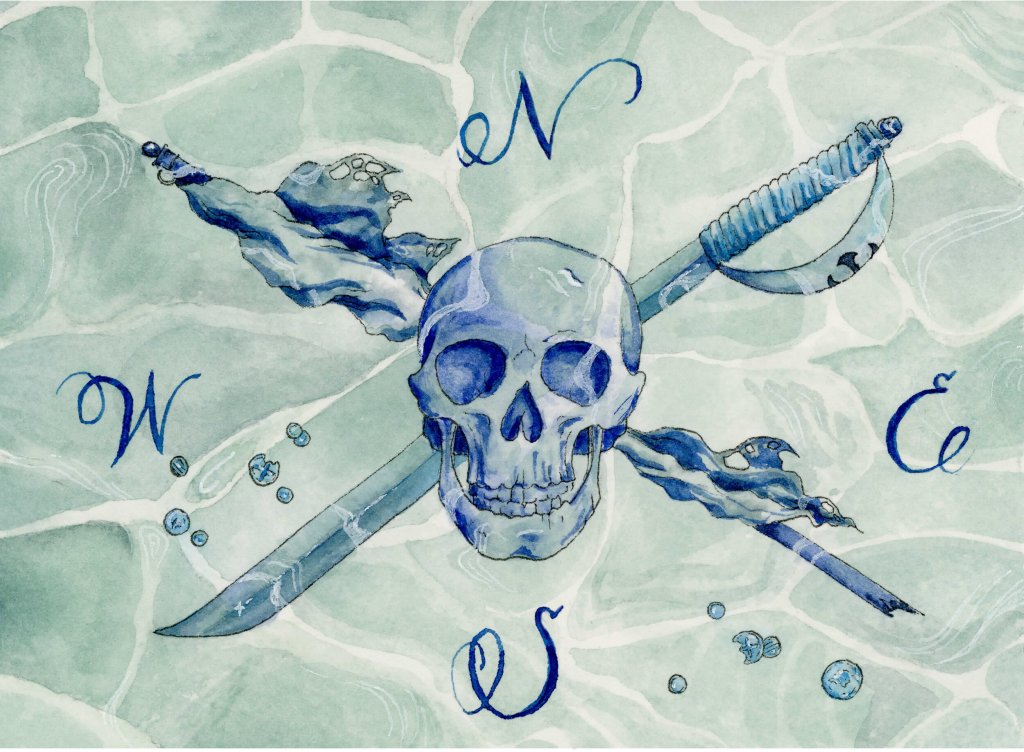


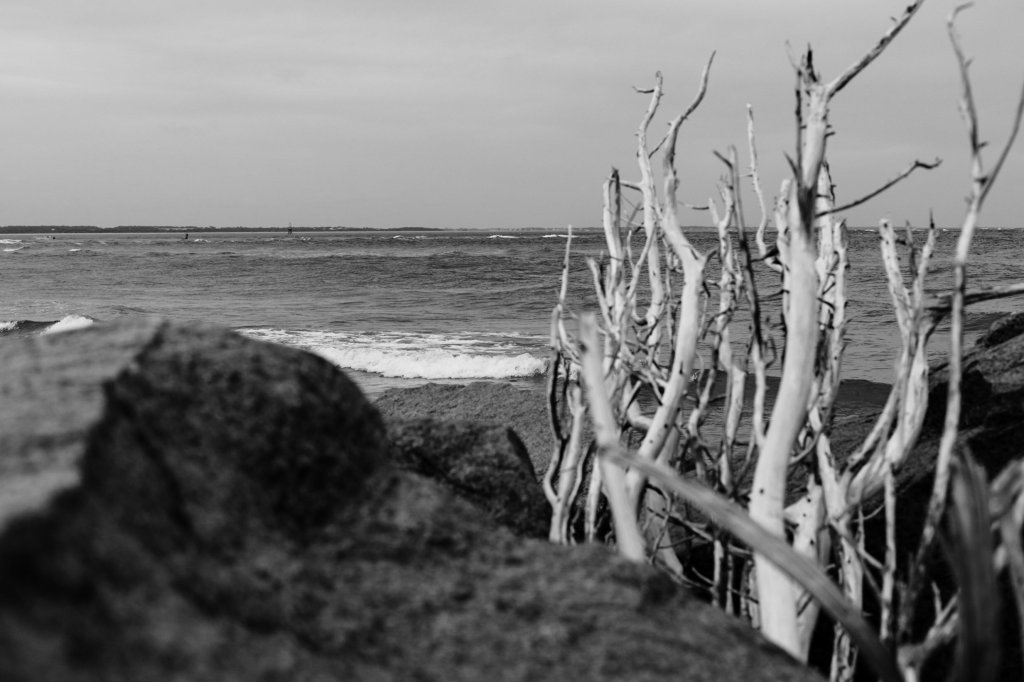


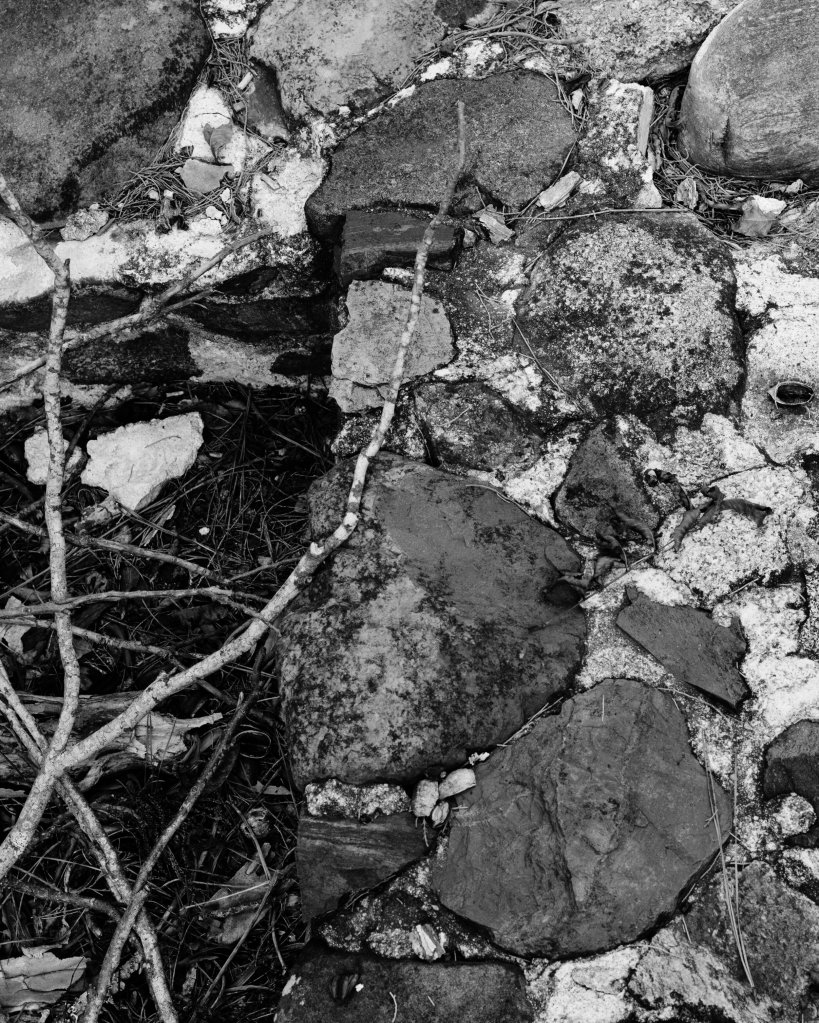

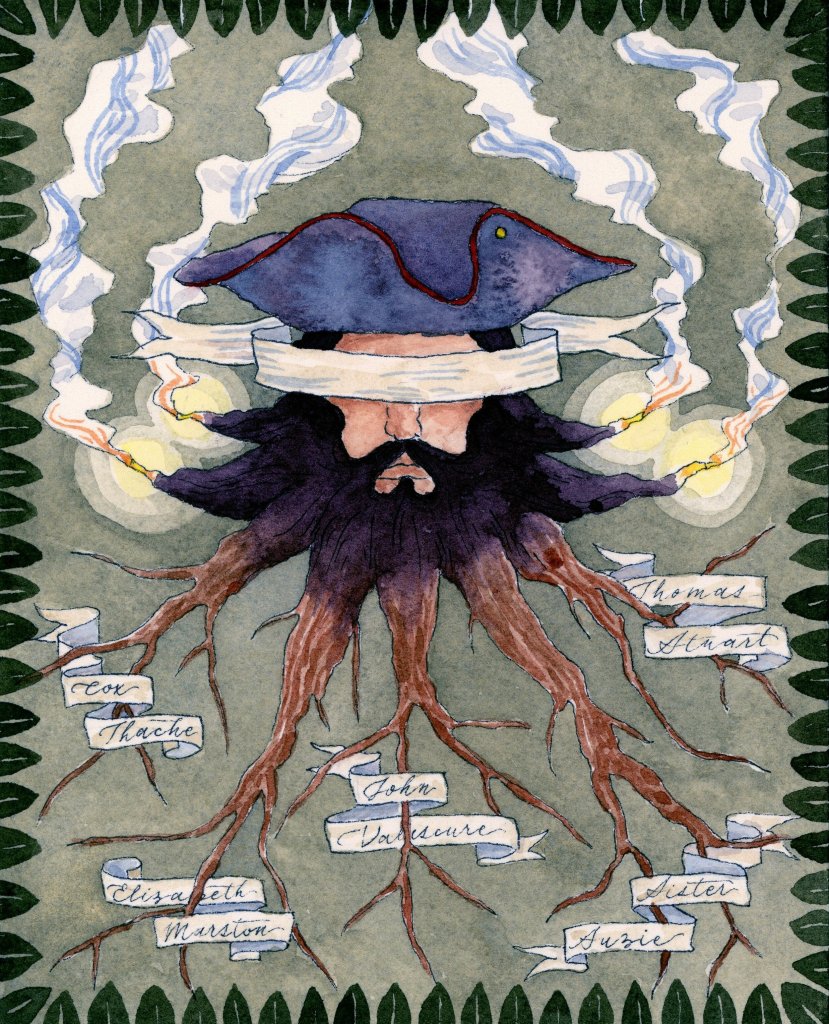


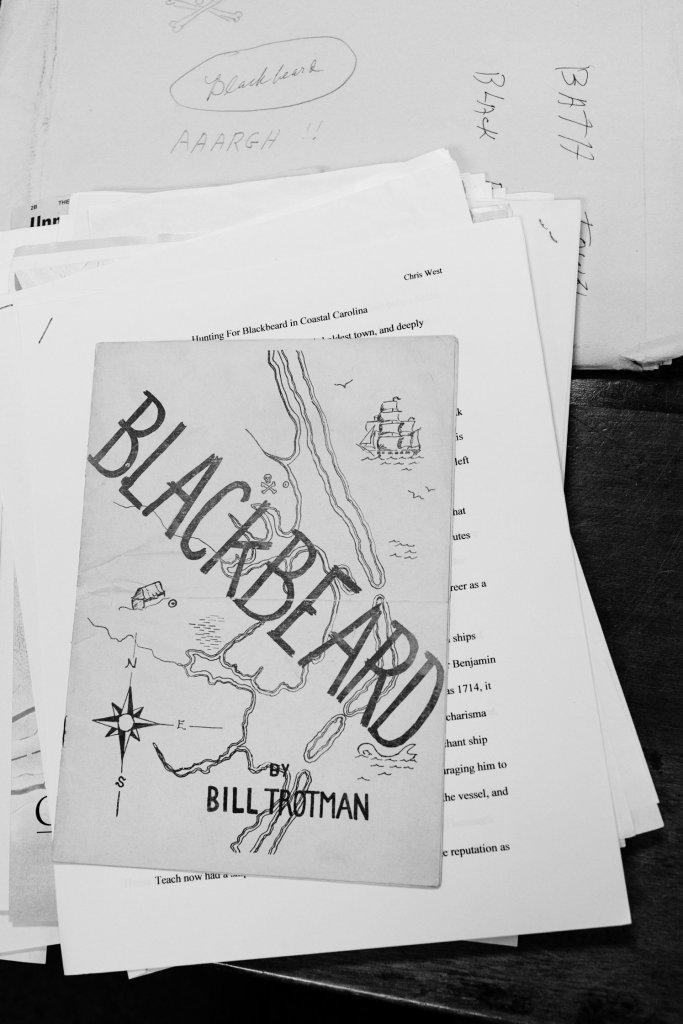

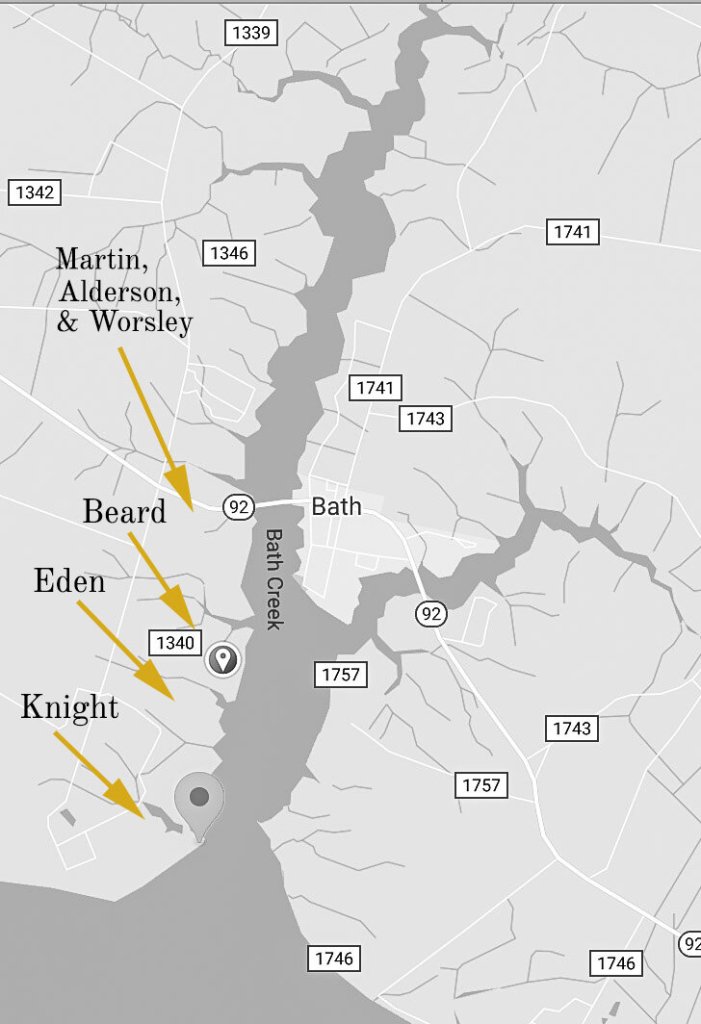
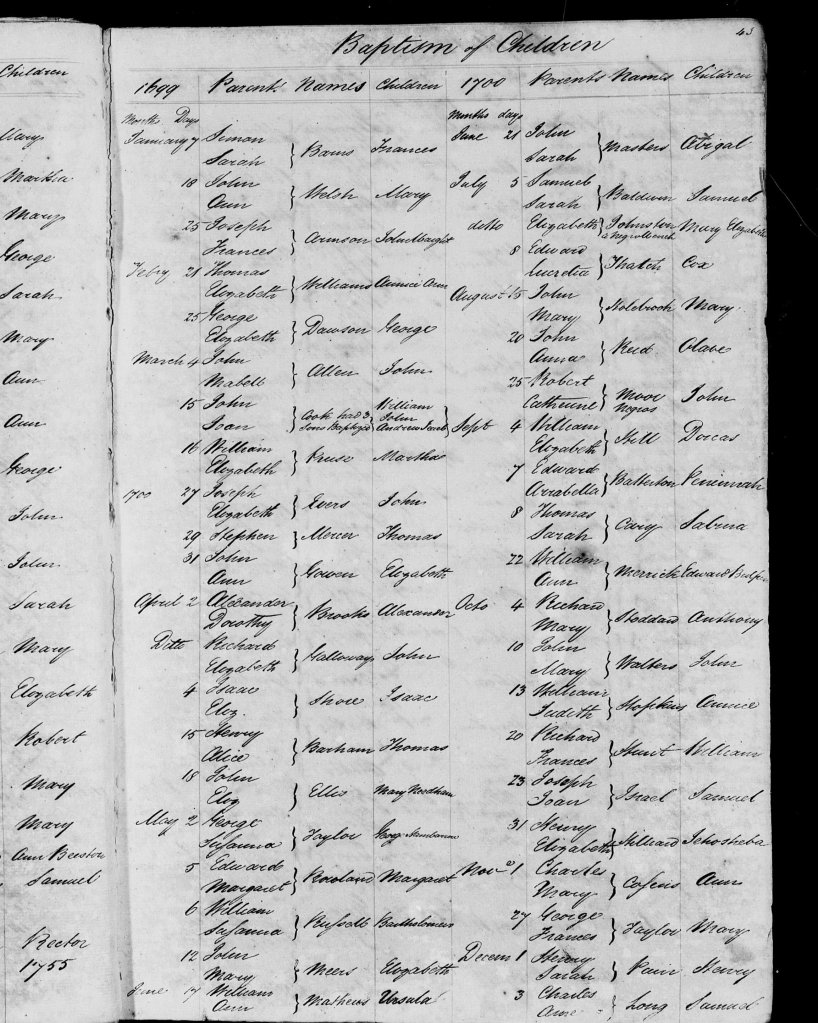
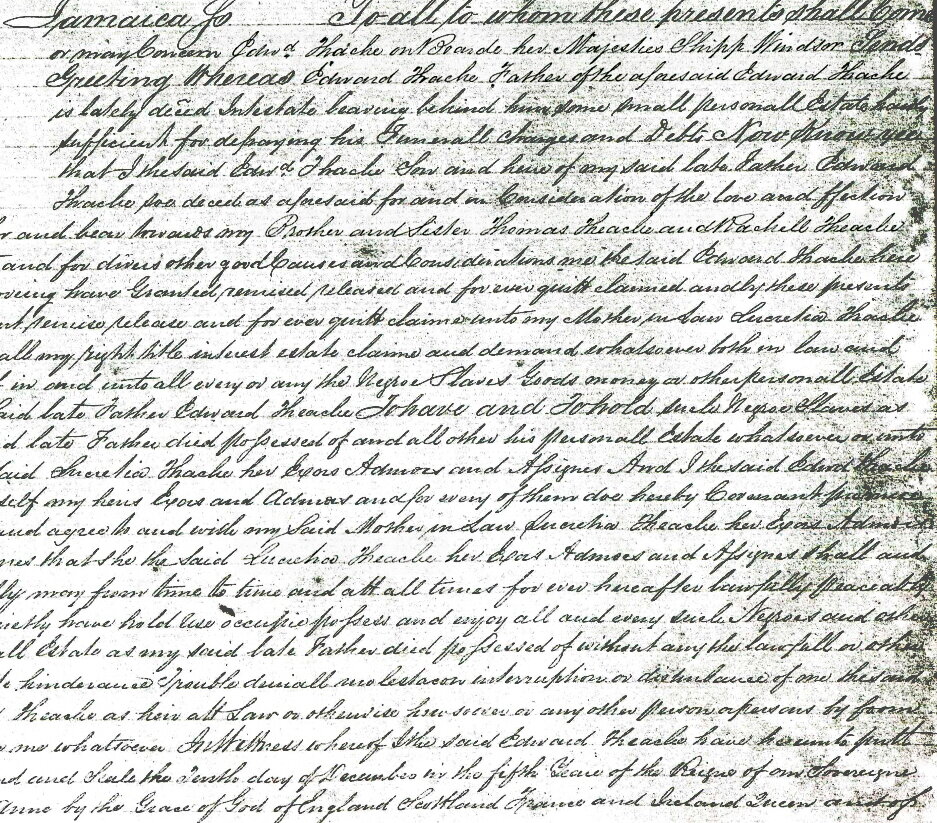
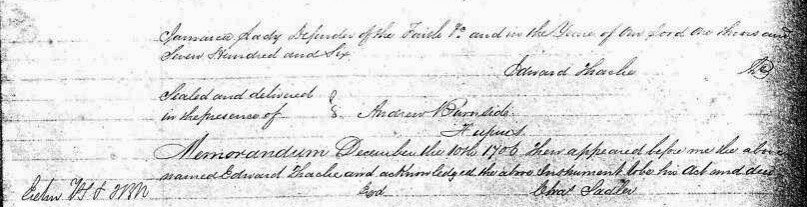
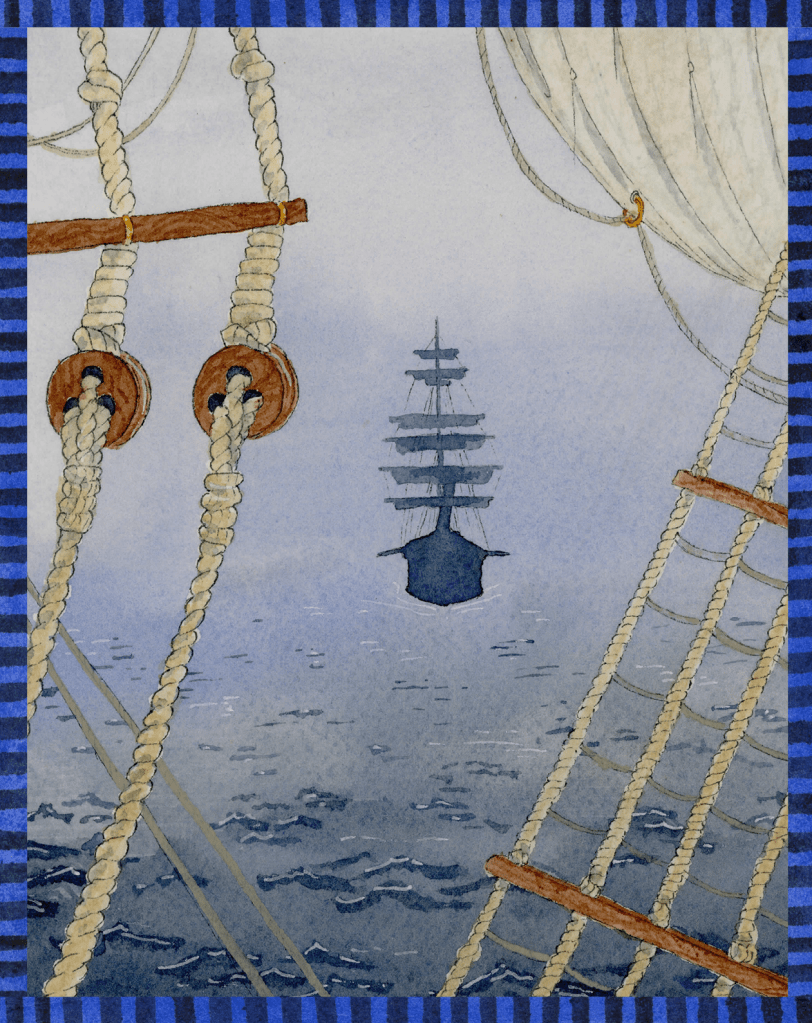
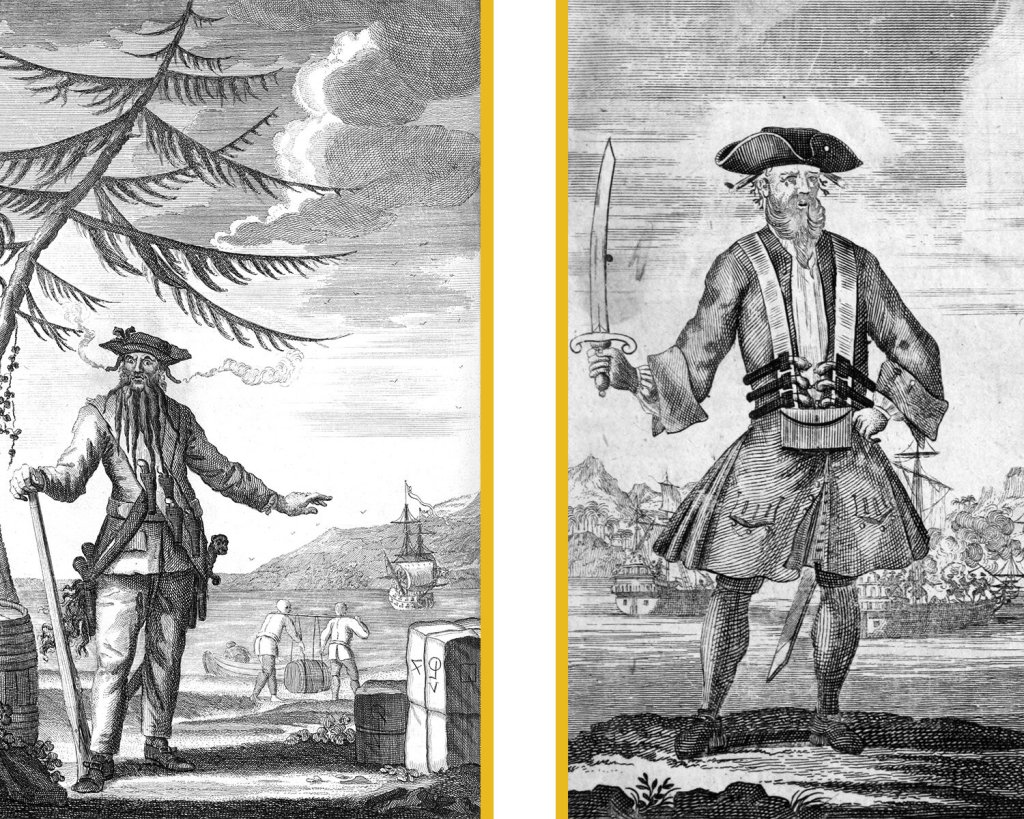

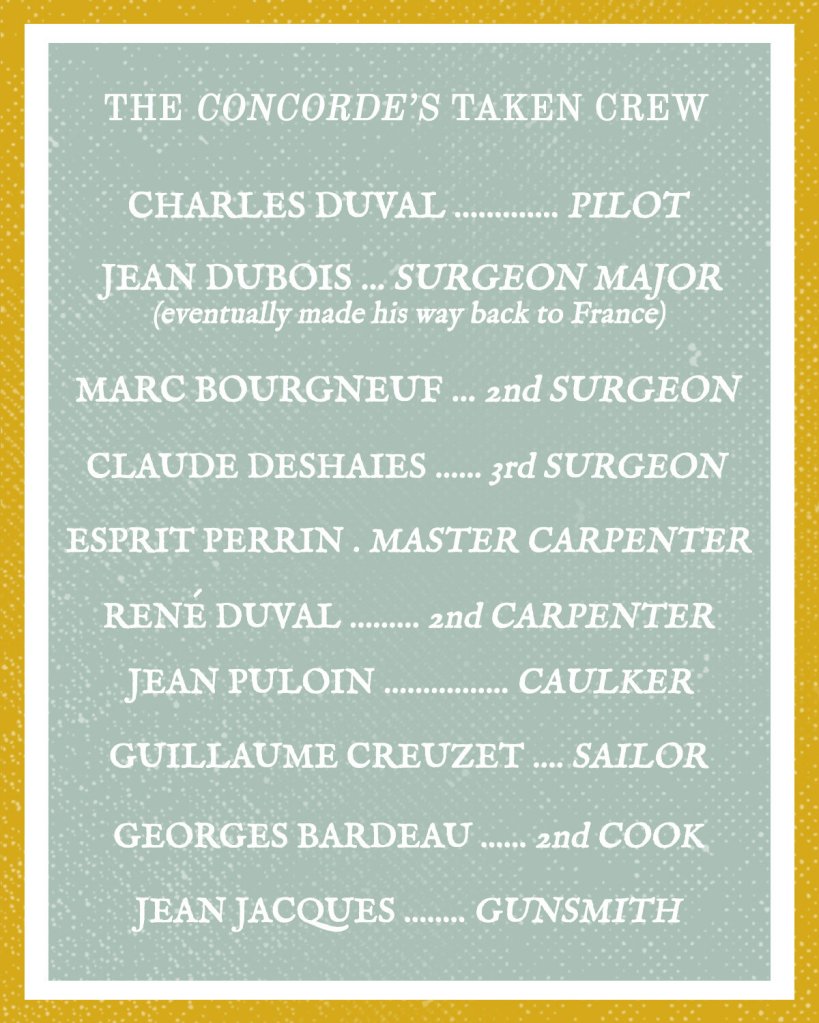
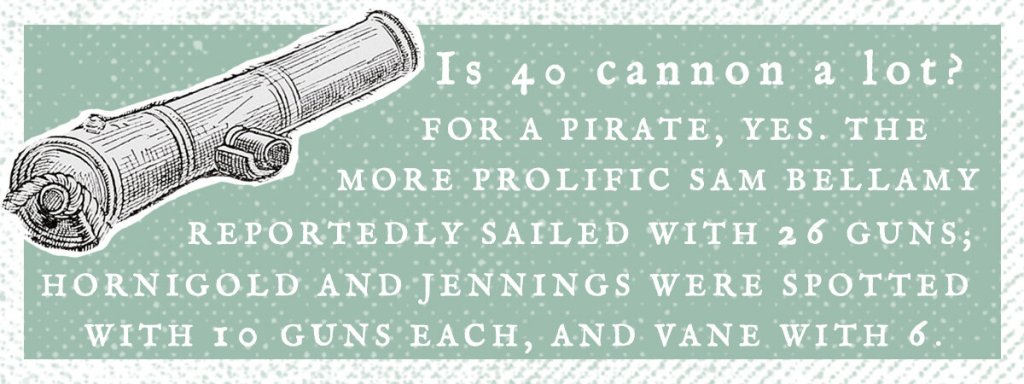
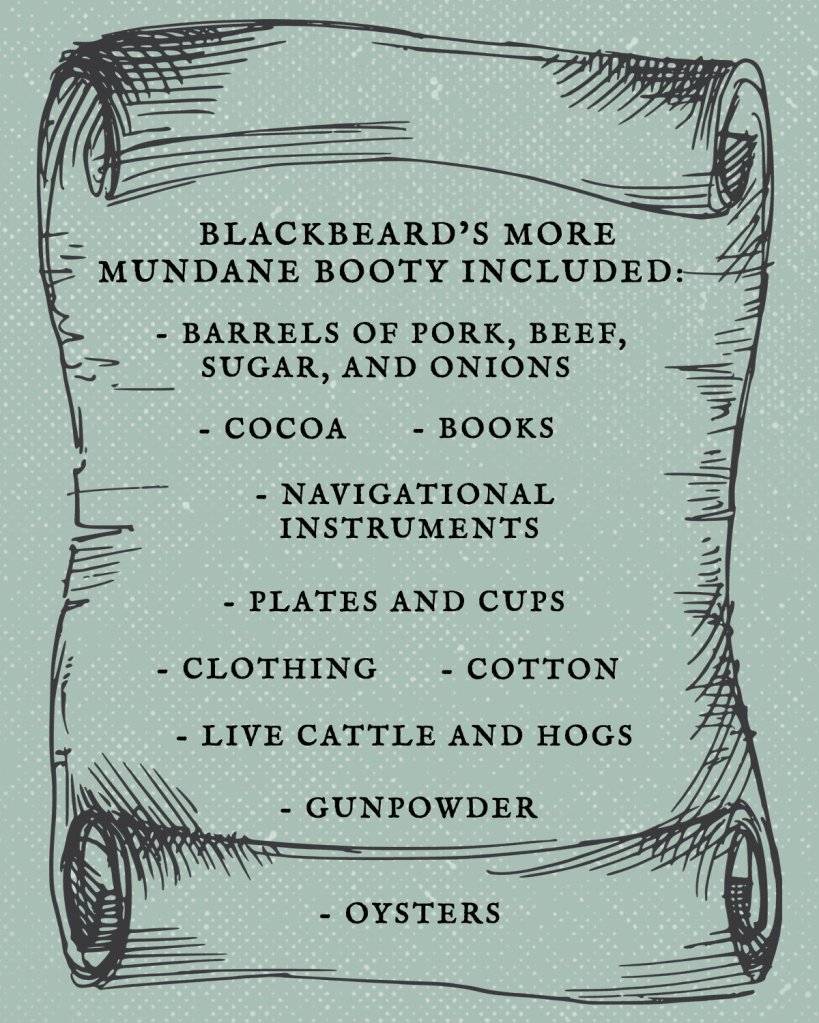
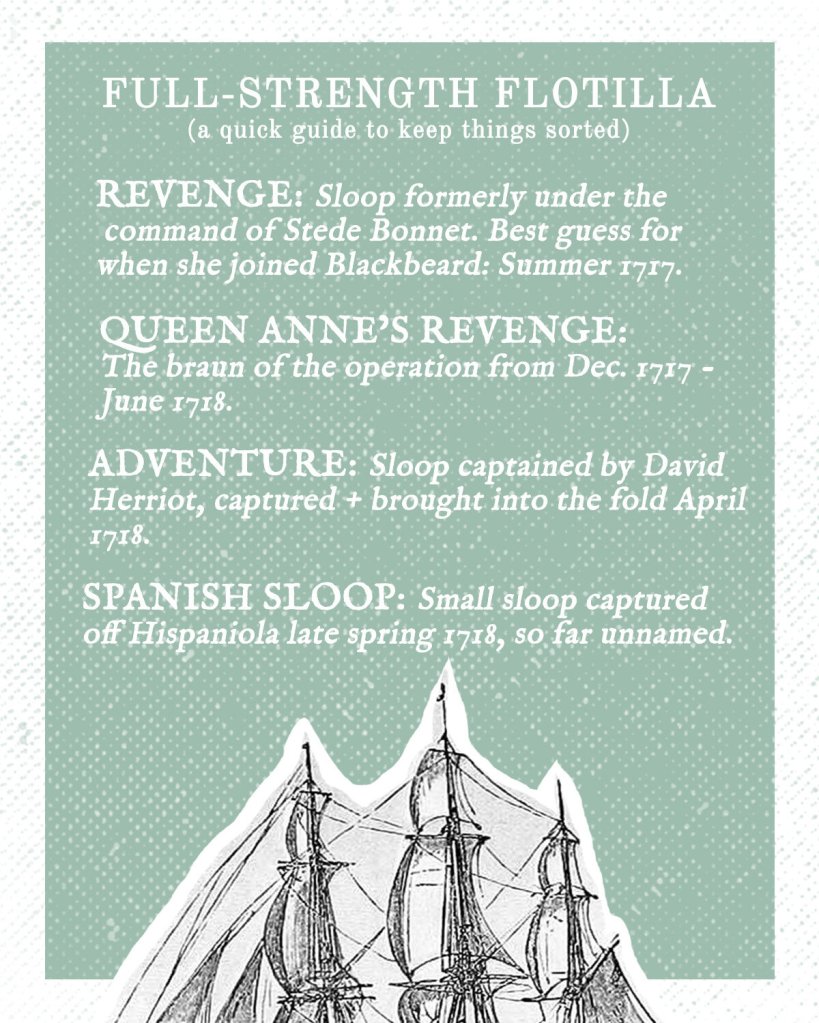


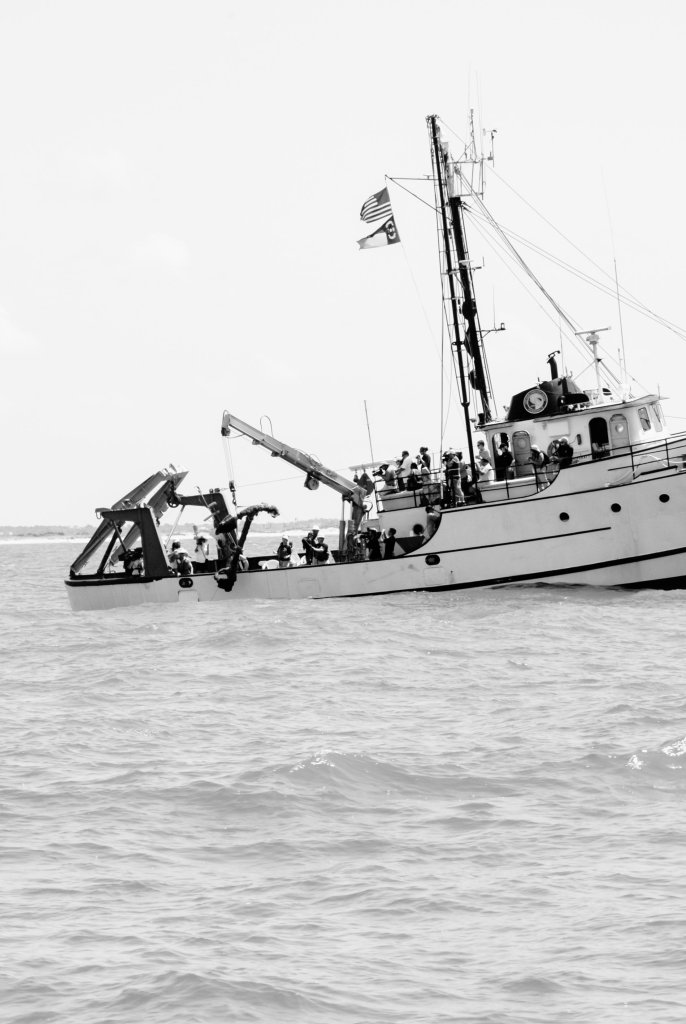
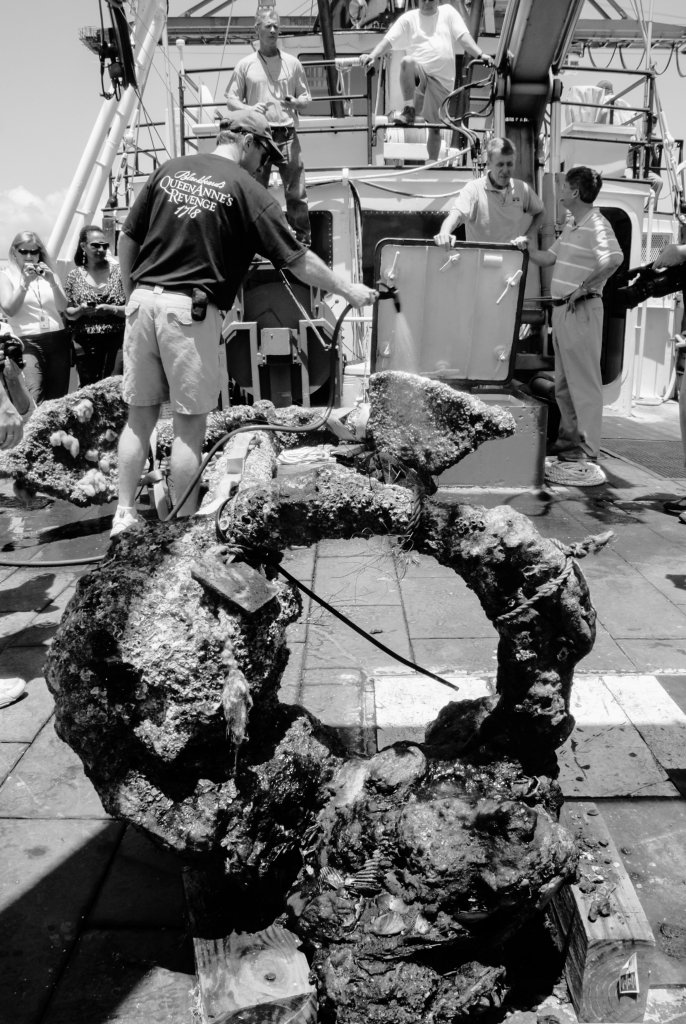
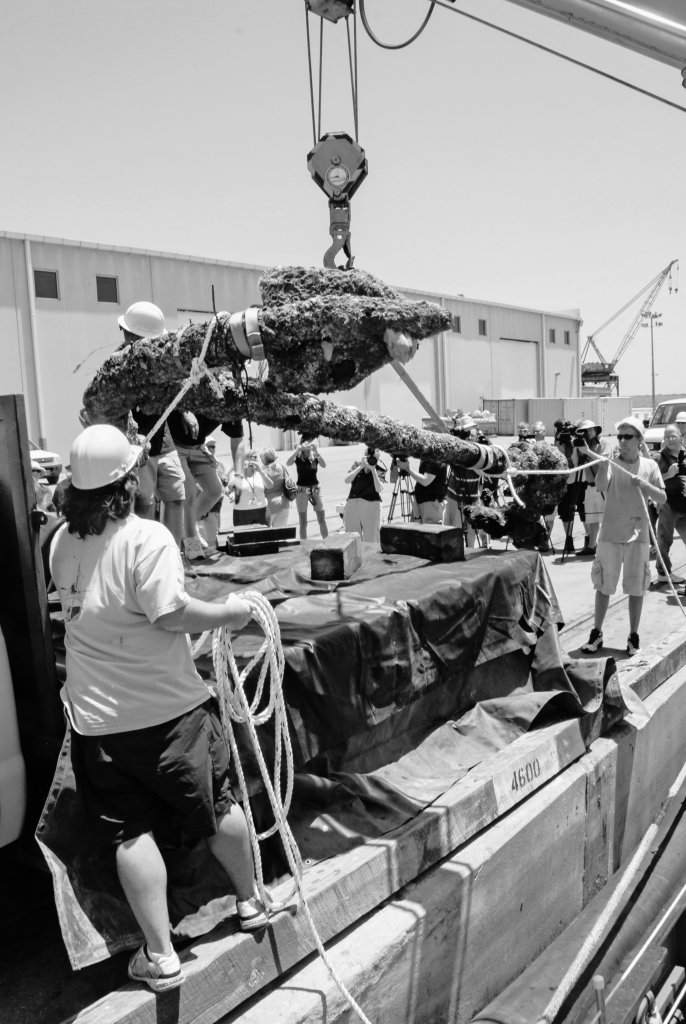


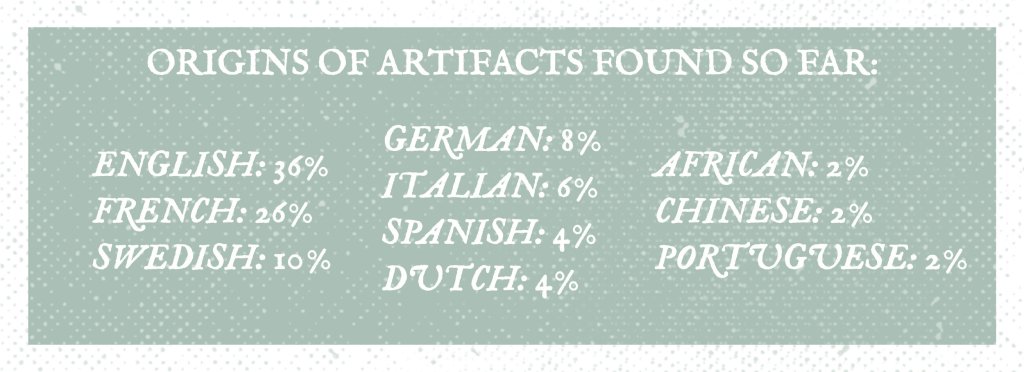


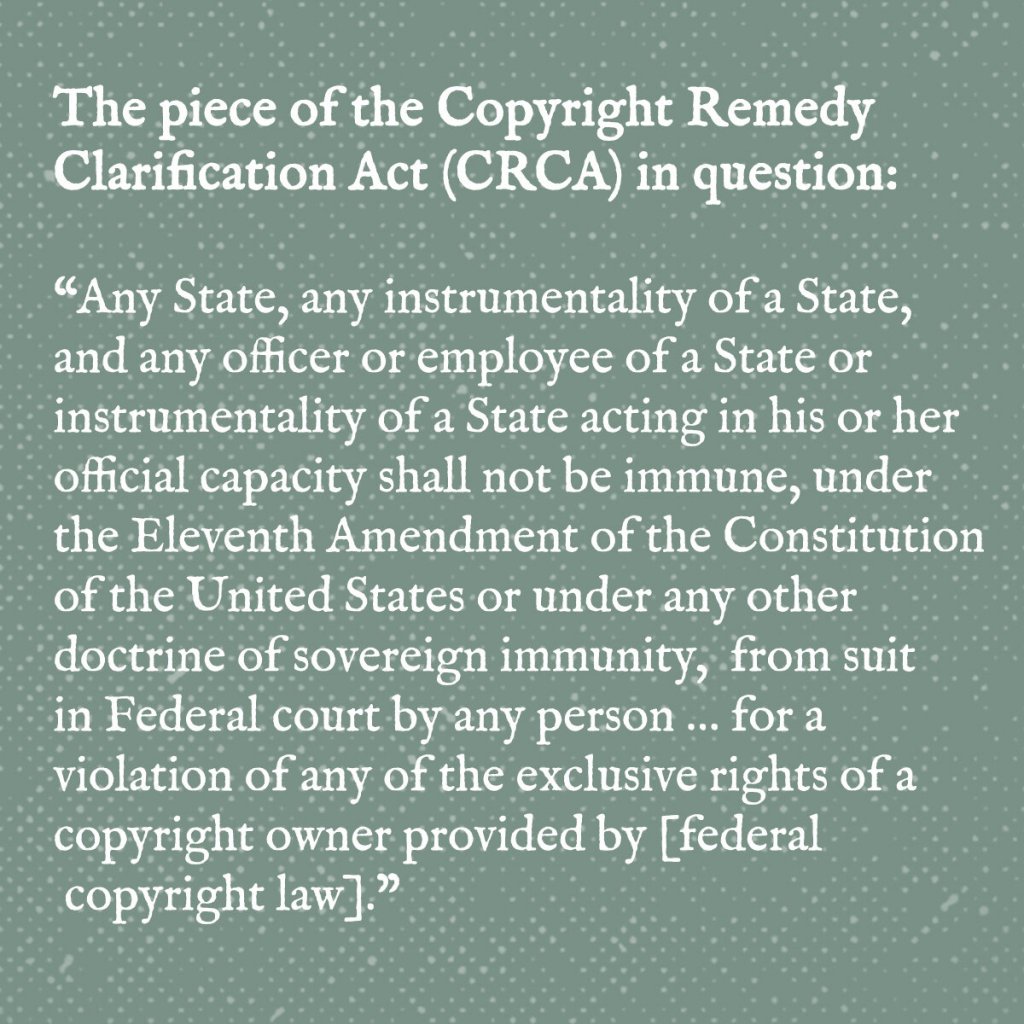


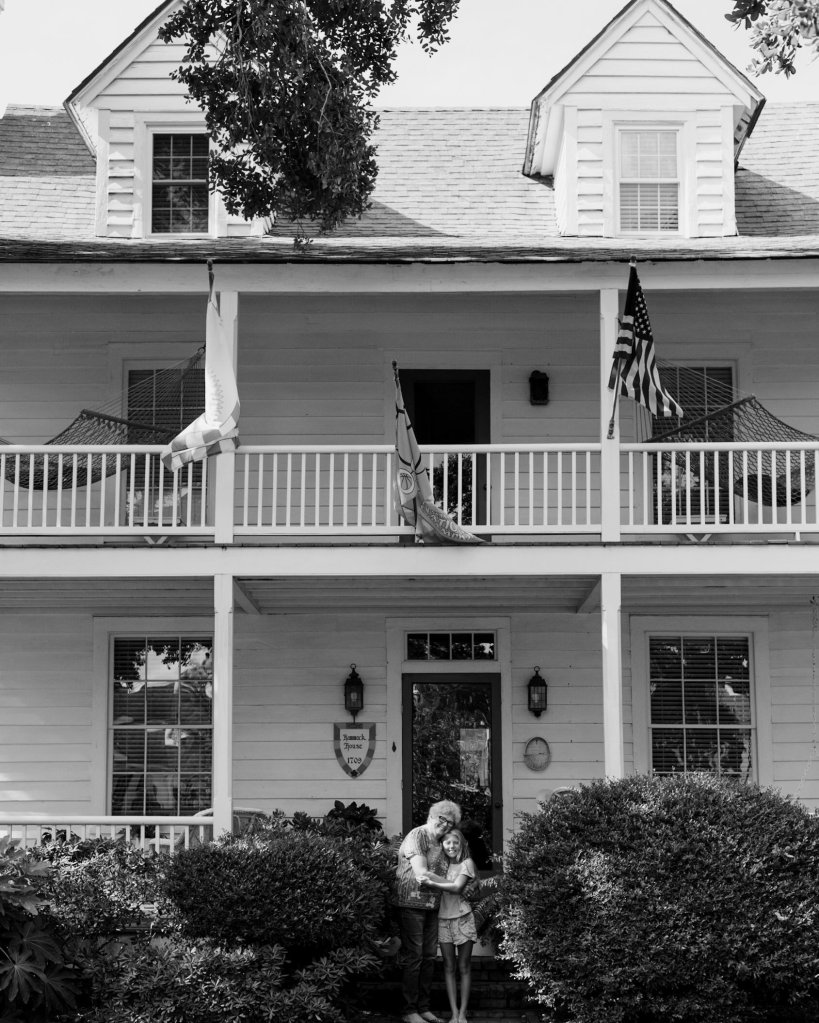

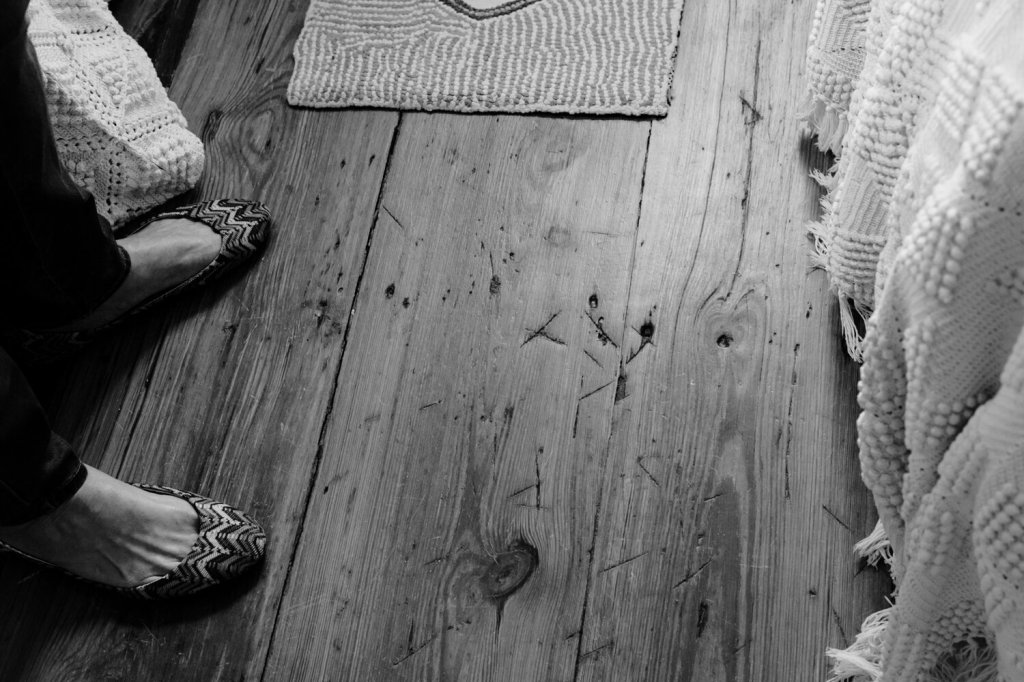
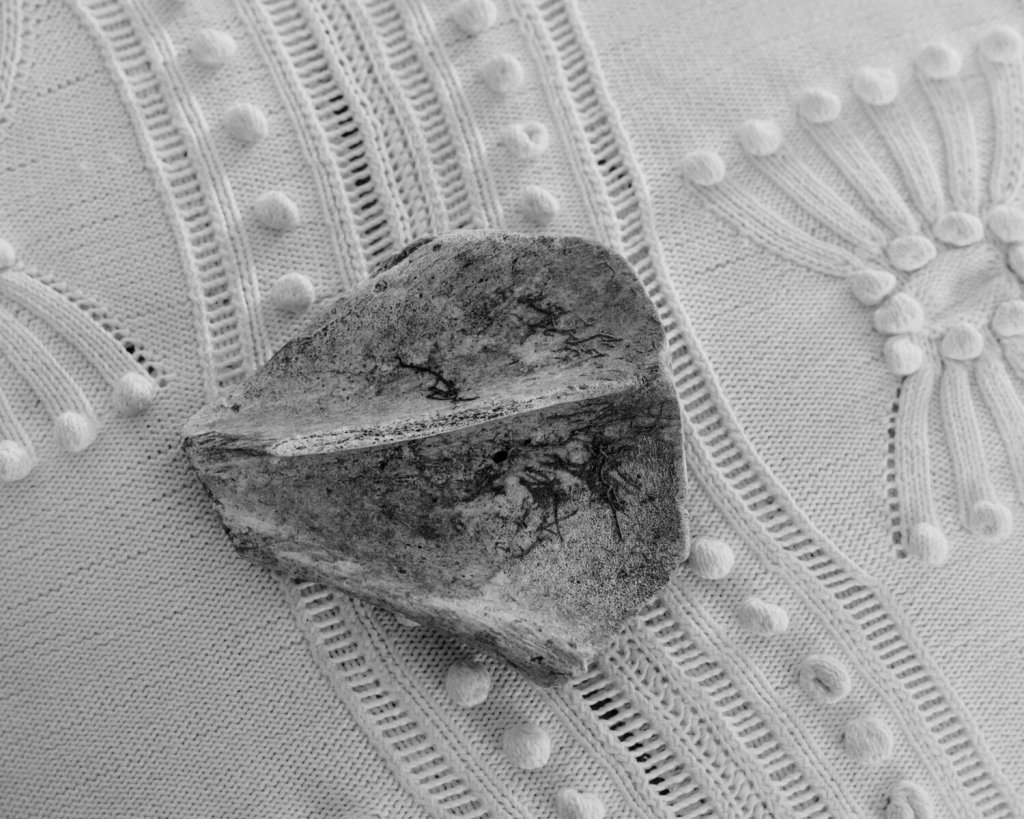
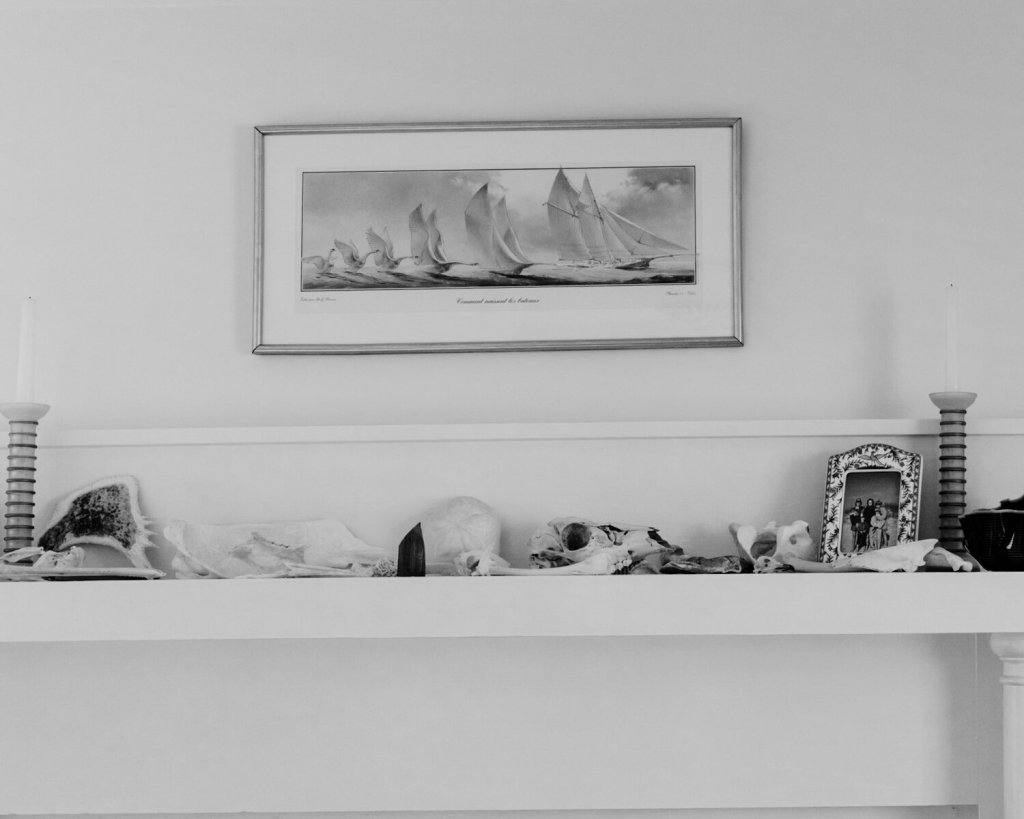
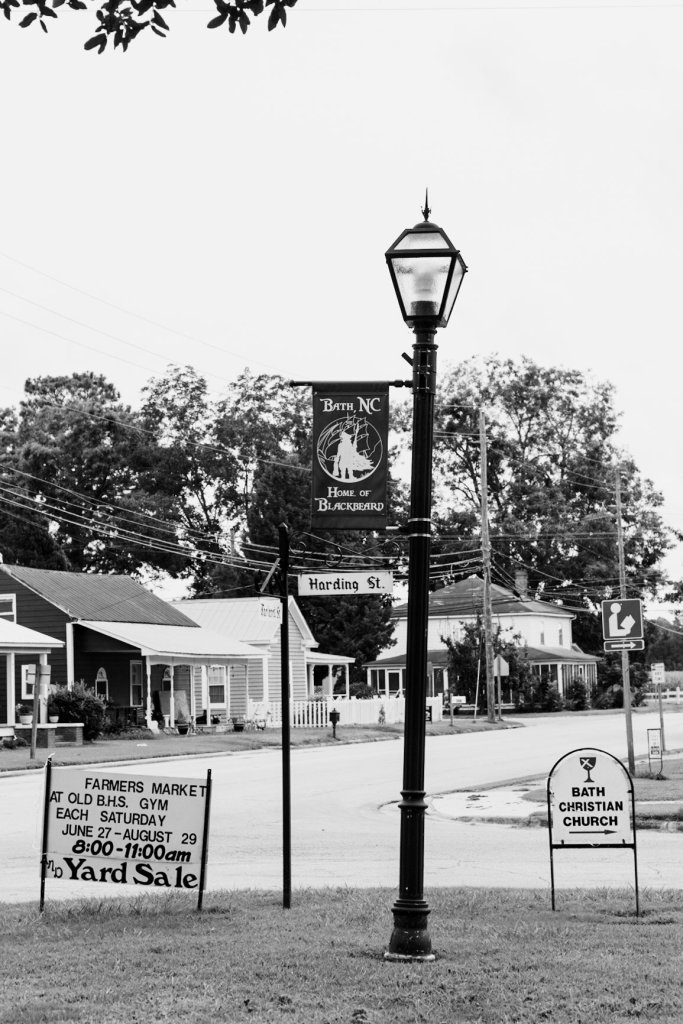
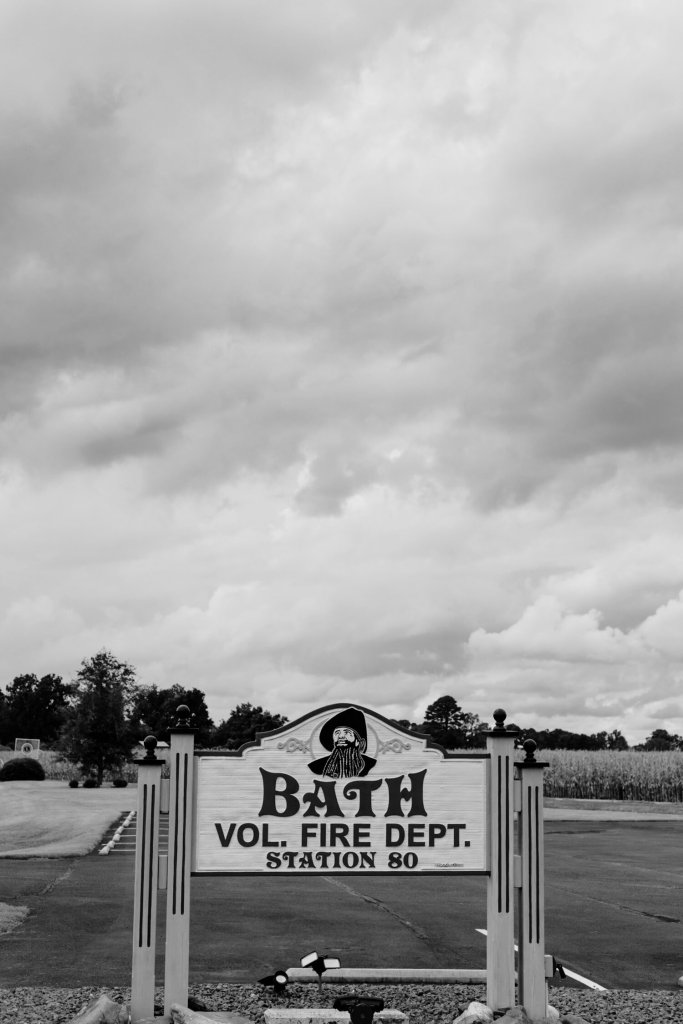




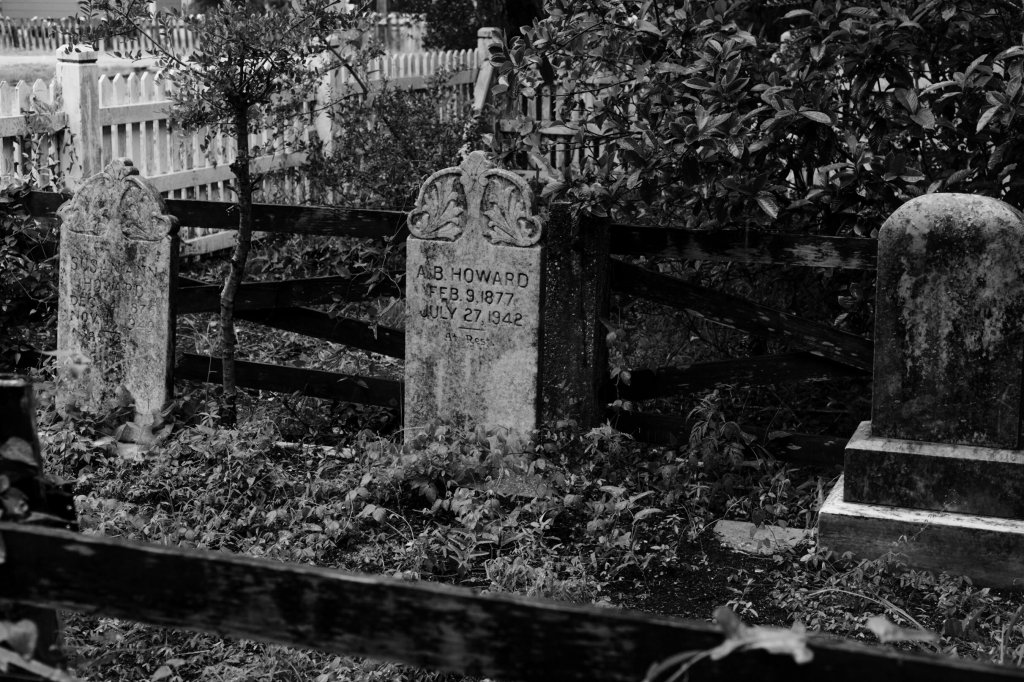
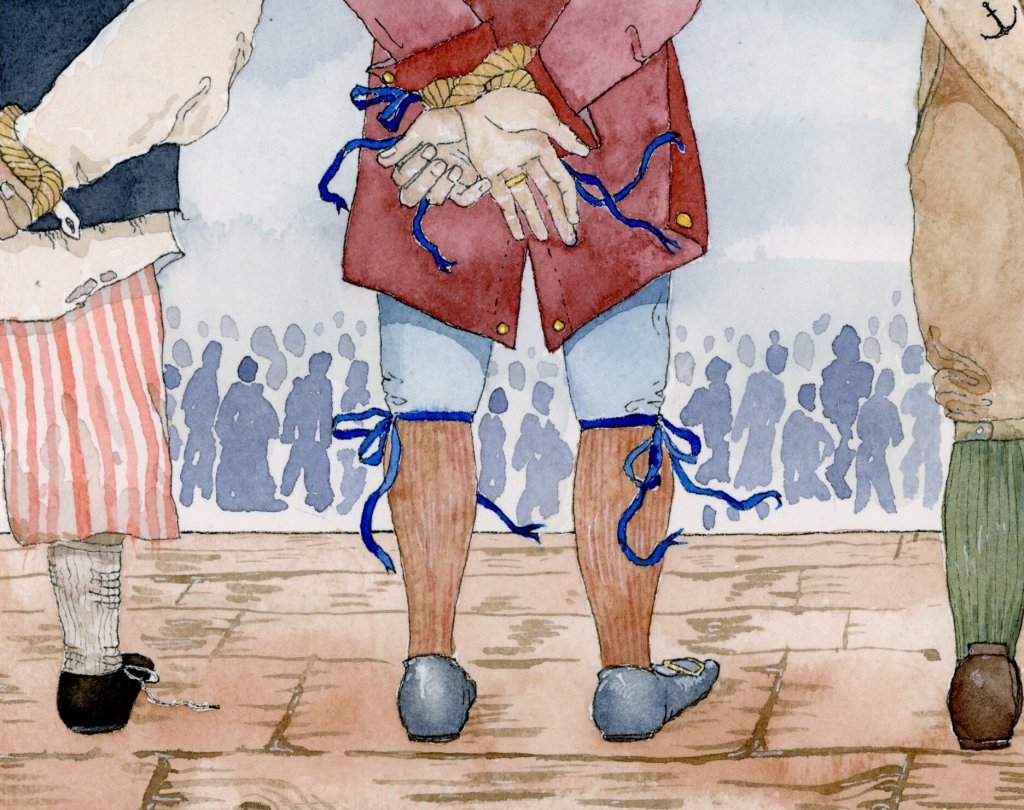
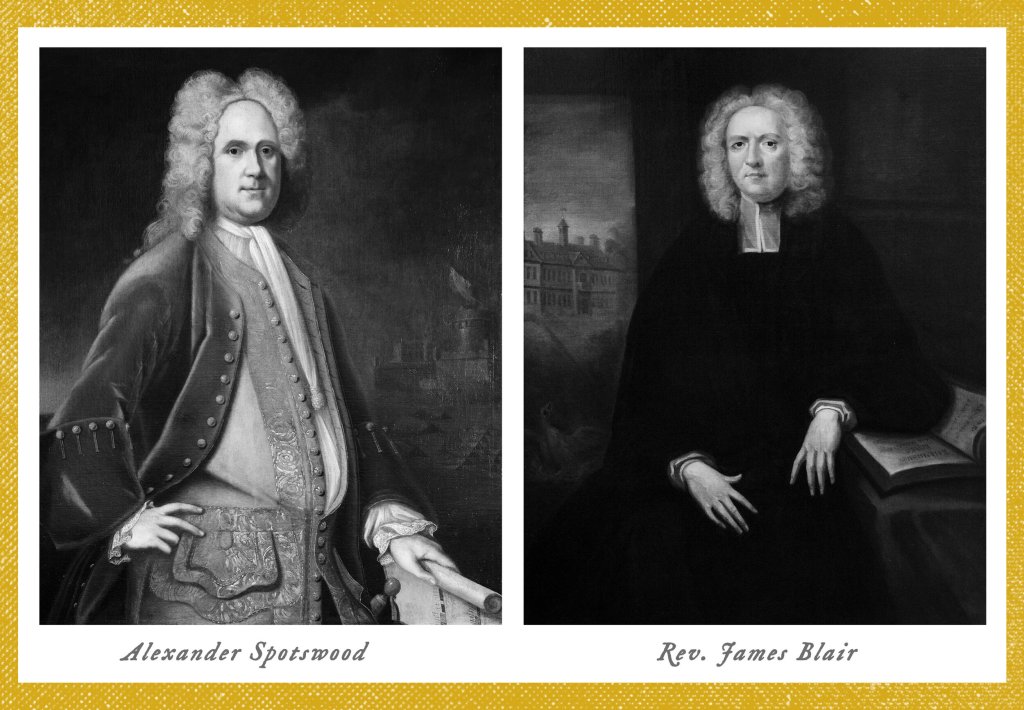


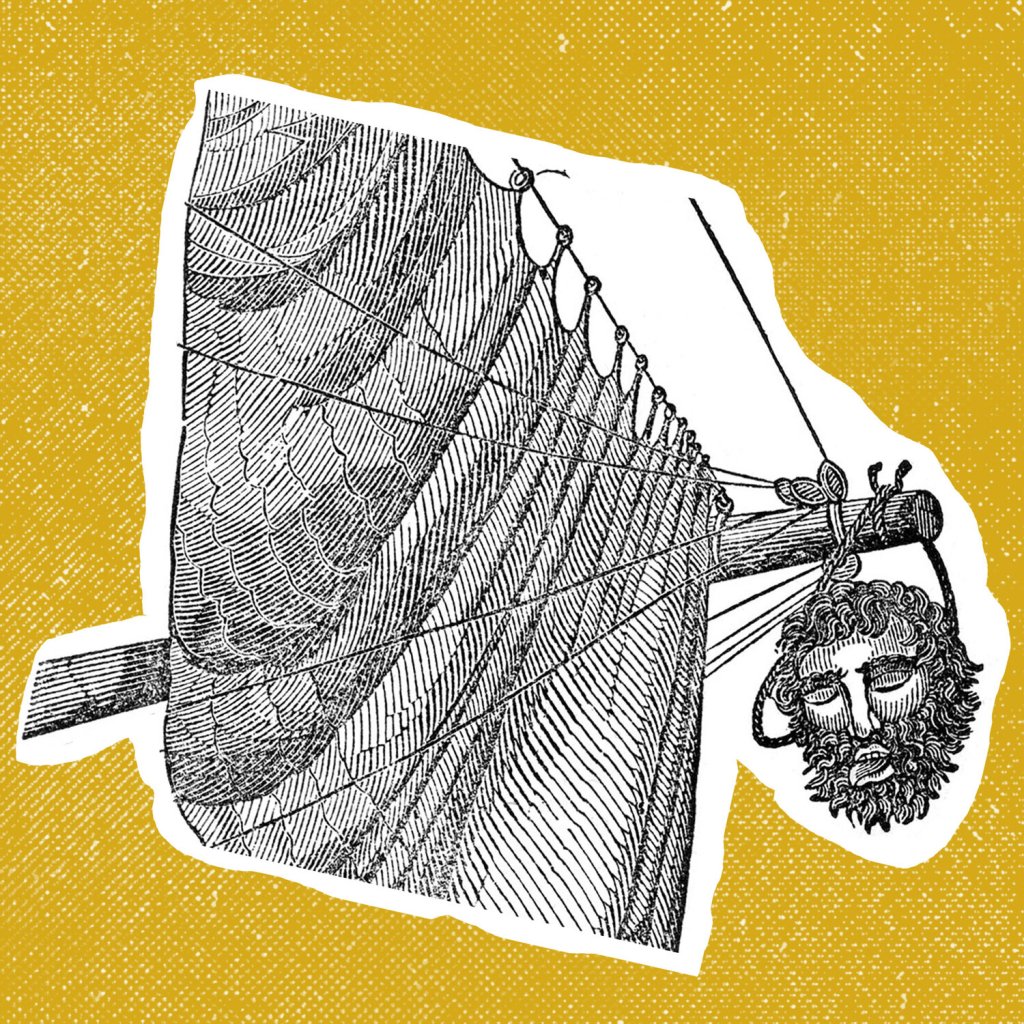
 Long Way Around